“Thy Kingdom Come” …but maybe not just yet??

“We can’t keep saying ‘Thy kingdom come’ when we are actually trusting in our own nations, political parties, militaries, banks, and institutions to save us.”

This phrase jumped out at me this morning from Richard Rohr’s daily meditation. It seems particularly relevant as the presidential electoral battle continues to heat up here in the US, as the marketing for Christmas is in high gear, and as we are challenged once again to ask ourselves what we who call ourselves Christian really and truly believe as December 25 approaches.

We must remember that if our actions indicate we worship anything less than God — money, country, success, fame, other people, or especially ourselves — then this is idolatry.

The Right Side of Salvation History

20111208-110105.jpgDuring her recent and much acclaimed speech in Geneva, Secretary of State Hillary Clinton challenged the world to live up to the principles of the Universal Declaration of Human Rights and recognize the inherent dignity of LGBT people around the globe. In doing so, she shared with her UN colleagues that human rights advocates in the US often call upon political and other leaders to be “on the right side of history” and remember that no good has ever been achieved by a contraction of the rights individuals enjoy in civil society. On the contrary, history bears out that it is only through an expansion of rights to groups previously excluded has progress been made in advancing the goals of equality and justice the 1951 Declaration espouses. Inclusion, not exclusion, has always been the path of progress.

A similar challenge can and should be made to Christian leaders who cite biblical passages out of context or institutional “teachings” limited by time and culture when they take positions against the civil and religious rights of God’s LGBT children. Just as it is possible to be on the wrong side of history, so too it is possible to be on the wrong side of Salvation History.

Generally speaking, the notion of Salvation History rests in the fundamentally Christian belief that God is active in our world. It recognizes the Mystery of the Incarnation in the concrete and sees the Hand of God not as some divine puppeteer pulling the strings in our daily lives, but rather as the presence of the Spirit Whose ways are simultaneously known and unknown, manifest and hidden. We don’t always know what is of God and what is not, but we believe that God is present and at work in all creation.

For those who do believe that every human person is a reflection of the Divine; for we who struggle each day to allow that image and likeness of God within us to be seen more clearly, despite our faults and failings which all too often dull the brightness of that beautiful image, how can we make sense of such labels as “objectively disordered” and other terms describing gay and lesbian people as somehow “less than” their straight sisters and brothers?

The simple, truthful answer is we can’t. The Truth that all people reflect the Image of God and the “teachings” about homosexuality put forth by many Christian communities, including my own Catholic Church, are simply irreconcilable. One perspective will be on the right side of Salvation History, and one will not. I’m putting my nickel on the Truth.

The [Real] Meaning of Marriage

This touching video describes the love and shared lives of two men, clearly married “later in life.” It’s worth a few minutes of your time.

  • “Why would anyone not want to foster love? It’s as simple as that.” 
  • As my brother went down the path of advanced AIDS…. I saw his trust in Dave… and the care Dave gave him….My husband said, I don’t think I could do for you what Dave is doing for Carl… I’ve never seen greater love than that.” — Carl’s sister.
  • “I thought it was awesome, I thought it was great! — Carl’s son on his father’s relationship and marriage to Dave,
  • “The way Davey would take care of my father….that was remarkable to me.”
  • “I was given an opportunity to care. ”  —  On caring for his husband Dave as he was dying with AIDS.
  • “I saw in their relationship the fruits of the Spirit.” — The couple’s pastor in Arkansas.

Opposing the death penalty: “common ground” for conservative and liberal Catholics

The idea of “common ground” seems to have become a victim of the extremism all around us these days.  In the worlds of politics and religion, we hear regularly about the lack of civility, the dearth of bipartisanship, and the recalcitrant conflicts between those who have different perspectives on almost every issue.

Instead of focusing on what separates, the concept of common ground asks us to look for those areas in which we agree in order to make some progress and do some good. The fact that such common ground must be searched for in the first place means we already know, and likely know all too well, the areas in which we disagree.  It recognizes that progress on those issues of conflict may not be possible right now … but surely there is something we can do, some common ground we can find, in order to make this world a better place.

In the Catholic world where conservatives and liberals have conflicts no less strident than those on Capitol Hill, why can we not come together on the issue of our collective opposition to the death penalty as a place to start?

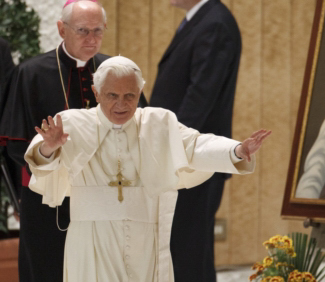
Recently, Pope Benedict XVI praised the advocacy efforts of some Americans from Chicago representing a group whose name needs no explanation: Illinois Coalition to Abolish the Death Penalty.

If American Catholics from cathedra to pew could find this common ground, at least two benefits could ensue. First, we might be able to help our fellow citizens see that our words about human dignity and the value of human life are words with meaning. We would put into practice what we preach when we say our faith calls us to respect the dignity and value of every person. Second, achieving a goal with someone typically seen as “the other” would surely open our eyes even more, helping us see the humanity in “the other” whom we can sometimes readily dismiss. Perhaps  we might understand more fully why they cling to what they cling, even when we cling to something different.  Common ground forces us to see one another not from a distance, but up close.

Perhaps that’s not such a bad thing to do, especially during this Advent Season when we celebrate our belief not in a distant and disinterested god, but in a God who took on the common ground of our own humanity and invites us daily to do the same.

Your thoughts? Would love to know.

Anger, Advent and Hope

Yesterday, I was a little down. This is my second “holiday season” as a single man, a relationship status not of my choosing, but is mine nonetheless. As a single man of a certain age (!), it’s not always easy constantly encountering the sights and sounds of family togetherness and happy couples holding hands, knowing that the vast majority of my own time is spent by myself and not with the person I had hoped to share life with.

I am self-aware enough to know that this was part of the reason for being down (or “low energy,” as a dear friend euphemistically describes it); and also self-loving enough to do things to get out of myself and become more engaged with others and the world. All this notwithstanding, I also began to realize how very angry I have become. Angry not only because I had little say in my now being single, but especially at the Church, that is, the institutional Church and its officials. Looking through the many Twitter feeds, blogs and news sources I follow, I felt my anger in a way I hadn’t felt before.

Oh, I know I’ve been angry at bishops and others who claim to speak for the Church for a long time. I love the Church; it is and always will be my family. But anger is a natural response when the family you love denies your full humanity, says you are “intrinsically disordered,” and uses its power to maintain your status as a second class citizen by denying you the civil rights your straight brothers and sisters have. Anger is also a natural response when such exclusionary positions are embraced precisely by those who claim to be shepherds, called to bear witness to the presence and love of Christ.

And so I prayed. I prayed last night that this Advent might help me find ways to respond to this righteous anger not by denying it or letting it rule me, but by allowing the Spirit to transform it into something good. How can I not see the reading from today’s Morning Prayer as a response to that prayer, filling me with hope?

“Do not fear, for I have redeemed you;
I have called you by name, you are mine.
When you pass through waters, I will be with you; through rivers, you shall not be swept away.
When you walk through fire, you shall not be burned, nor shall flames consume you.
For I, the Lord, am your God, the Holy One of Israel, your savior.”

(Isaiah 43:1b-3a)

5 Key Elements of a Truly Human Spirituality

Last weekend I had the great privilege of participating in a retreat sponsored by New Ways Ministry for Catholic gay clergy/religious who are no longer in active or “official” ministry.  As I mentioned earlier, the retreat was facilitated by theologian and writer Anthony Podovano. I was blessed to be part of a small group given a unique opportunity to listen to, learn from, and spend time with someone who has had such an important role in the life of the Catholic community for over five decades.

5 Key Elements of a Truly Human Spirituality — helping us answer the questions, what is religious experience (as distinguished from mere religion) and what is necessary for a valid spirituality? –  In order to answer these questions and to be accurately reflective of true spirituality, something must be present in every instance of humanity. We must also recognize that no person or class or group is ever truly “privileged,” although it might appear as such to those not part of the purported privileged group.  We need to avoid thinking that life or simply being human is ever “easier” for one person, one era of history, one group, etc. than any other person, era or group.  “Golden ages are called such by those who weren’t forced to live through them.”

1. Transcendental Imperative:  All people make enormous efforts to “get out of ourselves,” to get beyond themselves.  It is part of being human to constantly reach outside and beyond ourselves.  The greatest joys in life come from relationship with others, from friendship, marriage, connection with other human beings.  Aquinas said that without friendship, life is not worth living. To be friendless is to be truly bereft.  Believers simply say that God is the end of this process; but non-believers and atheists are also on this same journey, the journey on which we want/desire a companion on the way.

2. Life is Mystery:  Life is always unpredictable, always more than we can handle, and not subject to calculation. While ignorance is something I don’t know, Mystery is something I can’t know! Mystery works on the notion that the more data I have, the more unknowing/mysterious it becomes. E.g. the more we know about the development of the human person from the moment of conception, the more mysterious human development becomes. The more we know (i.e. the more data we have) about the universe/cosmos, the more mysterious the universe/cosmos becomes.

3. Community / Belonging:  the connections we make to others are essential. The real crisis in the church today is not what itsays, but that some people don’t feel home there anymore.  Why would a gay person “go home” to the church? Why would a woman who has had an abortion, or a person who is divorced, etc. want to “go home” to the church? The real contemporary heresy of the church is more related to its exclusion of so many and less than with its dogma.

4. Hunger for the Sacred: The secular is that which we need, but to which we cannot make commitments without it destroying us. I need food, clothing, shelter, money; but if I commit to these, they will destroy me. [Black Friday and unbridled consumerism!] If I give myself to food, clothing, shelter, money, “stuff,” etc. then I am consumed by them. The sacred is that which we also need; but our commitment to the sacred does not destroy us, it ennobles us. Love – love is inexhaustible. [Bishops and all who oppose same-sex marriage, are you listening?] Forgiveness – one cannot forgive excessively. Wisdom. Hope. Joy.  The whole world is hungry for the sacred … and we only turn to the secular when we despair of the sacred.  cf. Philip Slater’s  Wealth Addiction. When we commit to the secular, we need greater and greater amounts to satisfy, and yet get less and less in return (and are never fully satisfied).

5. Correlation of Reverence and Revelation:  You can only truly see what you reverence, and also reverence what you truly see.  If I don’t reverence a flower … I never really see the flower.  People who reverence each other reveal themselves to each other.  If we don’t feel reverenced, we shut down and no longer reveal ourselves. Revelation without Reverence is Brutality (e.g. sexuality, nakedness, intimacy or rape).

  • “Intellectual” arguments for the existence of God do not move us.
  • A church that does not reverence us has nothing to tell us.
  • Obedience is not submission – it’s attentiveness (from the Latin  “to hear”).
  • The wonderful thing that Jesus did with the pariahs of society is give them back to themselves – woman “caught in adultery,” Zacchaeus, Mathew.  Note that in doing so, he absolutely did not condemn them.
  • The “industry of the church” will depress us.
  • Do we really think God would abandon us if we sought God in another way? (e.g. Thomas Merton’s fascination with Buddhism)


Australian Gay Marriage Video

Guess I am a bit of a romantic, but I admit it … I did tear up when I saw this! How can anyone watch this video, produced by the Australian advocacy group, “GetUp! Action for Australia,” and not be moved?

To all  Catholic bishops around the world (including the Pope); all the Republican presidential candidates who have signed pledges in support of DOMA; Maggie Gallagher, Brian Brown, and other intellectually challenged supporters of NOM … how can you possibly watch this and fail to understand that support for civil (and yes, sacramental … but that’s another story) marriage will in no way harm either the marriages of heterosexuals or children?

This is about:

  1. accepting the fact that being gay is not a choice;
  2. recognizing that being gay is a natural part of the diversity with which humanity is so blessed; and
  3. deciding how to live faithfully and responsibly in light of the God-given realities of #1 # 2.

Rush Limbaugh Gets it Wrong — Again!

According to this Huffington Post piece, Gay Student’s Flamboyant Behavior Blamed For His Murder, that font of wisdom who never fails to express concern for the “least among us,” Rush Limbaugh has apparently declared, “He [murdered student Larry King] was showing up in school dressed as a woman,….  So now a confused 17-year-old is dead because the school [said] ‘Ah, there’s nothing we can do.'”

Limbaugh’s lament is not about the school’s lack of action with the student who pulled the trigger.  No, it’s about the school’s “failure” to make the murdered student dress in a way that ensured he fit in with all the other kids, like a good, “normal” boy should

Well, Rush, you got it wrong again! I don’t care if he was showing up at school wearing a plastic bag, a Superman outfit, or something from RuPaul’s closet!  The “confused” student in this case is not the one who was murdered, but the one who — apparently influenced by his association with neo-Nazis, his devotion to Hitler, and his heterosexual parents addicted to illegal drugs and violence —  seemed not to know that murder is murder is murder. He seemed not to know that there is absolutely no justification for one student to bring a loaded weapon into school and and to execute a fellow student, as Brandon McInerney apparently did.

I pray that the family of Larry King will find comfort, and that Brandon will get the help he needs to rid his mind and heart of the hate into which he apparently has been indoctrinated.

What do you call someone who reneges on a deal?

From today’s Washington Times:

“Mr. Hensarling [supercommittee co-chair] called the struggling negotiations ‘a huge missed opportunity,’ but said the ‘good news’ is if the supercommittee fails, $1.2 trillion in automatic spending cuts would be triggered in early 2013.

“The Texas Republican added he hopes Congress would undo the $600 billion in automatic cuts to the Pentagon, which he said would undermine national security.

“Mr. Toomey [Senator Patrick Toomey, R-PA] also said it would be ‘very important that we change the configuration’ of the automatic cuts to protect the Pentagon but that he would want to keep the $1.2 trillion spending cut target.”

So, an agreement was made back in the summer that they would try to do X by November 23, 2011.  If X didn’t come to pass, then Y would happen automatically.  It’s now clear that X will not come to pass.  Mr. Toomey and many others in his party want to revisit the deal made in the summer, so that the Pentagon bears none of the automatic cuts and what the Defense Department would have borne is spread around to other agencies.

Not only did they fail to reach a new agreement; now they also want to undo an agreement already reached.  This doesn’t sound like the mindset of someone who negotiates in good faith and reinforces the growing perception that the US Congress is held hostage by a very small minority of political terrorists whose attitude is our way is the only way and we will stop at nothing to get our way.

On the school playground that’s called being a bully. What is it called in Congress?

Sally Quinn’s Five Lessons after Five Years “On Faith”

I’m glad that The Washington Post publishes its On Faith section regularly. I was disappointed, however, in Sally Quinn’s reflections on five years of managing this important forum for discussion and mutual education.  Her Five lessons from On Faith makes one wonder how much she was paying attention, especially given her final statement that the one thing she knows is that God is whoever anyone of us says God is.

Here’s my comment that I posted there:

While this article has a few good points (especially the reminder about the common search for meaning, a la Viktor Frankl, that is present in all human cultures and times), on the whole Ms. Quinn doesn’t seem to have learned much in five years, at least not much about what religions and faiths and spirituality at their best do for humanity. 

Ms Quinn, do you realize the utter absurdity of concluding an article about “lessons on faith” by stating, “God is what you or I or anyone else says God is,” and then following this with the statement, “This I know”??? By definition, “faith” cannot be “known.”  If it were knowable, it would not be faith.

The Latin root of the word “absurd” means deaf. You say you came to the perspective that God is whoever or whatever anyone of us says God is because “nobody has the same view” and there are such different views about God held by people throughout the world. Instead of looking for cookie-cutter “definitions” of God that were the same everywhere, did you ever consider that such divergent views of the Divine themselves were evidence of the many paths to the same Ultimate Reality? Did you hear nothing of people’s views that God is utterly Transcendent and beyond our ability to categorize? Did you not listen when people of faith spoke of the divine as Mystery? Did you not ponder in silence, letting go of your rationalistic “need to know” when people of faith told you that their experience of God lead them to find forgiveness for enemies and deeper love for others?  If religion does this, then it is indeed “true religion,” and it helps us see that God is precisely NOT who or what we say God is. Such a god would be an idol, a “thing” of our own making. For people of faith, any faith, God, however, is indeed “no thing”; God is Being Itself and the source of all that is good, loving, kind, wise. As the scriptures from my tradition says, God is “I Am Who Am.”