
This past year I’ve really enjoyed taking nature photographs — birds and flowers seem to be most appealing. Here are just a few images from Southwest Florida on my recent visit with my parents for a few days over Christmas. (click on any image below to see the full photo gallery).
Monthly Archives: December 2011
Walking from Darkness to Light
Homily for Christmas 2011
For an intentional Catholic intentional community in Bonita Springs, FL
 When your pastor called and asked me to stand in for him at this very special celebration of the Christian year, I must admit I had a mixed internal response. First, he called when I was taking a short “Tim time” vacation, and so his call caught me a little off guard. On the one hand I was happy and pleased and willing to help, but I also thought, “who am I to preach to this group”? In Christian and most faith communities that have some sort of sermon or homily as part of their communal prayer, that sermon or homily is best when it speaks to the concrete circumstances of the community. That was true throughout the Scriptures that we proclaim each week – both Hebrew and Christian. The Scriptures we read were written not for some generic audience unknown to the author, but on the contrary were intended for a very particular group of people in a very particular time and place and facing very particular circumstances. To underscore this, we simply need to look at the letters of St Paul, which are clearly addressed either to individuals or mostly to relatively small communities of people. We all know how much we dislike getting “junk mail” or “spam” which is not addressed to us as individuals, or as part of a group we belong to. And we especially dislike it because it’s certainly not from anyone who knows us, our hopes, our struggles, our successes, or our lives.
And so it was for this reason that I felt a little awkward knowing that my “yes” to that request would involve doing what I’m doing now … knowing full well that probably any one of you could probably deliver a more appropriate, more timely and more relevant reflection on this feast of Christmas than I could. …. Any takers???
Earlier this week, your pastor called me again and asked what readings I’d like to use – Christmas being a bit unique in that we have four Masses and corresponding Scripture readings, though they are linked to the time of day that the feast is celebrated. I looked at the readings for the Vigil Mass and the Mass at Night/Midnight, knowing full well that we’ve all probably heard ALL of the readings associated with Christmas more times than we care to remember. We’ve all heard the long genealogy from Matthew, which goes to such great lengths to make sure we know Jesus is a descendant of David. We’ve heard the readings from the liturgy at dawn in which Luke’s angels proclaim to shepherds that a wonderful birth has taken place; and certainly we’ve all heard the beginning of John’s Gospel where we hear that poetic introduction, “In the beginning was the Word…” And so, as I looked at the options, I almost impulsively suggested that we use the ones we just heard, which are in fact the readings for the Mass at Midnight.
What struck me was the first line from that first reading: “A people who walked in darkness have seen a great light.”
Christmas f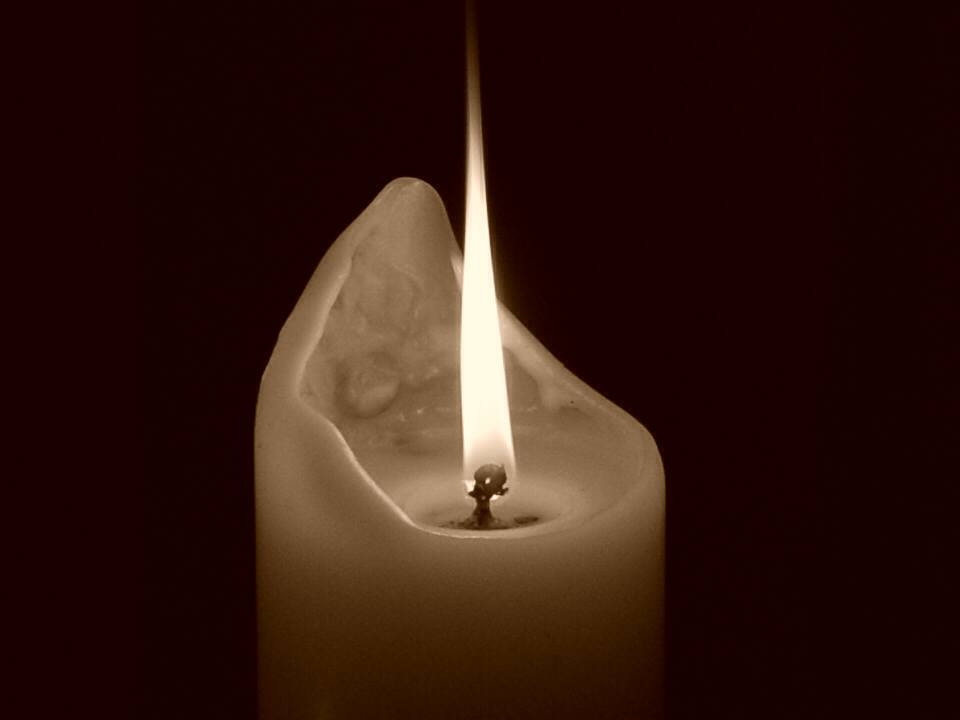 undamentally is the celebration of our unique Christian belief that God is present not simply in some spiritualized “out there” kind of way, but that God – in the person of Jesus of Nazareth – became present in human life and human history in the most intimate way possible … by becoming one of us. Christmas is the celebration of God’s presence in all aspects and absolutely every dimension of life: Present in all of Creation, but most especially in each and every human person – young, old; black, white; male, female; gay, straight; rich, poor; documented, undocumented; Christian, Muslim, Jew; atheist, believer – whatever labels or categories or dichotomies we can think of, none of them diminish that belief. And yes, despite rumors to the contrary, God is even present in a few bishops!
This was in the back of my mind when that read that opening line from the Prophet Isaiah, and I think it struck me for a couple of reasons. “A people who walked in darkness have seen a great light.” First, we all know what it’s like to be in darkness. The countless darknesses and burdens of human life are too numerous to mention. Collective and social darknesses such as war and violence and poverty and exclusion and discrimination – you know as well as I how much these burden our world. More personally, I daresay each one of us could come up with a list of those darknesses in our own lives that hinder us from seeing that Presence of God which Christmas reminds us of.
But what jumped at me most of all was this: Isaiah doesn’t say the people were stuck in the darkness, or that they languished in the darkness or that they became embittered in the darkness. No … the prophet says they were walking in the darkness. In some way that may seem counterintuitive, and maybe even a dangerous and treacherous, bringing, as it does, the possibility of stumbling and falling in the midst of darkness. But it especially challenges us in that no matter where we find ourselves – even in what might seem like the darkest of times – our task and our challenge is to keep moving. No matter what darknesses may be around us today – in our own lives, our communities, our country, our world, our church – the important thing is that we keep walking, that we keep moving forward, that we continue to seek that Light which Isaiah also says is the source of abundant joy and rejoicing.
Let me end by sharing another scripture passage that speaks of darkness and light. While instilling great hope within us, may it also reminds us of the journey that lies ahead, leading us to the fullness of what this night assures us is already ours: “In the tender compassion of our God, the dawn from on high shall break upon us, to shine on those who dwell in darkness and the shadow of death, and to guide our feet into the way of peace.”
Merry Christmas, and may the peace of the Babe of Bethlehem, the Crucified Christ, be yours now and always!
Cardinal George Crosses the Line
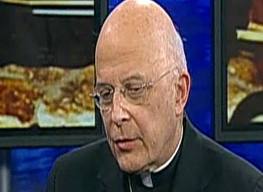 At first, one might think that Cardinal Francis George’s uncharitable comparison of the gay rights movement to the Ku Klux Klan was simply an unfortunate, off the cuff comment. Watch the video of the interview with the local Fox station in which the comment was made, and you might have a different impression. George is polished man when it comes to media interviews, and both his KKK reference and response to the pointed, followup question seem just a bit too prepped.
What should have been a story about how the LGBT community adjusted the schedule of its annual Pride Parade out of respect for the worshiping community at Our Lady of Mount Carmel parish has since become yet another example of how certain individuals in the Church’s hierarchy will go out of their way to speak ill of gays and lesbians. As Equally Blessed correctly states, the Cardinal’s comment is truly “unworthy of his office.” I would go even further. Such a statement is mean-spirited and damaging, not to mention simply untrue.
In these final days of the Advent Season, Catholics and all Christians look forward to celebrating the birth of Jesus and the presence of the Living God in all creation, especially in each and every person who reflects the image of the Divine. His Eminence’s hurtful and hateful words tarnish him more than they do those of whom he spoke.
Commonweal’s Christmas Cookie Recipe (Missale Romanum Version)
This recipe appears at dotCommonweal, blog of Commonweal Magazine.

Gay Men Mocking Nuns: UPDATE
This is an update with related information to my earlier post calling for an end to using Catholic religious women — i.e. sisters and nuns — as fodder for humor and cheap laughs.
- This promotional review of the performance provides several images of GMCW members dressed like nuns, singing and dancing.
- And this Washington Post story from earlier this month starts off with a reference to the “dancing nuns” rehearsing.
So, tell me again … why is it funny to make fun of Catholic religious women who have devoted their lives to doing good as nuns and sisters? Granted, many LGBT Catholics have legitimate beefs with the Catholic Church. Many of us feel rejected, unwelcome, and at times even demonized. But rarely, if ever, did this rejection come from religious women. In fact, it has been communities of religious sisters who have often stood up to the power of bishops and others and promoted an atmosphere of respect and welcome for gays and lesbians in the Church. So why is it funny that we repay them with such mockery?
The answer is, it isn’t. This isn’t funny, it’s not OK, and it should stop.
Let’s Stop Mocking Religious Women
 So I went to the Gay Men’s Chorus of Washington (GMCW) Red & Greene holiday concert last evening. It was the first of four performances of this annual event here in DC, and usually has a delightful mix of serious and light hearted entertainment. Last night was no exception. I was entertained, I laughed, and was even moved at times. I’m no drama/theater/music critic, so this isn’t a “review” (if you can go, I recommend going!), but there was one piece last evening which irked me.
Here’s what it was, and here’s why.
Shortly into the second part of the show, the part that is usually more funny and a bit campy, a group of chorus members performed dressed in black habits — the generic habit one sees when someone wants to “dress up as a nun.” They all had names that were variations of Sister Mary Something — the French accented Sister Mary Antoinette with a large white pompadour; the Latina Sister Mary Juana with … well, you get the picture. The performers were talented and the parodied lyrics of familiar Christmas songs were certainly clever and witty.
In Catholic parlance, “religious” can be a noun, and “a religious” is a woman or man who takes certain vows, lives in community, and spends her/his life in prayer and service. Now, even most Catholics would look at last night’s skit and see the humor in it, or at least the intended humor. But I knew in my gut that I didn’t like it. Even my companion — a non-Catholic — at one point leaned over and, with a reference to San Francisco’s famous (or infamous) Sisters of Perpetual Indulgence, said he never understood why dressing up as nuns was funny. And, to be blunt, I don’t either. I found it offensive and sexist. Religious women (interchangeably referred to as sisters or nuns, though there is a difference) seem to be fair game within the LGBT community when it comes to groups or types of people to make fun of.
You’d think we’d know better.
Just earlier this week I received a Calll It Out alert from HRC seeking support for its very legitimate appeal to ABC about its upcoming show, “Work It.” The premise of that show appears to be that two straight men feel the need to dress up as women in order to get jobs. As HRC puts it, such shows make light of the “very real challenges transgender Americans face,” and it asks supporters to Call It Out, reminding us that transgender people are “worthy of the same dignity that all Americans deserve.”
Actions like this, which challenge us to re-think our received ways of thinking and seeing — especially when it comes to the ways we think of and see others — is what makes me proud of such efforts from within the LGBT community.
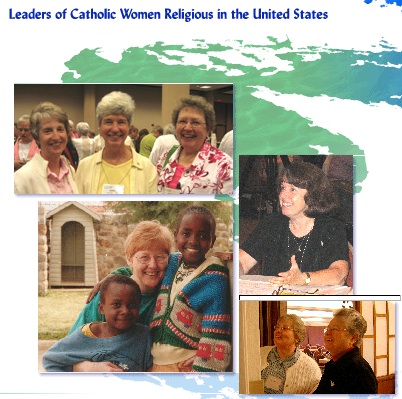 Catholic religious women have historically been the unsung heroines of pastoral ministry in the Church (and, I would say, society). They are the ones who teach and heal and comfort and nurture and care for others each and every day. They typically do so quietly, without much fanfare or recognition. They also are active promoters of Gospel values by seeking social justice, advocating for the poor and the “least among us” by challenging ecclesial, social, and political institutions, often being the voice of those who can’t speak for themselves.
Currently, there are over 55,000 women religious in the US in many and varied ministries, doing good and transforming the world. Aren’t they also “worthy of the same respect all Americans deserve”? Let’s stop using these good women as cheap props and easy targets in gay skits, Pride Parades, and drag shows. They deserve better, and we should know better!
“Thy Kingdom Come” …but maybe not just yet??
“We can’t keep saying ‘Thy kingdom come’ when we are actually trusting in our own nations, political parties, militaries, banks, and institutions to save us.”
 This phrase jumped out at me this morning from Richard Rohr’s daily meditation. It seems particularly relevant as the presidential electoral battle continues to heat up here in the US, as the marketing for Christmas is in high gear, and as we are challenged once again to ask ourselves what we who call ourselves Christian really and truly believe as December 25 approaches.
We must remember that if our actions indicate we worship anything less than God — money, country, success, fame, other people, or especially ourselves — then this is idolatry.
The Right Side of Salvation History
 During her recent and much acclaimed speech in Geneva, Secretary of State Hillary Clinton challenged the world to live up to the principles of the Universal Declaration of Human Rights and recognize the inherent dignity of LGBT people around the globe. In doing so, she shared with her UN colleagues that human rights advocates in the US often call upon political and other leaders to be “on the right side of history” and remember that no good has ever been achieved by a contraction of the rights individuals enjoy in civil society. On the contrary, history bears out that it is only through an expansion of rights to groups previously excluded has progress been made in advancing the goals of equality and justice the 1951 Declaration espouses. Inclusion, not exclusion, has always been the path of progress.
A similar challenge can and should be made to Christian leaders who cite biblical passages out of context or institutional “teachings” limited by time and culture when they take positions against the civil and religious rights of God’s LGBT children. Just as it is possible to be on the wrong side of history, so too it is possible to be on the wrong side of Salvation History.
Generally speaking, the notion of Salvation History rests in the fundamentally Christian belief that God is active in our world. It recognizes the Mystery of the Incarnation in the concrete and sees the Hand of God not as some divine puppeteer pulling the strings in our daily lives, but rather as the presence of the Spirit Whose ways are simultaneously known and unknown, manifest and hidden. We don’t always know what is of God and what is not, but we believe that God is present and at work in all creation.
For those who do believe that every human person is a reflection of the Divine; for we who struggle each day to allow that image and likeness of God within us to be seen more clearly, despite our faults and failings which all too often dull the brightness of that beautiful image, how can we make sense of such labels as “objectively disordered” and other terms describing gay and lesbian people as somehow “less than” their straight sisters and brothers?
The simple, truthful answer is we can’t. The Truth that all people reflect the Image of God and the “teachings” about homosexuality put forth by many Christian communities, including my own Catholic Church, are simply irreconcilable. One perspective will be on the right side of Salvation History, and one will not. I’m putting my nickel on the Truth.
The [Real] Meaning of Marriage
This touching video describes the love and shared lives of two men, clearly married “later in life.” It’s worth a few minutes of your time.
- “Why would anyone not want to foster love? It’s as simple as that.”
- “As my brother went down the path of advanced AIDS…. I saw his trust in Dave… and the care Dave gave him….My husband said, I don’t think I could do for you what Dave is doing for Carl… I’ve never seen greater love than that.” — Carl’s sister.
- “I thought it was awesome, I thought it was great! — Carl’s son on his father’s relationship and marriage to Dave,
- “The way Davey would take care of my father….that was remarkable to me.”
- “I was given an opportunity to care. ” — On caring for his husband Dave as he was dying with AIDS.
- “I saw in their relationship the fruits of the Spirit.” — The couple’s pastor in Arkansas.
The Advents of God: Past, Future, and Every Day In Between – Homily for the 2nd Sunday of Advent
2nd Sunday of Advent – December 3/4, 2011
For the communities of Dignity/NoVA at Emmanuel Church-on-the-Hill in Arlington, VA and Dignity/Washington at St. Margaret’s Episcopal Church, Washington, DC.
If I were to ask you to come up with a short list of words that characterize Advent for you, I suspect most of us would include the words “waiting” and “patience.” In fact, during his homily last weekend, something that our homilist said about patience really caught my attention and gave me pause. Perhaps you remember that our homilist asked the rhetorical question whether we, as gay Catholics, have something to teach the wider Church about the nature and value of patience, given the degree of patience that we and those who have gone before us have had to demonstrate as we wait for society and Church even still to recognize our full humanity and the wholeness and holiness of our sexuality.
And so as we think about patience and the value of waiting during this Advent season, a couple of questions come time mind. The first is … who is coming, for whom are we patiently waiting? And the second is … how will we know him when we see him?
Unlike Vladimir and Estragon, the characters in Samuel Becket’s existentialist play, “Waiting for Godot,” we are not waiting for someone who never shows up. Despite their being told that Godot will surely come tomorrow, we know that in this dramatic presentation from the Theater of the Absurd, Godot will not come tomorrow, nor any tomorrow thereafter. Of course, the fact that the title character never arrives suggests that he doesn’t even exist. For we who believe, however, just the opposite is true. We wait for God whom we know will come – and we know this precisely because God has already come. Probably more important than the fact that God has come in time in the past, and out belief that God will come again in the future … is our belief that God does come and is coming into our daily lives each and every day. That’s the fundamental message of the feast we are preparing to celebrate, isn’t it? The message of Christmas – without which there is no Christianity – is that God became incarnate, in time, in the very flesh and blood of humanity. Christmas also means that this Incarnation was not limited to one time, one place, one person. But it means that the Incarnation is for all time, all places, all persons.
Even if our faith is strong in answering the “Who” question, I wonder if the “how” question challenges us just a bit. Here’s what I mean. Our faith tells us that God came in the person of Jesus two thousand years ago; and it also tells us that God will come again in glory at the end of time. But what about now? What about these “in between times” before the First and Second Comings? Do we also believe that God is coming into our world and our lives right now? Do we have eyes to see the presence of God all around us, even at this very moment? Do we really believe that the Incarnation of the Divine in Jesus of Nazareth was precisely to remind us of the Incarnation of Divine in the flesh and blood lives of every woman, man and child on the face of the earth?
I put that question not only to the wider church and all who claim to be followers of Jesus; I put that question not only to all of you gathered here tonight; but I put that question also to myself … because if the answer is “yes,” If I say that yes, I do believe that God is present here and now in me, then what does that belief tell me about the way am – or should be – living my life? What does that say about the things I do or don’t do? … about the choices I make or don’t make? … about the love I give or fail to give others who are in my life?
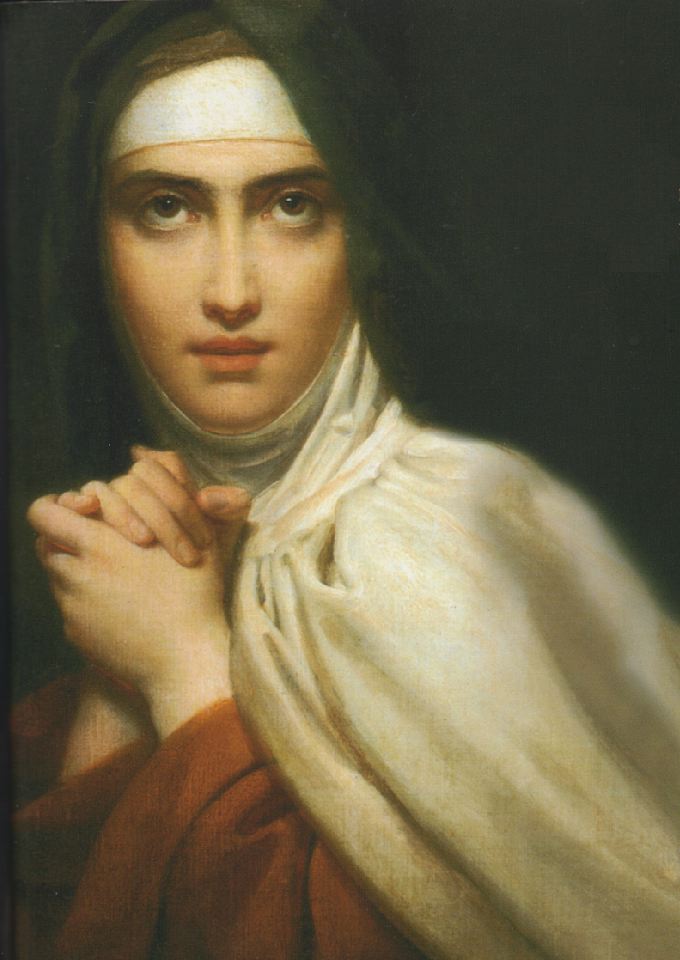
St Teresa of Avila, Doctor of the Church
One of the greatest mystics of our Catholic tradition was Teresa of Avila, the discalced Carmelite nun who, with little formal education or training, wrote deeply and profoundly about the marriage of the human and the divine. In her most developed book, Interior Castle, Teresa writes about the human soul describing it as a castle made of a single diamond; and within that castle are seven mansions that lead closer and closer to ultimate union with God. Teresa – writing for her sisters to help them on their own spiritual journeys of faith – answers my second question and tells us very clearly how we will know when God is present. Teresa reminded her sisters and reminds us across the centuries that even when we are engaged in what some might call “worldly” activities, in the daily “stuff” of every day life of – in both its pleasures and its struggles, in both our successes and our shortcomings – it is in the midst of all this that God comes into our lives, hearts and our souls.
Teresa wrote: God’s “appeals [to us] come through the conversations of good people, or from sermons, or through the reading of good books; and there are many other ways, of which you have heard, in which God calls us. Or they come through sicknesses and trials, or by means of truths which God teaches us at times when we are engaged in prayer.”
Teresa reminds us that God comes to us through the life of someone in whom we can see beauty and truth. God comes to us in the wonder of nature, the crispness of an autumn day, and the stillness of a breath-taking sunset. God comes in the love of another person who loves us so deeply and so unconditionally that our defenses are lowered and we dare to accept the fact that we are lovable. God comes when we gather with friends and family to share a meal, when we reach out a hand to someone we’ve hurt, or even simply to someone who is alone and for whom solitude is less a choice and more simply just the way life is. God comes when we give without fanfare or recognition to those in need – especially when we give not from our bounty, but from our necessity. Most of all, she reminds us that there is no limit to the countless ways in which God comes into our daily lives. Perhaps that’s we need especially to hear; that during this busy, over-scheduled and distraction-filled time of year, we need to be reminded that every step along the way, every word we speak, every action we take, every person we meet … these all have within them the possibility to be encounters with God incarnate in our world.
 Image and Likeness