Thank you, Cardinal George

Most of us are pretty good at calling someone out when they say mean, untruthful, or outrageous things.  Thus, it was no surprise that recent remarks made by Chicago’s Catholic archbishop, Cardinal Francis George, comparing the gay rights movement to the Ku Klux Klan were met with justified outcry and condemnation.

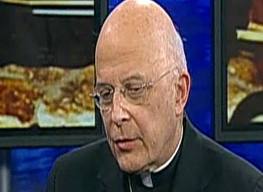
Cardinal Francis George

Cardinal Francis George, Archbishop of Chicago

The Chicago Tribune is reporting today that His Eminence has publicly apologized, stating that he is “…truly sorry for the hurt my remarks have caused.”

Just as quickly as we stand up against that which is wrong, we must also stand up quickly in support of that which is right.

Cardinal George deserves to be thanked for recognizing the real impact of his words and the potential harm they could have done, had they been left as is. He should also be thanked for providing the example of what any Christian should do whenever he recognizes he has made a mistake. The simple word “sin” has many variations in our Hebrew and Greek patrimony. Among these various terms are words that mean “missing the mark” or suggest that a relationship has been harmed or broken. Cardinal George’s apology publicly recognizes that whatever point he was trying to make, his comparison to the KKK was way off the mark. He also recognizes that words are powerful — they can both build up and tear down. While they can never be unspoken, they can and must be corrected whenever we realize that something we have said has done harm to others. This, Cardinal George has done. And for that, he should be thanked.

My prayer this Saturday morning is that the Cardinal’s apology will be welcomed and met with forgiveness. Perhaps this will be the dawn of a new day in the Church, and I pray that a spirit of reconciliation will help create an atmosphere of openness and dialogue between Church authorities and those of us who seek a deeper and richer theology of sexuality in light of the lived experience of God’s LGBT children.

What’s the difference, really??

Here are two current stories about two very similar men whom the Catholic Church treats very differently.

The first is a man who followed a call to ministry, was ordained a priest within his church, and eventually became a bishop. Because that church allows priests to be married, Jeffrey Steenson also has a wife, three children, and even a grandchild.  Steenson, the former bishop of the Episcopal Diocese of the Rio Grande, Albuquerque, NM has since left the Anglican Communion, been welcomed into the Catholic Church and ordained a Catholic priest.  Most recently he was appointed head of a new Ordinariate intended to smooth the transition to the Catholic Church for Episcopalians who, for whatever reason, feel called to swim the Tiber. Although Fr. Steenson will not be permitted to become a bishop, his new position essentially gives him all the administrative authority of a bishop and he will even be a voting member of the US Conference of Catholic Bishops.

The second man also followed a call to ministry within his church, and was similarly ordained both a priest and a bishop.  Though I don’t presume to know anything other than what is being reported today, Gabino Zavala apparently also felt called to the intimacy of a marital relationship and family life, and recently revealed that he is the father of two teenage children.  In the current structures of Catholicism, however, the requirement of mandatory celibacy makes all this a big “no, no.” And so, today’s big news is that the Pope has accepted Zavala’s resignation as an auxiliary bishop of the Archdiocese of Los Angeles. The Vatican announcement of this news cites that part of Canon Law (can. 401§2) which allows for the resignation of a bishop prior to the established retirement age of 75 due to ill health or “some other grave cause.”

Putting aside the fact that Bishop Zavala did not live up to the imposed requirement in the Western Church that priests and bishops be celibate, the question remains:  At a substantive, material level, how are these two men really different, and why does the Catholic Church treat them so differently?

How About a Prayer for All Marriages (And All Committed Relationships Rooted in Love)?


(My comment to an article on the Huffington Post. Read the Article at HuffingtonPost)

“While Nienstedt has every right to write a prayer of exclusion and insert it into the Mass…” Actually, Archbishop Nienstedt does NOT have this right. Catholic Liturgy is public prayer, it is communal prayer. The Eucharisti­c Liturgy, commonly referred to as the Mass, is the epitome of Catholic Liturgical life and it is precisely NOT subject to the whims of individual­s, including the bishop of a particular diocese (if it were, there would not continue to be such concerns about the recently re-transla­ted Roman Missal).

Reading the letter that accompanie­d the introducti­on of this “prayer” on the archdioces­an website, it’s hard to tell whether Nienstedt was directing that this be included in Mass (as part of the “Prayer of the Faithful”)­, or whether it was merely a very strong suggestion­. In either case, the insertion of such a text which clearly does not reflect the “prayer of the Faithful” is a scandalous abuse of his authority as the bishop of that diocese. My prayer is that pastors and priests simply ignore this call.

Cardinal George Crosses the Line

At first, one might think that Cardinal Francis George’s uncharitable comparison of the gay rights movement to the Ku Klux Klan was simply an unfortunate, off the cuff comment.  Watch the video of the interview with the local Fox station in which the comment was made, and you might have a different impression.  George is polished man when it comes to media interviews, and both his KKK reference and response to the pointed, followup question seem just a bit too prepped.

What should have been a story about how the LGBT community adjusted the schedule of its annual Pride Parade out of respect for the worshiping community at Our Lady of Mount Carmel parish has since become yet another example of how certain individuals in the Church’s hierarchy will go out of their way to speak ill of gays and lesbians. As Equally Blessed correctly states, the Cardinal’s comment is truly “unworthy of his office.” I would go even further. Such a statement is mean-spirited and damaging, not to mention simply untrue.

In these final days of the Advent Season, Catholics and all Christians look forward to celebrating the birth of Jesus and the presence of the Living God in all creation, especially in each and every person who reflects the image of the Divine.  His Eminence’s hurtful and hateful words tarnish him more than they do those of whom he spoke.

Gay Men Mocking Nuns: UPDATE

This is an update with related information to my earlier post calling for an end to using Catholic religious women — i.e. sisters and nuns — as fodder for humor and cheap laughs.

  • This promotional review of the performance provides several images of GMCW members dressed like nuns, singing and dancing.
  • And this Washington Post story from earlier this month starts off with a reference to the “dancing nuns” rehearsing.

So, tell me again … why is it funny to make fun of Catholic religious women who have devoted their lives to doing good as nuns and sisters? Granted, many LGBT Catholics have legitimate beefs with the Catholic Church. Many of us feel rejected, unwelcome, and at times even demonized.  But rarely, if ever, did this rejection come from religious women.  In fact, it has been communities of religious sisters who have often stood up to the power of bishops and others and promoted an atmosphere of respect and welcome for gays and lesbians in the Church.  So why is  it funny that we repay them with such mockery?

The answer is, it isn’t.  This isn’t funny, it’s not OK, and it should stop.

Let’s Stop Mocking Religious Women

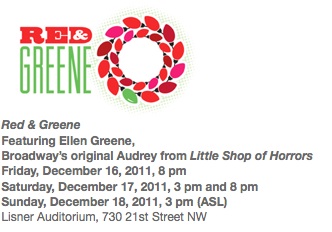
So I went to the Gay Men’s Chorus of Washington (GMCW) Red & Greene holiday concert last evening.  It was the first of four performances of this annual event here in DC, and usually has a delightful mix of serious and light hearted entertainment. Last night was no exception. I was entertained, I laughed, and was even moved at times.  I’m no drama/theater/music critic, so this isn’t a “review” (if you can go, I recommend going!), but there was one piece last evening which irked me.

Here’s what it was, and here’s why.

Shortly into the second part of the show, the part that is usually more funny and a bit campy, a group of chorus members performed dressed in black habits — the generic habit one sees when someone wants to “dress up as a nun.”  They all had names that were variations of Sister Mary Something — the French accented Sister Mary Antoinette with a large white pompadour; the Latina Sister Mary Juana with … well, you get the picture. The performers were  talented and the parodied lyrics of familiar Christmas songs were certainly clever and witty.

In Catholic parlance, “religious” can be a noun, and “a religious” is a woman or man who takes certain vows, lives in community, and spends her/his life in prayer and service.  Now, even most Catholics would look at last night’s skit and see the humor in it, or at least the intended humor.  But I knew in my gut that I didn’t like it.  Even my companion — a non-Catholic — at one point leaned over and, with a reference to San Francisco’s famous (or infamous) Sisters of Perpetual Indulgence, said he never understood why dressing up as nuns was funny.  And, to be blunt, I don’t either.  I found it offensive and sexist.  Religious women (interchangeably referred to as sisters or nuns, though there is a difference) seem to be fair game within the LGBT community when it comes to groups or types of people to make fun of.

You’d think we’d know better.

Just earlier this week I received a Calll It Out alert from HRC seeking support for its very legitimate appeal to ABC about its upcoming show, “Work It.” The premise of that show appears to be that two straight men feel the need to dress up as women in order to get jobs. As HRC puts it, such shows make light of the “very real challenges transgender Americans face,” and it asks supporters to Call It Out, reminding us that transgender people are “worthy of the same dignity that all Americans deserve.”

Actions like this, which challenge us to re-think our received ways of thinking and seeing — especially when it comes to the ways we think of and see others — is what makes me proud of such efforts from within the LGBT community.
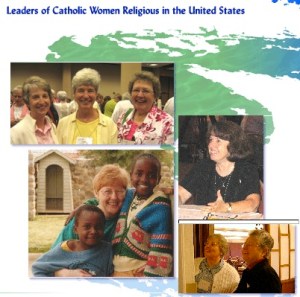
Catholic religious women have historically been the unsung heroines of pastoral ministry in the Church (and, I would say, society).  They are the ones who teach and heal and comfort and nurture and care for others each and every day. They typically do so quietly, without much fanfare or recognition. They also are active promoters of Gospel values by seeking social justice, advocating for the poor and the “least among us” by challenging ecclesial, social, and political institutions, often being the voice of those who can’t speak for themselves.

Currently, there are over 55,000 women religious in the US in many and varied ministries, doing good and transforming the world.  Aren’t they also “worthy of the same respect all Americans deserve”?  Let’s stop using these good women as cheap props and easy targets in gay skits, Pride Parades, and drag shows.  They deserve better, and we should know better!