
Category Archives: TFTD-Thought for the Day
Occasional thoughts from others (and sometimes me) to ponder throughout or just part of the day.
Democracy: America’s Unopened Gift to the Church
We have a mission and a mandate, in independence and baptism, that will not allow slavery again in this nation, this time under the guise of religious tyranny. For we have been called to freedom by something even more awesome than the Declaration of Independence. We have been called to freedom by Christ. [emphasis added]
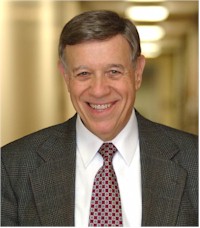
Anthony T. Padovano
That’s the closing paragraph of Chapter 2 in Anthony T. Padovano’s book, A Path to Freedom. The chapter’s title, The American Catholic Church: Assessing the Past, Discerning the Future, gives a sense of what it’s about. Padovano argues convincingly that we are in a unique moment in history where the ideals of American democracy can and must continue to push for reform within the Catholic Church.
Padovano is not naive. He notes:
The fact that Americans cannot bring democracy … to the Catholic Church at large is the single greatest failure of American Catholicism. The fact that American bishops repeat enthusiastically that the Church must not be a democracy is anti-American and anti-Christian. … Loyalty to Christ, after all, is not essentially connected with monarchy and ecclesial feudalism.
Democracy is without doubt the greatest gift that America has given to the world. Our system is not perfect, to be sure, but the ideals enshrined in our founding political documents envision a world very different from the world in which they were written. Those of us who’ve been both raised and long-educated in the the spirit and practice of Catholicism will agree that the values of democracy are not only consistent with but are natural sisters to the ideals of Catholicism’s world-view where charity, justice, and all God’s People live in freedom. Let me be clear: by Catholicism I mean the Catholicism of the broad universal Church with its rich tradition of intellectual rigor and pastoral sense of mission, and not the “Catholicism” that is increasingly characterized by anachronistic liturgical practice and a childish adherence to rules meant to form and guide and lead to freedom, not to squelch and imprison and lead to a slavery of the soul.
When and how will this gift of democracy be received by the institutional Church? Padovano notes some movement toward this over the past century, though that movement has been marked both by periods of great progress, as well as periods of retrenchment. It seem that this is where we are now, in a period where forces within the papacy, the episcopacy, the clergy and even among the laity are hearkening back to a fantasy vision of the Church they think once existed, but never really did. In noting a list of pressing pastoral issues that a small group of US bishops identified in 1995, this one seems to be the most overarching and is behind so much of what we see today: it’s the practice of Presenting the minority position of Vatican II as though it were the majority.
As American Catholics try to find a way forward during these challenging times, Padovano’s words are worth remembering … again, and again, and again.
We have come this far with broken hearts and bruised spirits, betrayed too often by shepherds who became predators and preyed on our trust. But no more. We ourselves were not always sinless. But the crimes of democracy are always less than those of tyranny. We are free of that now.
Amen!
These are some of my thoughts; what are yours? Would love to read your comments and feedback.
TFTD: Forgiveness and Reclaiming our Human Dignity
 Almost by definition, forgiveness is a mutual act. There is both the one who forgives, and the one who is forgiven. Forgiveness is one piece of the more full and all-encompassing act of reconciliation, by which not only is a wound healed, but a broken relationship is restored.
In my own experience, there are two lessons about forgiveness that have been hard for me to learn. The first is that giving forgiveness — at least forgiveness that’s worth giving — is not a singular act. No, it is something that must happen over and over until my own heart is healed and the need to forgive no longer exists. This is the lesson of the so-called Parable of the Unforgiving Servant in the Gospel of Matthew (18:21-22):
Then Peter approaching asked him, “Lord, if my brother sins against me, how often must I forgive him? As many as seven times?” Jesus answered, “I say to you, not seven times but seventy-seven times.
The second lesson about forgiveness may be even more of a challenge. It’s the challenge to forgive even when the other person does want, request, or even acknowledge the need to be forgiven. In some sense, this is almost like a second injury. It’s one thing to be hurt deeply by another person; it’s another thing to have that injury ignored, minimized, or otherwise unseen and unacknowledged. And yet … even in such situations as this, forgive we must. As Henri Nouwen writes,
But if our condition for giving forgiveness is that it will be received, we seldom will forgive! Forgiving the other is first and foremost an inner movement. It is an act that removes anger, bitterness, and the desire for revenge from our hearts and to reclaim our human dignity...The only people we can really change are ourselves. Forgiving others is first and foremost healing our own hearts. (Bread for the Journey, January 27, emphasis added)
Forgiveness is first and foremost something we do for ourselves, and we do so because failing to forgive means we are carrying around a weight and burden we don’t need. Failure to forgive is an act of self-injury.
Is there someone I need to forgive today, whether or not he/she knows it? Let today be the dawn of a new day — the day I take one step along the path of forgiveness, a path that leads me to reclaim the fullness of my human dignity and healing my injured heart.
All images © 2012 Timothy MacGeorge
Aloneness, Solitude, and Community
I often struggle with loneliness. Despite the fact that I have lived alone for the past ten years, the solitariness of being single is at times overwhelming. In his meditation for January 22 in Bread for the Journey: A Daybook of Wisdom and Faith, the late Henry Nouwen has this to offer:
Community Supported by Solitude
Solitude greeting solitude, that’s what community is all about. Community is not the place where we are no longer alone but the place where we respect, protect and reverently greet one another’s aloneness. When we allow our aloneness to lead us into solitude, our solitude will enable us to rejoice in the solitude of others. Our solitude roots us in our own hearts. Instead of making us yearn for company that will offer us immediate satisfaction, solitude makes us claim our center and empowers us to call others to claim theirs. Our various solitudes are like strong, straight pillars that hold up the roof of our communal house. Thus, solitude always strengthens community.
 I venture that Nouwen would also say the layer between solitude and community — relationship with another — is likewise nurtured by the fruits of allowing our aloneness to lead us into solitude. When we know and are at home at that center where we can breathe deeply and profoundly and simply be who we are — it is then that we are best able to move beyond our center and relate with the “other.”
And in this relating, Love lives most fully.
All Images © 2012 Timothy MacGeorge
Platonists or Christians?
Richard Rohr’s Meditation for Today. In part…
Matter and spirit have never been separate, says the Christ Mystery. We live in One United Whole; there is no sacred and profane, no natural and supernatural. All is sacred and supernatural inside of the One Christ Mystery, who “reconciles all things in Himself.”
TFTD – Christ our Hero
From Richard Rohr’s, On the Threshold of Transformation: Daily Meditations for Men:
Day 4: The Holy Grail
In culture after culture, much has been written about blood. It holds deep, archetypal meanings in all storytelling, both as the ultimate energy of life and the ultimate symbol of death. The Eucharist speaks to this dramatically; we are taking in the essence of another, and it speaks on a cellular, physical level. This is deeply transformative if we allow it to be. Quite simply, we become what we eat and drink.
This experience has lost some of its power. In ancient rites, men sometimes drank the blood of their elders and heroes. The Eucharist has at times become an antiseptic caricature of the original Supper, complete with lace on the altar and priests dressed in silk. This distracts us from the graphic symbol: we are drinking the blood of our hero — Christ — and are now one with him.
 Image and Likeness