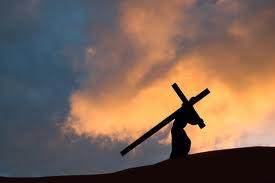
Anger, Advent and Hope

Yesterday, I was a little down. This is my second “holiday season” as a single man, a relationship status not of my choosing, but is mine nonetheless. As a single man of a certain age (!), it’s not always easy constantly encountering the sights and sounds of family togetherness and happy couples holding hands, knowing that the vast majority of my own time is spent by myself and not with the person I had hoped to share life with.

I am self-aware enough to know that this was part of the reason for being down (or “low energy,” as a dear friend euphemistically describes it); and also self-loving enough to do things to get out of myself and become more engaged with others and the world. All this notwithstanding, I also began to realize how very angry I have become. Angry not only because I had little say in my now being single, but especially at the Church, that is, the institutional Church and its officials. Looking through the many Twitter feeds, blogs and news sources I follow, I felt my anger in a way I hadn’t felt before.

Oh, I know I’ve been angry at bishops and others who claim to speak for the Church for a long time. I love the Church; it is and always will be my family. But anger is a natural response when the family you love denies your full humanity, says you are “intrinsically disordered,” and uses its power to maintain your status as a second class citizen by denying you the civil rights your straight brothers and sisters have. Anger is also a natural response when such exclusionary positions are embraced precisely by those who claim to be shepherds, called to bear witness to the presence and love of Christ.

And so I prayed. I prayed last night that this Advent might help me find ways to respond to this righteous anger not by denying it or letting it rule me, but by allowing the Spirit to transform it into something good. How can I not see the reading from today’s Morning Prayer as a response to that prayer, filling me with hope?

“Do not fear, for I have redeemed you;
I have called you by name, you are mine.
When you pass through waters, I will be with you; through rivers, you shall not be swept away.
When you walk through fire, you shall not be burned, nor shall flames consume you.
For I, the Lord, am your God, the Holy One of Israel, your savior.”

(Isaiah 43:1b-3a)

5 Key Elements of a Truly Human Spirituality

Last weekend I had the great privilege of participating in a retreat sponsored by New Ways Ministry for Catholic gay clergy/religious who are no longer in active or “official” ministry.  As I mentioned earlier, the retreat was facilitated by theologian and writer Anthony Podovano. I was blessed to be part of a small group given a unique opportunity to listen to, learn from, and spend time with someone who has had such an important role in the life of the Catholic community for over five decades.

5 Key Elements of a Truly Human Spirituality — helping us answer the questions, what is religious experience (as distinguished from mere religion) and what is necessary for a valid spirituality? –  In order to answer these questions and to be accurately reflective of true spirituality, something must be present in every instance of humanity. We must also recognize that no person or class or group is ever truly “privileged,” although it might appear as such to those not part of the purported privileged group.  We need to avoid thinking that life or simply being human is ever “easier” for one person, one era of history, one group, etc. than any other person, era or group.  “Golden ages are called such by those who weren’t forced to live through them.”

1. Transcendental Imperative:  All people make enormous efforts to “get out of ourselves,” to get beyond themselves.  It is part of being human to constantly reach outside and beyond ourselves.  The greatest joys in life come from relationship with others, from friendship, marriage, connection with other human beings.  Aquinas said that without friendship, life is not worth living. To be friendless is to be truly bereft.  Believers simply say that God is the end of this process; but non-believers and atheists are also on this same journey, the journey on which we want/desire a companion on the way.

2. Life is Mystery:  Life is always unpredictable, always more than we can handle, and not subject to calculation. While ignorance is something I don’t know, Mystery is something I can’t know! Mystery works on the notion that the more data I have, the more unknowing/mysterious it becomes. E.g. the more we know about the development of the human person from the moment of conception, the more mysterious human development becomes. The more we know (i.e. the more data we have) about the universe/cosmos, the more mysterious the universe/cosmos becomes.

3. Community / Belonging:  the connections we make to others are essential. The real crisis in the church today is not what itsays, but that some people don’t feel home there anymore.  Why would a gay person “go home” to the church? Why would a woman who has had an abortion, or a person who is divorced, etc. want to “go home” to the church? The real contemporary heresy of the church is more related to its exclusion of so many and less than with its dogma.

4. Hunger for the Sacred: The secular is that which we need, but to which we cannot make commitments without it destroying us. I need food, clothing, shelter, money; but if I commit to these, they will destroy me. [Black Friday and unbridled consumerism!] If I give myself to food, clothing, shelter, money, “stuff,” etc. then I am consumed by them. The sacred is that which we also need; but our commitment to the sacred does not destroy us, it ennobles us. Love – love is inexhaustible. [Bishops and all who oppose same-sex marriage, are you listening?] Forgiveness – one cannot forgive excessively. Wisdom. Hope. Joy.  The whole world is hungry for the sacred … and we only turn to the secular when we despair of the sacred.  cf. Philip Slater’s  Wealth Addiction. When we commit to the secular, we need greater and greater amounts to satisfy, and yet get less and less in return (and are never fully satisfied).

5. Correlation of Reverence and Revelation:  You can only truly see what you reverence, and also reverence what you truly see.  If I don’t reverence a flower … I never really see the flower.  People who reverence each other reveal themselves to each other.  If we don’t feel reverenced, we shut down and no longer reveal ourselves. Revelation without Reverence is Brutality (e.g. sexuality, nakedness, intimacy or rape).

  • “Intellectual” arguments for the existence of God do not move us.
  • A church that does not reverence us has nothing to tell us.
  • Obedience is not submission – it’s attentiveness (from the Latin  “to hear”).
  • The wonderful thing that Jesus did with the pariahs of society is give them back to themselves – woman “caught in adultery,” Zacchaeus, Mathew.  Note that in doing so, he absolutely did not condemn them.
  • The “industry of the church” will depress us.
  • Do we really think God would abandon us if we sought God in another way? (e.g. Thomas Merton’s fascination with Buddhism)


Sally Quinn’s Five Lessons after Five Years “On Faith”

I’m glad that The Washington Post publishes its On Faith section regularly. I was disappointed, however, in Sally Quinn’s reflections on five years of managing this important forum for discussion and mutual education.  Her Five lessons from On Faith makes one wonder how much she was paying attention, especially given her final statement that the one thing she knows is that God is whoever anyone of us says God is.

Here’s my comment that I posted there:

While this article has a few good points (especially the reminder about the common search for meaning, a la Viktor Frankl, that is present in all human cultures and times), on the whole Ms. Quinn doesn’t seem to have learned much in five years, at least not much about what religions and faiths and spirituality at their best do for humanity. 

Ms Quinn, do you realize the utter absurdity of concluding an article about “lessons on faith” by stating, “God is what you or I or anyone else says God is,” and then following this with the statement, “This I know”??? By definition, “faith” cannot be “known.”  If it were knowable, it would not be faith.

The Latin root of the word “absurd” means deaf. You say you came to the perspective that God is whoever or whatever anyone of us says God is because “nobody has the same view” and there are such different views about God held by people throughout the world. Instead of looking for cookie-cutter “definitions” of God that were the same everywhere, did you ever consider that such divergent views of the Divine themselves were evidence of the many paths to the same Ultimate Reality? Did you hear nothing of people’s views that God is utterly Transcendent and beyond our ability to categorize? Did you not listen when people of faith spoke of the divine as Mystery? Did you not ponder in silence, letting go of your rationalistic “need to know” when people of faith told you that their experience of God lead them to find forgiveness for enemies and deeper love for others?  If religion does this, then it is indeed “true religion,” and it helps us see that God is precisely NOT who or what we say God is. Such a god would be an idol, a “thing” of our own making. For people of faith, any faith, God, however, is indeed “no thing”; God is Being Itself and the source of all that is good, loving, kind, wise. As the scriptures from my tradition says, God is “I Am Who Am.”

Why am I here?

New Ways Ministry Retreat with Anthony Padovano
November 18-20, 2011
Bon Secours Spiritual Center, Marriottsville, MD

Saturday, November 19, 2011
Why am I here? No, that’s not meant as some deep philosophical question about the meaning of life. It’s meant, rather, in the very concrete sense. Why am I here, in this actual physical place in which I find myself right now?

As I ask this question, I am on a retreat at Bon Secours Spiritual Center in Mariottsville, MD. It is 5:21 am. The retreat is for gay “former” priests/religious and the broad focus of the retreat is sexuality and spirituality. Sponsored by New Ways Ministry, the facilitator is Anthony Padovano, a man who has been so influential in the life of American Catholicism since Vatican II.

Why am I here? The ‘expected’ answer no doubt involves God in some way. To spend time with God….To get away from the busy-ness of life and spend time in prayer and reflection.

Why am I here? Some might see this as self-centered or even narcissistic, but the answer is really to spend time with myself.

Padovano talked last evening about Thomas Merton and one of his insights — so simple and yet so profound — is that the only thing that I can do in this life that absolutely no one else can do is be me. Merton said, “To be a saint is to be myself.”

There is no one who has ever lived, is living now, or who will ever live who can be who I am.

What I Miss Most

I’ve been in Orlando now since Tuesday evening and have stayed an extra day after our annual conference finished yesterday.

I really enjoy the opportunity to travel and experience new places; but what I’ve missed most this past year and a half of being single is having someone special with whom to share it all. Perhaps “singleness” is heightened at a place like DisneyWorld, so focused as it is on family and togetherness. But whether it’s a busy place like Disney or the beauty of a Tuscan village, sharing the joys of life with someone we love is a gift to be treasured always.

20111113-114955.jpg

The “good” bishops apologizing? A nice idea, but ….

Brian Cahill’s suggestion in the National Catholic Reporter (NCR) that the small number of “good guy” bishops apologize for the harm done by the church leaders to gays and lesbians is intriguing. Unfortunately, I think it misses the bigger picture, and falls way short of what these “good guys” can and should be doing.

Here’s my comment.


Mr. Cahill,

The idea of an apology from church leaders for the ways in which the official church currently treats God’s LGBT children is certainly appealing. However, the problem with your suggestion — i.e. that this small group of “the good guys” apologize for the actions of others — is that it is inconsistent with the more complete idea of “reconciliation” and misses the point that, for reconciliation to be truly meaningful, it must be personal.

If my brother steals your car or harms you in any way, I can tell you that “I’m sorry this happened” or “I regret what my brother has done; he should not have done it,” but this is not an apology in the formal sense. It’s a statement of empathy, care, and concern for the harm you have experienced at the hands of another. Only my brother can truly “apologize” for the harm HE committed (sorrow for one’s actions), only HE can make right (penance) this harm, promising not to do it again (purpose of amendment), and only YOU can forgive him. These elements are what is necessary for reconciliation to occur.

  • What these “good guys” CAN do, however, is challenge — fraternally, respecfully, lovingly — the misguided “teachings” of their fellow bishops on the various issues surrounding homosexuality.
  • What they SHOULD do is embrace their teaching responsibility and fraternally correct their brother bishops who continue to misinterpret Sacred Scripture and ignore the truths from all current sciences about sexuality and sexual orientation.
  • What they SHOULD do is help their brother bishops form their consciences so that they — the bishops, including the Holy Father, who speak harshly and disrespectfully of God’s LGBT children — may allow their hearts to be unhardened, and they may find it in themselves to apologize for the wrong they continue to do.

Now THAT would be a good day in God’s Church!

Fully Gay and Fully Catholic

It’s because of crap like this (which also comes in a Catholic version through the programs called the Courage Apostolate) …

… that I feel so strongly the mission of DignityUSA and its chapters around the country should focus on the “gay issue” — and nothing else. Just look at this young man.  Clearly seeking something, wouldn’t it be wonderful if someone truthfully and faithfully and convincingly helped him to see himself as God sees him?

Young gay Roman Catholics need a place where they can learn that God created them as they are, that it’s not only OK but good and right for them to live their lives as the people God created them to be.  They need a place where they can be fully themselves — fully gay and fully Catholic. I pray that Dignity and its chapters continue to be such places — fully Gay and fully Catholic.

The Symbolic Significance of Vestments

Although there was much to recommend and rejoice at during the recent DignityUSA Convention held here in Washington, DC, one of the things that troubled me was the ambiguity that seems to pervade some of the organization’s liturgical celebrations, both at the national level and in many local chapters. In particular, it seems that there is a lack of clarity between what a “presider” is and what a “presbyter” is. Nowhere was this confusion more evident than in the convention’s Eucharistic liturgy, as well as other liturgical celebrations.

Without delving in to the many elements of Roman Catholic Sacramental Theology as it relates to Eucharist and Orders, one not-so-small thing jumped out at me repeatedly. It seems that whenever anyone was leading a prayer, he/she wore a stole. Such loosey goosey use of liturgical vesture robs these important vestments of their liturgical value and contributes to confusion.

Liturgist Aidan Kavangh put it clearly:

“Vestments are sacred garments rather than costumes or billboards. They are meant to designate certain ministers in their liturgical function by clothing creatures in beauty. Their symbolic strength comes not from their decoration but from their texture, form and color. The basic vestment of major ministers is the stole, which bishops and presbyters wear around the neck and deacons wear over the left shoulder. No other ministers wear stoles in the Roman Rite,” [emphasis added]. (Elements of Rite: A Handbook of Liturgical Style, Aidan Kavanagh, Pueblo Publishing Co., 1982, p. 19)