Benedict XVI on Jesus and the Apocalypse

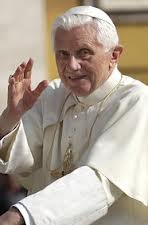
Pope Benedict XVI

Benedict XVI’s words from the Sunday Angelus (Rome, Nov. 18, 2012) provide a helpful perspective on a theme that is often overlooked by Catholics and misunderstood by others — Christian and non-Christian alike:

Jesus does not describe the end of the world, and when He uses apocalyptic images, He does not act as a ‘seer’. On the contrary, He wishes to ensure that His disciples in every age remain unmoved by dates and predictions, and gives them instead a more profound understanding, showing them the right path to take, now and in the future, towards eternal life. Everything changes, the Lord reminds us, but the Word of God does not change, and before it each of us is responsible for our own actions.

Confirmation Confusion in Minnesota (and Canon Law)

Canon Lawyer Edward Peters

Edward Peters, JD, JCD is a canon lawyer. I occasionally follow his blog, as he sometimes has interesting posts about his take on Church matters in the public eye. I say “occasionally” because his blog does not allow comments or feedback, so I prefer not to give my own time to bloggers who do not allow for such engagement. After all, isn’t engagement and interaction what blogging and the tools of social media are all about?  In this regard, I think Dr. Peters confuses “blogging” with “lecturing” … but I digress.

That said, his recent post, Confirmation and advocacy of ‘gay marriage’ [sic] cries out for response.

Two points:

First, my “[sic]” notation is to draw attention to the fact that Dr. Peters is one of those folks who puts the phrase gay marriage in quotations or otherwise off-sets it as a means of communicating that they do not think such a thing is real.  If he were speaking to you in person, you could just see him holding up both hands and making finger-quotes as he voiced that phrase, as if to say, “they call it ‘gay marriage,’ but we know such a thing doesn’t really exist.” They think that God’s gay sons and daughters — living their full humanity, including their sexuality, as given by God — are incapable of entering into marital relationships with someone of the same sex. Instead of seeing with open eyes and thoughtful minds the evidence from so many human sciences, including theology  (not to mention the lived experience of millions of gay men and women living in committed relationships), Dr. Peters prefers the blinders of ecclesiastical legality to the truth self-evident to so many.

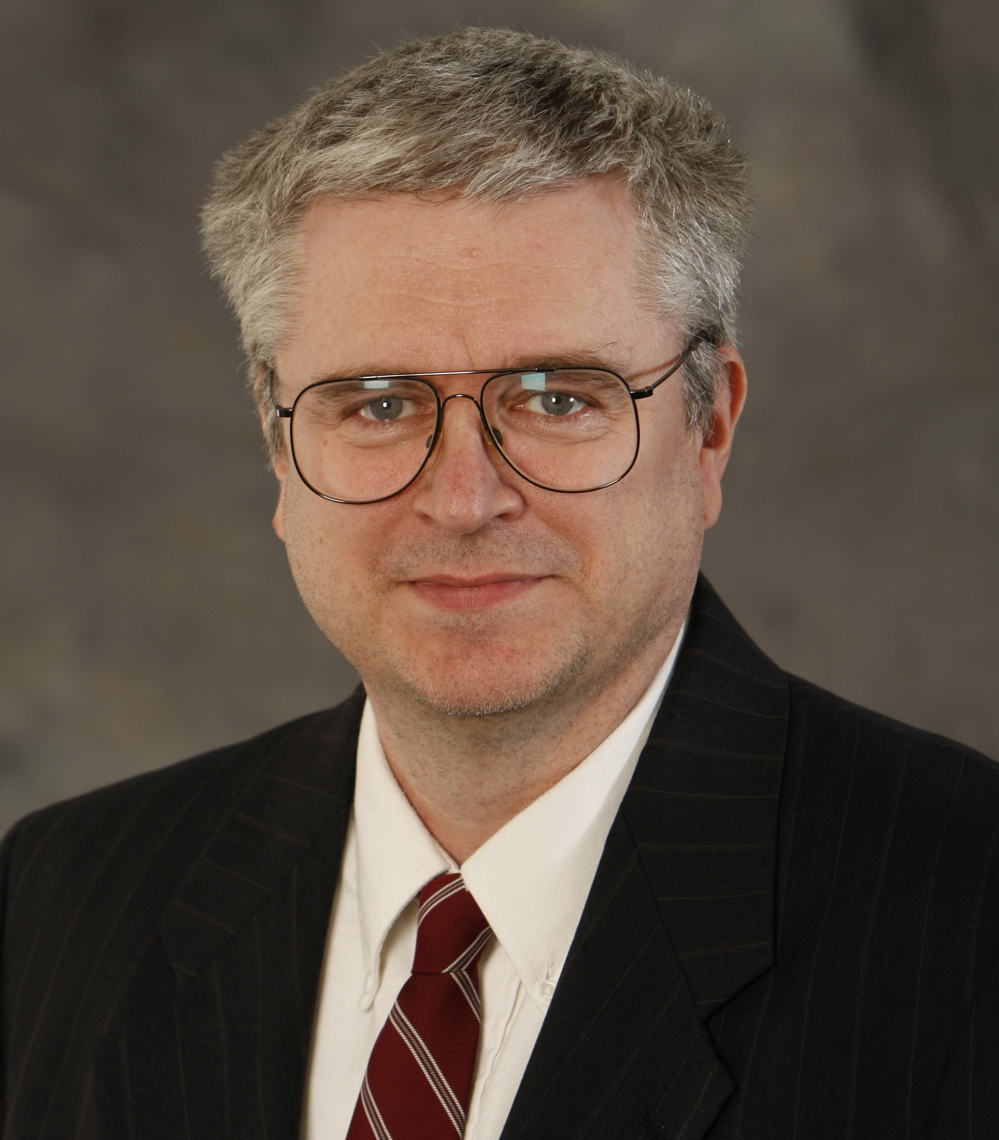
Lennon Cihak

Second, Dr. Peters’ post discusses the situation of a young man who has been denied the Sacrament of Confirmation for his opposition to Minnesota’s recent ballot initiative that would have included in that state’s constitution language limiting marriage to one man and one woman. Peters focuses his brief post on the meaning of “proper disposition” as one of the criteria necessary for the Faithful to share in the sacraments.

I do not take issue with this basic principle of sacramental theology. The sacraments in our Tradition are indeed not to be taken lightly and must be appreciated as the gifts they are, a means by which God’s People share more fully in God’s grace.  Sacramental participation requires a minimal understanding of what a particular sacrament is all about; a freely-expressed desire to share in the sacrament; and the expressed intention to live one’s life as best one can with the fundamentals of Christian faith.

Peters, however, goes on to observe the distinction between “internal disposition” and “external disposition” as follows:

Generally “proper disposition” is not a question of internal disposition (such as interior faith, fervor, or grace) but rather of external disposition (public demeanor, dress, and conduct). The state of a would-be recipient’s soul is not determinable, of course, but his or her attitudes and conduct are observable (we’re talking Facebook, no?), and potentially actionable.

In all fairness, Peters does not state explicitly that the pastor’s action in this situation was correct. A benign interpretation of Peters’ post could be merely that it points out that Church order allows for a pastor to refuse the sacraments in certain circumstances. Priests and pastors do and should have this right. After all, a pastor can and must deny marriage to someone who is already married, or Eucharist to someone who is not Baptized and has no intention of living the Christian life (as they, the potential recipient, would declare).

Nonetheless, a more likely interpretation of his post is that Peters supports the pastor’s decision — and it is with this, i.e. that the pastor’s decision was correct, that I (and others) take issue. Despite what Dr. Peters’ and the USCCB say formally about civil marriage, the fact is that a majority of American Catholics support the rights of God’s LGBT sons and daughters to marry the person they love. Would Dr. Peters deny the sacraments to these millions of Catholics? Or only to those who wear a rainbow ribbon on their lapel or post a supportive photo online? And, of course, why be limited to support for civil-marriage as the litmus test for deciding appropriate “external disposition”? There are countless issues where millions of Catholics hold different positions than do official Church leaders — civil divorce, war, immigration, capital punishment, to name but a few.  Would every Catholic, for example, who holds that civil divorce should be allowed in a pluralistic society likewise be denied the sacraments?

My point is this:  the denial of confirmation to this young man was a bad decision.  Using the sacraments as tools of discipline (especially when that discipline is misguided) is a bad idea.  It’s a lesson that this pastor — and the US bishops — need to learn.

Richard Rohr on Intimacy

Reflections

“One’s biggest secrets and deepest desires are usually revealed to others, and even discovered by ourselves, in the presence of sorrow, failure, or need when we are very vulnerable and when one feels entirely safe in the arms of someone’s love….People who have avoided all intimacy normally do not know who they are at any depth—and cannot tell others who they are.”

From Richard Rohr’s Daily Meditation, Nov. 14, 2012

Evidence, not Opinion: What the bishops should embrace about homosexuality

I spent this past week at a conference in San Francisco on ADHD, the annual conference of the non-profit organization where I work. The closing plenary was by a renowned neurologist, Dr. Martha Denckla from Baltimore’s Kennedy-Krieger Institute. Dr. Denckla is a true scientist, relying on the facts and what empirical data show in drawing her research conclusions.

During the Q & A after her presentation she was asked by one attendee, “What’s your opinion of [some named product making claims about alleviating ADHD symptoms]?” Without missing a beat, Dr. Denckla replied, “I prefer not to have opinions. I prefer evidence over opinions.”

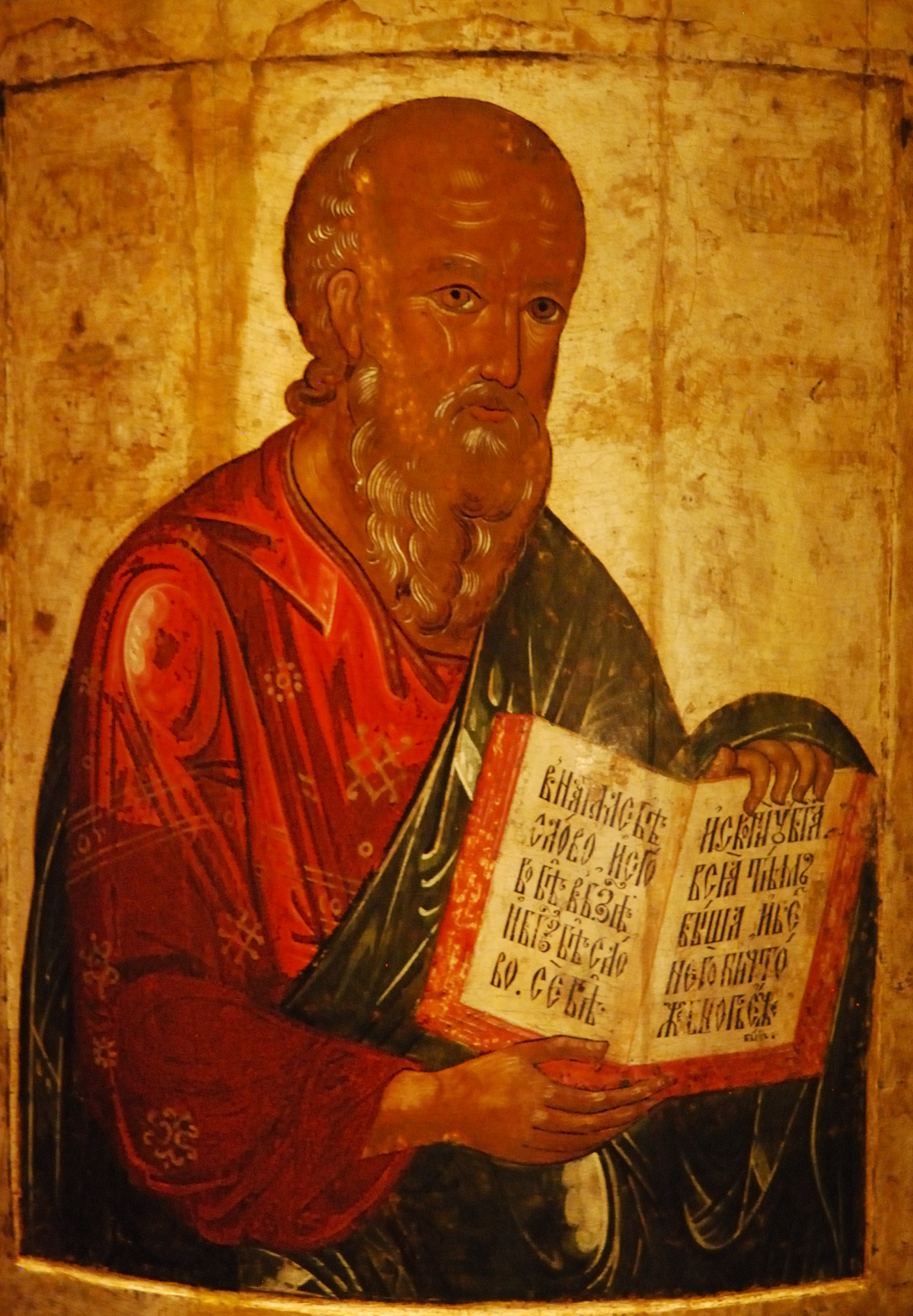
Russian icon from the collection at Hillwood Museum.

Such wisdom would serve well current Church leaders who continue to bury their heads in the sand, choosing to remain blind to the incontrovertible evidence about what it means to be gay. As the US Catholic Bishops have their fall meeting in Baltimore this week and discuss (as no doubt they will) what to do in response to last week’s election, the wisdom of those words deserves repeating. The bishops (both in the US and around the world, including Rome) would do well to take a dose of humility for a change and simply listen. They should listen to the evidence of the lives of LGBT people, their families and friends, as demonstrated in the favorable votes in four states on same-sex marriage. They should put aside their opinions, based as they are on outdated and incorrect understandings of human sexuality, and they should listen to the evidence that tells us that:

  • being gay is a given, not a choice;
  • being gay for a gay person is just as ‘natural’ as being straight is for a straight person;
  • the struggle for LGBT rights — including the right to marry the person you love — is about gay people and in no way diminishes the marriages of straight people.

As the US and worldwide bishops continue to look away from the clear evidence of research and most especially the evidence of the lived experience of God’s LGBT children, they run the risk of being guilty of remaining in what moral theology calls “vincible ignorance.”  Unlike “invincible ignorance” which cannot be overcome due to one’s own efforts, vincible ignorance is that lack of knowledge for which one is morally responsible. As shepherds of God’s People, bishops have an obligation to know the people they are called to serve.

They have an obligation to listen to the stories of gay men and women who live lives of deep Christian faith and who live in faithful, committed relationships.  They need to listen to the stories of parents whose gay children have suffered bullying and abuse at the hands of others inspired, in part, by the hateful language of “disordered” and “unnatural.”  Perhaps especially they need to listen to the stories of their own lives (many bishops, no doubt, are gay themselves) as well as the stories of their family members and friends.

The lived experience of God’s People is not only a legitimate source of insight into clarifying and articulating anew the Christian message in every age; it is a required source of such insight. If we really believe that God is actively involved in the lives of His People, then it is the evidence of God’s action in human lives that deserves recognition, respect, and support.

Reflections in Flight

Nov. 6, 2012 – Election Day in America: It’s not often that I have a window seat when flying, preferring as I do the easy access and extra leg room of the aisle.  This morning, however, I was assigned a window on the first leg of my two-flight trip to San Francisco.  Leaving DC and heading for Dallas on Election Day 2012, we ascended to our cruising altitude of thirty-eight thousand feet, as the captain announced.  Others around me settled in, putting on their headsets, taking out their iPads or laptops to read a book or watch a movie. As my seatmate pulled out a pile papers and printed emails, reading over material that was clearly for work and not for pleasure, my own eyes were captivated by the beauty of the snow-capped mountains of West Virginia, the sculpted mountains of the landscape below.

Ours is indeed a beautiful country.  Although I don’t consider myself a particularly patriotic person in the “gung ho-America-right-or-wrong” sort of way, I doubt there is anyone among us who is not proud in a healthy-pride sort of way of the country in which we live.  The rancor and ugliness of political campaigns – which we all seem to agree is getting worse and not better – doesn’t show to ourselves and the world what is Best about America and, more importantly, what is Best about Americans.  In these post-election days, wouldn’t it be nice to have respite from it all and simply be thankful for the beautiful land in which we live, the many blessings in which we share, and the graced faces of God’s people who touch our lives every day.

UPDATE: Worth the Applause: Homily of Fr. Richard Lawrence on MD’s Question 6

UPDATE: Apparently in response to a request from Archbishop William Lori of Baltimore, the video of Fr. Lawrence’s homily has been removed. A request to the parish and to the video owner for information about its removal have gone unanswered.

It is sad indeed not only that the archbishop would make such a request inhibiting the free discussion of ideas so that Catholics can make well-informed decisions when entering the voting booth, but also that those responsible for the video’s removal would succumb to such pressure.  Fortunately, the audio of the homily remains available on the website of St. Vincent de Paul where Fr. Lawrence serves as pastor. Homily of Fr. Richard Lawrence, October 28, 2012 (parish website).

And, in case the audio is eventually removed, a copy of the mp3 file may also be found here:  Homily of Fr. Richard Lawrence, October 28, 2012.


As any churchgoer can tell you, it’s the rare homily that is met with applause.  I don’t remember one of my own homilies ever receiving an ovation, though I suspect if it ever happens in the future, it will be out of thankfulness that I’ve stopped talking!

This homily, however, is definitely worth the applause it receives.  We need more Catholic priests and pastors to do what Fr. Richard Lawrence, pastor of St. Vincent de Paul Parish (his parish website “bio” is worth reading!), did this past weekend in Baltimore.  With respect and balance and intellectual honesty, he does what a pastor should do when it comes to helping parishioners form their consciences in matters of public import. Unlike Archbishop Lori, whose letter he reads at the beginning, Fr. Lawrence does not tell his parishioners how to vote on Ballot Question 6: The Civil Marriage Protection Act.  Rather, he encourages them to continue to form their consciences faithfully, as best they can, and to vote accordingly.

102812 Homily from Jerome Bird on Vimeo.

Vatican II: The Optimism of John XXIII

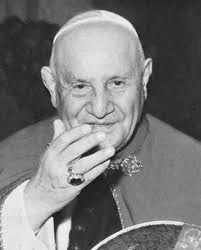
Blessed Pope John XXIII

Fifty years ago today, one of the most momentous events in the life of the Catholic Church took place.  Attentive to the “signs of the times” as he was, Pope John XXIII officially opened the Second Vatican Council.  Others more astute than I have commented at length about the importance of this day and the event that so deeply affected the experience of millions of Catholics around the world. Nonetheless, there is no Catholic alive today who hasn’t felt the impact — whether he/she is aware of it or not — of that Council.

Pope John’s complete opening remarks are worth reading and absorbing.  Parts of those remarks  somehow sound even more relevant to the Church in 2012 as they must have sounded to the Church in 1962.

In the daily exercise of Our pastoral office, it sometimes happens that We hear certain opinions which disturb Us—opinions expressed by people who, though fired with a commendable zeal for religion, are lacking in sufficient prudence and judgment in their evaluation of events. They can see nothing but calamity and disaster in the present state of the world. They say over and over that this modern age of ours, in comparison with past ages, is definitely deteriorating. One would think from their attitude that history, that great teacher of life, had taught them nothing. They seem to imagine that in the days of the earlier councils everything was as it should be so far as doctrine and morality and the Church’s rightful liberty were concerned.

We feel that We must disagree with these prophets of doom, who are always forecasting worse disasters, as though the end of the world were at hand.

Where’s Nature in Natural Law?

Desert Blossom

I don’t often have “aha” moments of insight, but I did the other day. It occurred to me that much of organized religion’s arguments against the rights of LGBT people to live full and complete lives as God created us — including lives that include sexual expressions of love — are often connected with a loose understanding of Natural Law theory.  I say “loose,” because I think that Natural Law theory — properly understood — has lots of room and possibility within it to come to different conclusions about homosexuality. In its crudest sense, Natural Law theory claims that what is natural is also universal, and that a proper understanding of “human nature” is what governs human life and activity, including moral activity.

My “insight” was simply this:  if there were more Nature in Natural Law, then perhaps the mistake wouldn’t be made of placing general and abstract principles above specific, concrete individuals.  The notion of “flower” exists precisely as that — as a notion, an idea.  It doesn’t really exist in the concrete such that it can be pointed to, described, or experienced in the here-and-now.  What does exist is this flower and that flower and those flowers over there.  Similarly, “the human person” only exists as a notion and an idea to help aid in understanding ourselves.  But any conclusion about “the human person” as an idea must always, always, always give way to the reality of you or me or any other individual human person.  Abstractions about “the human person” can indeed help us understand those things that are at the core of what it means to be  human, but if the the list of those things becomes such that fewer and fewer of us see ourselves as thus described, then the list needs to stop.

When the lived, concrete experience of living, breathing people becomes subordinate to an abstract notion of what it means to be a man or a woman or a person, then our thinking has taken a wrong turn and we need to return to the drawing board of Nature.

After all, isn’t it in Nature that we find what is Natural?!

786 Years Ago Today

Francis of Assisi died.  Giovanni Francesco di Bernardone was 45 years old (b. 1181; d. Oct. 3, 1226).  His view of himself and the world is an utterly Christian, incarnational view, seeing in all creation the wonderful and sustaining presence of the Divine.  The sun and the moon, the earth and the mountains, vegetation and animals and all humanity are bursting with the Spirit of God.

Perhaps this is why Francis and the orders of friars and sisters who bear his name today are so appealing to God’s LGBT children.  Having been told by others with a more dualistic outlook that our bodies and desires are merely sources of sin, LGBT people (and all people, really) experience in the flesh the untruth of such assertions. What Francis knew almost eight centuries ago so many of us, our fellow Christians, and especially our Church leaders are still learning.

Franciscan Father Richard Rohr puts it this way (reblogged from his Daily Meditation):

Richard's Daily Meditations

St. Francis of Assisi by Nancy Earle, SMIC.

FRANCISCAN MYSTICISM

In most paintings of people waiting for the Holy Spirit they are looking upward, with their hands outstretched or raised up, the assumption being that the Holy Spirit will descend from “up” above. In the Great Basilica in Assisi where St. Francis is buried, there’s a bronze statue of him honoring the Holy Spirit. His posture and perspective are completely different from what we have come to expect. He’s looking down into the earth with expectation and desire! This is the change of perspective that became our alternative orthodoxy—although it should have been mainline orthodoxy! He was merely following the movement of the Incarnation, since Christians believe that the Eternal Word became “flesh” (John 1:14), and it is in the material world that God and the holy are to be found.

Francis recognized and took to the logical conclusion the implications of the Incarnation. If God became flesh in Jesus, then it is in the world, the physical, the animal, in the natural elements, in human sexuality that God must be found. Speak of embodiment, physicality, and the world—use whatever words you want—these are the hiding places and the revelation places of God. This is how Christianity was supposed to change everything. Most of us just kept looking up, when God in Jesus had, in fact, come down. (This is the foundation of Franciscan mysticism.) On this day in 1226, Francis died at sunset and asked to lie naked and exposed on the earth as he died. The friars were embarrassed, but conceded to his wish. Now you know that it made total sense.

From an unpublished talk in Assisi, Italy, May 2012

Hatred Meets Anger: The Aryan Nation vs Protesters

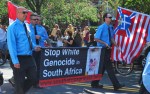
Yesterday was a gorgeous Fall day here in DC.  As I came home from having breakfast with a friend in Arlington, I encountered blocked traffic on 8th St SE, as it was closed off for one of the many Fall festivals DC and cities around the country celebrate.  Finally making my way closer to home, I saw Metro Police everywhere.  I parked on East Capitol Street, just half a block from my building.  When I asked one officer what was going on, he said there was a march shortly.  “Who’s marching?” I asked.  “The Aryan Nation.”

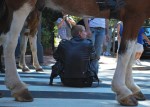
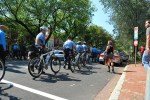
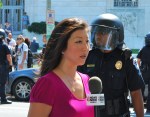
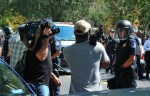
Police in cars, on bikes, on foot, and on horseback were everywhere.  Here are some photos of what happened when the small group of Aryan Nation marchers — I counted less than 10 — were met by a much larger group of protesters who blocked the march at several points along the way.  It was an experience of contrasts.  The positions of the Aryan National are certainly reprehensible.  But the counter protesters, with shouts of “Death to the Nazis…” were equally disturbing.  While there was no violence (at least none I saw), it’s hard to describe this sort of event as “peaceful.”