Priest-Mayor and Gay Marriage in France

ElieGeffray

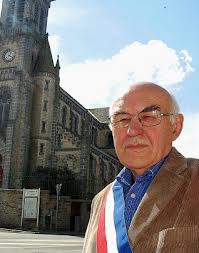
Elie Geffray, priest and mayor of the village of Eréac in Brittany

What a great story from the French countryside! This evening’s All Things Considered tells the story of a Catholic priest who supports same-sex marriage in France and — when that becomes law — will officiate at civil weddings in his capacity as mayor.

French Catholic Priest Plans To Marry Same-Sex Couples In New Job As Mayor

Which Catholic parish will be first to welcome Gay Scouts?

BSA-LogoApparently the Boy Scouts of America may soon revise their long-standing ban on allowing gay people — as either scouts or volunteer leaders — into the organization. (See today’s story in the Washington Post.) The revision may be that local organizations that sponsor troops — typically civic or religious groups — will be able to make their own call on this matter.

If that comes about, I pray that there will be one Catholic parish somewhere in these United States that will have the faith, the courage, and the decency to do the right thing.  I pray that there will be one courageous pastor who will lead his parish in making a decision that puts them “on the right side of history,” and allows the scout troop under their auspices to accept openly gay scouts and leaders.

Today’s story in the Washington Post includes this comment:

“Said Sister Mary Ann Walsh, a spokeswoman for the U.S. Conference of Catholic Bishops, “The bishops hope the Boy Scouts will continue to work under the Judeo-Christian principles upon which they were founded and under which they have served youth well.”

Hopefully Sister Mary Ann and the bishops for whom she works will one day learn that exclusion of people because of who they are as God made them to be is not really a “Judeo-Christian principle.”

A Gay Brother’s Love

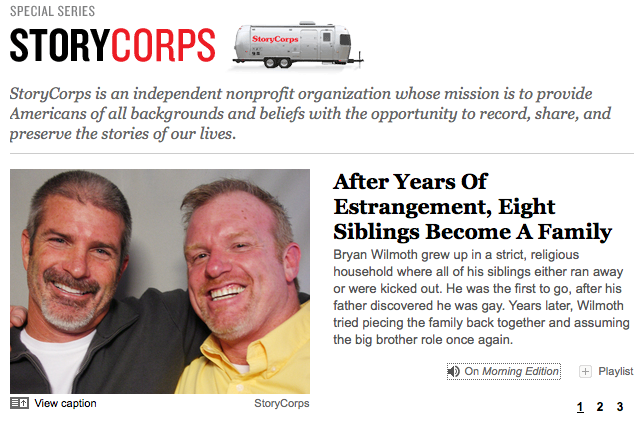
Screen Shot 2013-01-26 at 9.54.26 AMThere’s an old Christian folks song that proclaims, “They will know we are Christians by our love, by our love; they will know we are Christians by our love.”

As you listen to this StoryCorps story of how a family of eight siblings were reunited by the love of their eldest (and gay) brother after all of them had been driven away for one reason or another by their religiously (Christian?) fanatical parents, you decide whose actions were more loving.

Changed Minds Follow Changed Hearts

Timely Wisdom from Fortunate Families

Fortunate Families

Fortunate Families

Whenever my own first reaction to baseless statements from those who go to great lengths disparaging God’s LGBT sons and daughters is to engage in rational argument, messages like this one from Fortunate Families remind me that — in the end — changed hearts must come before changed heads.  It will be the lived experience of real people living out lives of simple faith and goodness that will humanize hearts that have become cold and stoney. As the prophet Ezekiel reminds us, it is just such a human, fleshy heart that God wants us to have; human hearts that are able both to endure great suffering and and also to love very deeply.

Referring to recent articles and statement from Rome, Fortunate Families says this:

These harsh statements are particularly dispiriting at this sacred time of year when families that include LGBT children, parents and grandparents gather to celebrate the birth of the Christ child. We could find fault with Ms. Scaraffia’s historical comparison, or the pope’s rigid and outmoded understanding of what it means to be a man or a woman. Instead we remember that Jesus, when asked by messengers from John the Baptist whether He was the Messiah, told them to go back and tell John about what they saw happening all around them:  the sick were being healed, the lame made to walk and good news was being proclaimed to the poor.

What we see when we look around us are heterosexual parents loving their LGBT children and advocating for their dignity and equality; same-gender couples creating safe and happy homes for their children; and transgender people like those whom the pope criticizes living healthy, mature, and generous lives. [emphasis added]

The Holy Family: Non-Traditional Family Values

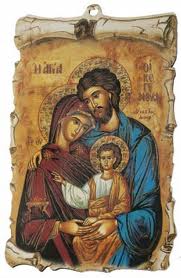
HolyFamilyIconIn the Catholic liturgical calendar, today is the Feast of the Holy Family of Jesus, Mary and Joseph. Ironic, isn’t it, that this feast — in which Catholics hold up for reverence a three-person family where a man marries a woman and raises a child not his own — is used by religious leaders to condemn the dire, unforeseen consequences of allowing God’s LGBT sons and daughters the right to form their own loving, committed relationships and families. A letter from the Catholic archbishop of Birmingham (England), Bernard Longley, which is being read today in parishes throughout that diocese, is the latest example of a Catholic bishop reminding us of what peril awaits should the UK move forward with Prime Minister David Cameron’s proposal to legalize same-sex marriage.

Ever since the struggle for gay rights began to focus on the right to marry the person one loves, opponents of gay rights have shifted their arguments from attacking gay people directly to seeing such demands as an “attack on the family.” By seeking the same rights to form loving, committed, marital relationships as their heterosexual brothers and sisters, gay people were accused of undermining “traditional family values” in which a wife and husband raise the offspring of their union in the “the traditional family.”

As the iconic non-traditional family, perhaps the Holy Family of Jesus, Mary and Joseph should become the new poster symbol in the continuing struggle for gay rights.

“The mystery of the Incarnation…..”

FeetCloseup“….is precisely the repositioning of God in the material world once and forever. Continual top-down religion often creates very passive, and even passive-dependent and passive-aggressive Christians. I know this as a Catholic priest for over 40 years. Bottom-up, or incarnational religion, offers a God we can experience for ourselves. We have nothing to fight or prove, just something to know for ourselves. This is what we are about to celebrate at Christmas.”

from Richard Rohr’s Daily Meditation

The Pope’s First Tweets

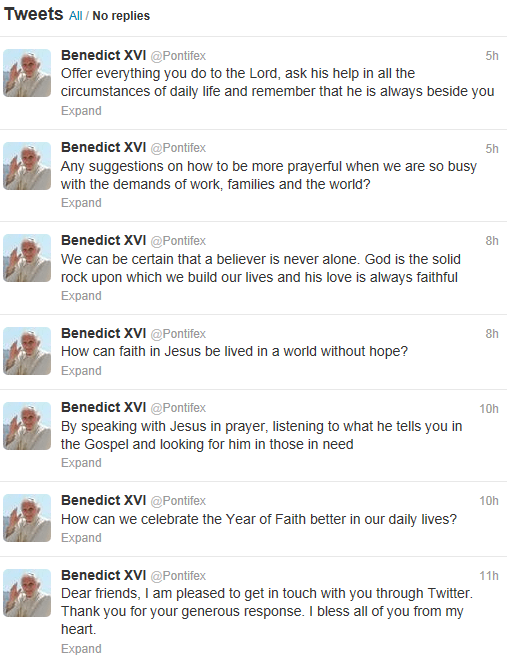
So today it happened. On the Feast of Our Lady of Guadalupe, Pope Benedict XVI sent seven tweets to his Twitter followers, today numbering just under a million at 926,000. His 140 character thoughts focused on the Year of Faith, Jesus, and ensuring that God is the “solid rock” on which our lives are built.  I wasn’t quite sure if his fourth tweet — “How can faith in Jesus be lived in a world without hope?” — was stating as a given that the world is “without hope” or that if he was asking how faith in Jesus can be lived in the world if one doesn’t have hope? I presume the latter and that this is just an examply of a slightly misplaced modifier.

PopesTweets121212

The first tweets of Pope Benedict XVI, sent on the Feast of Our Lady of Guadalupe.

Why is this “Art”?

It’s a serious question.

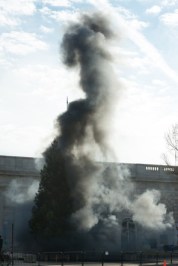
ChristmasTreeExplosion

(Photo by Susan L. Voisin – Washington Post)

Chinese artist Cai Guo-Qiang exploded a Christmas tree on the National Mall yesterday.

Never mind that all didn’t seem to go according to plan, leaving onlookers (and even the artist) a bit disappointed (see the video).

My question is this:  Why would this be considered “art” in the first place?  What’s the artistic value of exploding or setting on fire anything, let alone the principal symbol of Christmas, which has both secular as well as intensely religious meaning to millions and millions of people around the world.

I realize that the artistic, creative side of my brain isn’t as developed as I’d like … but I really, really don’t get this.  Anyone?

“His brother’s keeper” – Benedict XVI and Prison

There’s no doubt that the Catholic Church these days isn’t very high on many people’s lists of respected institutions. There are many valid reasons for this, and there’s no need to restate them here. One of the great and sad side-effects of this largely self-generated reality is that the Church’s moral voice on so many important matters is not able to be heard.
On Thursday, Nov. 22 (Thanksgiving Day in the US), Pope Benedict XVI spoke to European Directors of Prison Administration. His words are rooted in a Catholic Christian Weltanschauung of great depth and richness. As such, I wonder how much, if at all, they would resonate in contemporary American society and politics, especially among those in the public eye who wear their Catholicism or Christianity proudly, but whose politics reflect little of Catholic Christianity’s gospel-rooted values.

In speaking to those who run prisons and are responsible for the care and well-being of convicts, Benedict spoke about justice, about the need for rehabilitation (and not mere punishment), and about the need for their work to focus on the dignity of prisoners. How many American government executives (governors, etc) would say this to prison wardens and administrators in their state:

“Everyone is called to become his brother’s keeper, transcending the homicidal indifference of Cain. You in particular are asked to take custody of people who, in prison conditions, are at greater risk of losing their sense of life’s meaning and the value of personal dignity, yielding instead to discouragement and despair. Profound respect for persons, commitment to the rehabilitation of prisoners, fostering a genuinely educational community: these things are all the more urgent, in view of the growing number of ‘foreign prisoners’, whose circumstances are often difficult and precarious”.

In 2010 about 7.1 million adults were under the supervision of adult correctional authorities in the U.S. Over 3,000 of these were under a sentence of death (US Dept. of Justice, Bureau of Justice Statistics).

While the “Black” in today’s moniker of “Black Friday” might refer to the color of the ink on retailers’ profit statements, for prisons it no doubt has a different meaning. The disproportionate number of US prisoners who are African-American is startling (3.1% of the black male population, compared with 0.5% of the white male population) and the bleakness of prison life no doubt burdensome.

The pope ended his remarks on a somewhat poetic, hopeful note:

“Particularly important in this regard is the promotion of forms of evangelisation and spiritual care, capable of drawing out the most noble and profound side of the prisoner, awakening his enthusiasm for life and his desire for beauty, so characteristic of people who discover anew that they bear within them the indelible image of God.”