Trusting that All Will Be Well

Demonstrators in front of US Capitol (Dec. 2012)

Demonstrators in front of US Capitol (Dec. 2012)

This week has been hard.

Taking a brief 3-day cruise that began last Sunday, we were at sea and “off the grid” for the final days of the recent election. I did not sleep Tuesday evening, tossing and turning and praying all night. By 6 am we had arrived within sight of Port Everglades and cellular service was returning. While following my morning routine of going to the Deck 5 coffee shop, I was able to get a ful cellular signal. I opened the Washington Post app on my phone and saw the words, “Trump Triumphs.” I felt ill; I sat down for a few moments in the empty lounge I was passing through. I returned to our stateroom (sans cappucino) to share the news with my partner. I don’t think I’m revealing too much when I say that we cried. It remains unfathomable to me how anyone — including some family and friends — could have voted for a man who seems to be without moral compass and whose campaign brought out the worst in the human spirit. This Huffington Post commentary expresses what I and so many millions of Americans are feeling. As commentator Jennifer Sullivan writes, “The entire Trump/Pence ticket’s platform revolves around making other individuals be made to feel less than. It is divisive. It is harmful. And it stands in stark opposition to every ideal this country was founded upon.”  For me, the enduring feeling — as someone on Facebook stated — is as if my neighbors, my family, my friends voted against me.

It Is What It Is

One of the essential elements of mental and spiritual health is the ability to live in reality. And so I recognize and accept what is. Tuesday cannot be undone. Our quirky Electoral College system that allows someone who came in 2nd to be named the winner cannot be retroactively changed. One hundred million voters who decided their vote didn’t count cannot now cast their ballots and have their voices heard, too.

The only option we have is to move forward, reminding ourselves daily of the values we hold most dear and how those values impact our daily lives and daily choices. Like the demonstrators above who were not afraid to demonstrate for peace on the grounds of the US Capitol, we too must find ways of ensuring that our voices are heard in the public square — whenever and however we can.
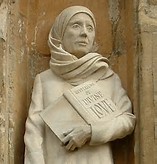
julian-of-norwichAgain, this has been a tough week. But I took comfort this morning from this passage in Richard Rohr’s Everything Belongs (p. 132).

“Again I quote beloved Julian of Norwich in her famous thirteenth Showing. ‘In fear and trembling,’ she asked Jesus, ‘O good Lord, how can all be well when great harm has come to your creatures through sin? And here I wanted, if I dared, to have some clearer explanation to put my mind at rest.’ And he said, ‘Since I have brought good out of the worst-ever evil, I want you to know by this; that I shall bring good out of all the lesser evils, too.'”

Or, as Julian is famously quoted:  “All shall be well, and all shall be well and all manner of thing shall be well.”
 

Florida DCF Should Protect LGBT Youth in Foster Care

Florida Department of Children and Families
1317 Winewood Boulevard, Bldg. 4

Tallahassee  Florida  32399

ATTN:  Ms. Jodi Abramowitz

Dear Ms. Abramowitz,

My name is Timothy MacGeorge and I am a Licensed Clinical Social Worker (LCSW).  In my work as a therapist at a community behavioral health center in Naples (FL), I occasionally work with youth who self-identify as lesbian, gay, bisexual, or transgender (LGBT).

I am writing to urge the Department of Children and Families (DCF) to restore the language that was recently stricken from  Rule 65C-I4: Group Care Licensing (cf. http://www.dcf.state.fl.us/publicnotices/20160408-Notice-of-Change-65C-14.pdf ) being considered at tomorrow’s [April 8, 2016] public hearing.  As a therapist, I have seen first hand how a young LGBT person’s emotional well-being is impacted by the degree to which he/she is accepted by his/her family, friends, classmates, teachers, and society at large. When young people are accepted for who they are, they are more likely to thrive and reach their God-given potential. When young people are denigrated, shamed, and made to feel that their sense of self is an abomination to be exorcised, then the resulting high rates of anxiety, depression and even suicide should not come as a surprise. All reputable mental health organizations now recognize the broad range of sexual orientations and gender identities within the human family. They also recognize that any attempt to change or “convert” someone’s sexual orientation or gender identity is not only clinically unsound, but also professionally unethical.

Media reports suggest that the impetus behind this recent language change in the Proposed Rule was pressure from religious groups in the state, including the Florida Catholic Conference. As a Catholic Christian (one who was also ordained a Catholic priest), I believe that there is more support in Sacred Scripture for accepting all of God’s children as they are, created in God’s image and likeness, than there is for any view which sees LGBT persons as “unnatural,” “not normal” or in need of so-called “conversion therapy.”

Please do the right thing and restore the recently stricken language from the proposed rule. Please act on behalf of all youth committed to DCF’s care — including LGBT youth.

Sincerely,

Timothy J MacGeorge, LCSW
Bonita Springs, FL  34135

The First “Bible” is Nature and Creation

Two men holding hands

Two men holding hands

To those who say that same-sex attraction is “unnatural” or is contrary to “biblical teaching,” remember that even before there was the written Word in the Hebrew and Christian scriptures, there was and is the Word of God written in Creation.

LGBT people know in the core of our being that we are beloved sons and daughters of God. We know that our love is just as natural, just as God-given as the love of our straight brothers and sisters. It is this knowledge — borne of profound self-awareness and a respect for our own Nature as created by God — that tells us that the Church’s theology of human sexuality is limited and incomplete.

Read Richard Rohr’s Wisdom Lineage Summary for a more complete discussion of the sources of wisdom.

Two Rainbows — What Is and What is Yet To Be

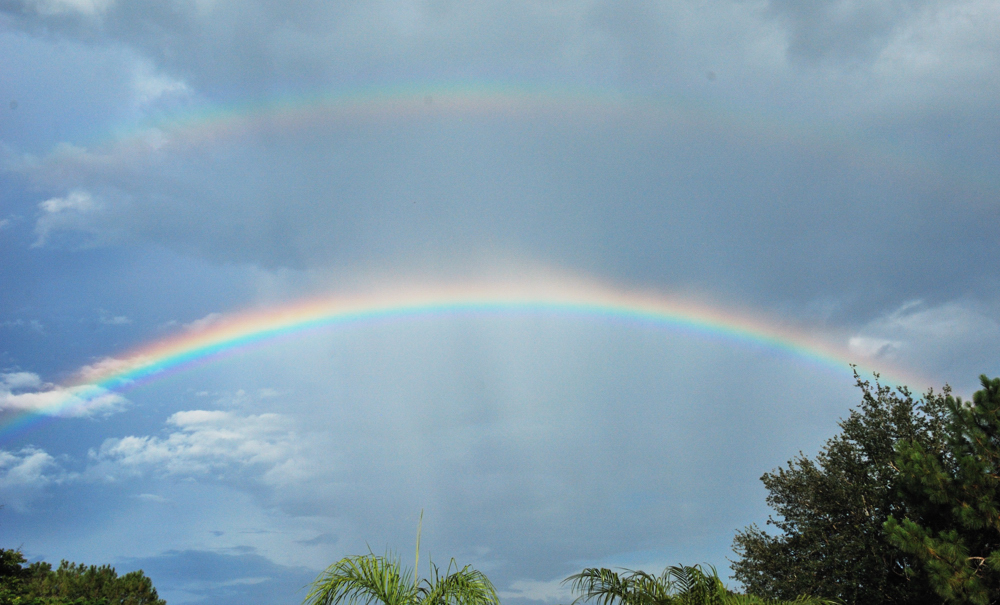
Double Rainbow

Double Rainbow

“But some things you know deep in your heart: that all human beings are made in the image of God…” That’s from Andrew Sullivan’s wonderful essay on yesterday’s historic Supreme Court ruling. It also includes a phrase that is the title of these pages and expresses a belief I’ve “known in my heart” for as long as I can remember.  The new header above — a double-rainbow after a Spring thunderstorm here in Florida just a few weeks ago — seems to me symbolic.

The lower, brighter rainbow is more clear, more brilliant. It seems closer to the Earth, closer to home, and for me symbolizes the wonderful progress God’s LGBT children have made in seeking recognition and acceptance within civil society. The upper rainbow — less clear, less brilliant, but still there — to me symbolizes the progress that has yet to be made within the Church. I pray for the day when both rainbows will be brilliant and bright, expressive of the full diversity that is within God’s human family, and the welcome, love and acceptance that all People have for one another.

The Sensus Fidelium of Catholic Ireland

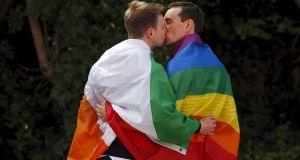
(Source: The Irish Times)

(Source: The Irish Times)

Ireland is a country with a huge Catholic majority. Though recent data indicate a decline in those who identify as Catholic, at least 84% of the population still do (Central Statistics Office Ireland, 2011). Ireland has also just become the first nation in the world to approve same-sex marriage by popular referendum. This historic change came about not by legislation passed by elected officials and not by judicial decree. It came about through the most democratic tool available to a free people.

Termed a “national act of inclusion” by former tánaiste (deputy prime minster) Eamon Gilmore, in Catholic theological language Friday’s vote can also be seen as an act expressing the sensus fidelium (sense of the faithful) in this overwhelmingly Roman Catholic country where religious faith is deeply embedded in the lives and culture of the people.

Is there a lesson here for Catholic leaders both in Ireland and around the globe? Perhaps this vote is telling the world that as Catholic Christians, Irish men and women have a deeper understanding of the Gospel than those whose role it is to preach it. Perhaps this vote is telling the world that the Gospel of Jesus — so strongly interwoven into the everyday lives of a faithful, evangelized people — challenges people everywhere to recognize that all persons, regardless of sexual orientation (or race or ethnicity or language or skin color or….), are children of God called to live lovingly, openly and honestly — just as God created us.

As an Irish-American, I am so very proud today of the country where my grandparents were born; so very proud of my many cousins and “relations” whose grandparents never left “the auld sod” and today are part of a new Ireland that has spoken loudly, clearly and forcefully.

Walter Brueggemann on American Consumerism, Militarism, Neighborliness and LGBT People

A Facebook friend (FBF) recently shared this article from On Faith, an interview with theologian Walter Brueggemann. As the interview demonstrates, Prof. Brueggemann — one of the most influential Old Testament scholars in the U.S. — is pretty clear about how much of contemporary American culture is out of sync with an accurate understanding of the message of Scripture and the Gospel of Jesus.  I suspect there are many who would be afflicted by his words, calling to mind that old adage that one of the purposes of the Gospel is “to comfort the afflicted and to afflict the comfortable.” Screen Shot 2015-01-11 at 7.50.22 AMI particularly find Prof. Bureggemann’s notion of neighborliness on point, especially living in a part of the country where so very, very many people live in “gated and guarded communities,” neighborhoods where entry is limited only to residents. This map (from Gated Communities: Are you in or out? Naples Daily News, July 26, 2013) shows how much of the area in this part of SW Florida is “off limits” to neighbors outside the gate.

On another issue, I was particular edified to read Prof. Brueggemann’s response to the first of two questions about LGBTQ people and how many who claim to be Christian treat them. Here’s what was asked, and Brueggeman’s first words in response.

You talked about the poor and healthcare. What about the LGBTQ community, especially when people use the Old Testament to argue against that community?

The discussion needs to start with what it means to be made in the image of God [emphasis added]. The confession of Christian faith is that all of God’s human creatures are made in the image of God. That means that they are to be treated with dignity, offered maintenance and security, as is necessary.

Brueggemann claims that the starting point of this discussion must be the recognition that LGBTQ people are made in the image of God. That understanding is the very reason for the title of this blog. If we are not able to see in ourselves and others a reflection of the Divine, then what possible hope is there for dealing well with any of the myriad problems this generation or any generation faces? If we can’t see the presence of God in every person — especially those whom we so readily label as “other” — then how can Christians claim to be followers of the One who came to lead all people to God?

After briefly dispatching with concerns about what some of the various texts of Scripture supposedly say about homosexuality, Brueggemann’s concluding words are worth repeating:

The texts that are determinative are those that talk about the love of God that has been shown to us in Jesus. We can’t compromise that.


True Courage

ChiSonoIoEven while there are many hopeful signs about the Church moving forward on the subject of God’s gay daughters and sons, there are some who still call for an expansion of “ministries” that ask LGBT Catholics to be less than who they are. One of these is called “Courage,” and Fr. Roger Landry’s commentary in the Boston Pilot’s online forum, Echoes, pronounces the virtues, nay necessity, of this organization for LGBT Catholics.  Here, in part, is my comment to the contrary. 

I have to agree with Ann Marie Rosa, while simultaneously taking great exception to Fr. Landry’s commentary.

What I find most strikingly off target with the tone and substance of his comments is the underlying assumption that God’s LGBT sons and daughters are somehow distinct from “the Church” and “Catholics.” Gay and lesbian persons are in every parish, every Catholic community, every diocese around the globe. Indeed, we are in many (most?) seminaries, rectories, convents and houses of religious men and women. Gay and lesbian Catholics are not so much looking to be welcomed by the Church, for indeed, we ARE the Church — just as sure as is every other person who embraces his/her baptism and seeks to live the Gospel with faithfulness and integrity.

What we are looking for, however, is an experience of Church that reflects the famous (and hopefully prophetic) words of the Holy Father. You will recall that Pope Francis was asked a question in the summer of 2013 about a “gay lobby” at the Vatican. After addressing that point in particular, Francis went on to say that, “if a person is gay and is eagerly searching for God, then who am I to judge them?” Fr. Landry, however, seems all too willing to go where the Holy Father chose not to. And so, rather than listening to the lived experience of God’s gay sons and daughters; rather than walking with us in faith through the joys and struggles of our lives; rather than listening to how we understand our unions to be both unitive and procreative; and rather than think that perhaps — just perhaps — his own judgment about the morality of our lives might be flawed, Fr. Landry instead pronounces judgment and prescribes what he thinks he knows is best for all God’s gay children.

I believe the Holy Spirit was at work in this most recent synod as it made history in addressing an issue hitherto swept under the rug. I pray fervently that the same Spirit will continue to soften the hearts of all those who stand in judgment of God’s gay children. All of us are created in God’s image and likeness. The diversity of human sexuality is only one of the many beautiful and glorious ways in which that divine image shines through humanity. May the work of the Spirit allow that diversity to shine even more brightly in the years to come.