
There’s no doubt that the Catholic Church these days isn’t very high on many people’s lists of respected institutions. There are many valid reasons for this, and there’s no need to restate them here. One of the great and sad side-effects of this largely self-generated reality is that the Church’s moral voice on so many important matters is not able to be heard.
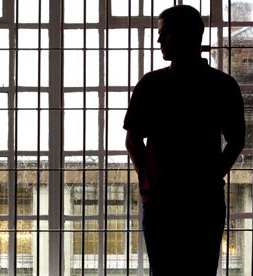 On Thursday, Nov. 22 (Thanksgiving Day in the US), Pope Benedict XVI spoke to European Directors of Prison Administration. His words are rooted in a Catholic Christian Weltanschauung of great depth and richness. As such, I wonder how much, if at all, they would resonate in contemporary American society and politics, especially among those in the public eye who wear their Catholicism or Christianity proudly, but whose politics reflect little of Catholic Christianity’s gospel-rooted values.
In speaking to those who run prisons and are responsible for the care and well-being of convicts, Benedict spoke about justice, about the need for rehabilitation (and not mere punishment), and about the need for their work to focus on the dignity of prisoners. How many American government executives (governors, etc) would say this to prison wardens and administrators in their state:
“Everyone is called to become his brother’s keeper, transcending the homicidal indifference of Cain. You in particular are asked to take custody of people who, in prison conditions, are at greater risk of losing their sense of life’s meaning and the value of personal dignity, yielding instead to discouragement and despair. Profound respect for persons, commitment to the rehabilitation of prisoners, fostering a genuinely educational community: these things are all the more urgent, in view of the growing number of ‘foreign prisoners’, whose circumstances are often difficult and precarious”.
In 2010 about 7.1 million adults were under the supervision of adult correctional authorities in the U.S. Over 3,000 of these were under a sentence of death (US Dept. of Justice, Bureau of Justice Statistics).
While the “Black” in today’s moniker of “Black Friday” might refer to the color of the ink on retailers’ profit statements, for prisons it no doubt has a different meaning. The disproportionate number of US prisoners who are African-American is startling (3.1% of the black male population, compared with 0.5% of the white male population) and the bleakness of prison life no doubt burdensome.
The pope ended his remarks on a somewhat poetic, hopeful note:
“Particularly important in this regard is the promotion of forms of evangelisation and spiritual care, capable of drawing out the most noble and profound side of the prisoner, awakening his enthusiasm for life and his desire for beauty, so characteristic of people who discover anew that they bear within them the indelible image of God.”
 Image and Likeness