Why I Will Vote for Obama: Appointments to the Federal Bench are Every President’s Lasting Legacy

All the news these days centers on the Republican Convention in Tampa and the storm battering the Gulf coast. In the midst of that, let’s not forget stories like this:  Texas redistricting discriminates against minorities, federal court says.  The unanimous decision — handed down by three judges appointed by George W. Bush and one appointed by President Obama — is clear and direct:  the congressional redistricting plan developed by the GOP leaders of Texas is discriminatory and cannot stand.

We all have good reasons (hopefully!) for making the choices we do at the ballot box. The President of the US has many powers and influences our country in countless ways. But long after any president forwards his mail from 1600 Pennsylvania Avenue, one of those presidential powers stands alone in significance:  it’s his (her?) prerogative of nominating judges to the Federal Courts. Certainly the bench of the US Supreme Court is paramount there.  But, as the story above reminds us, federal judges at all levels play a critically important role in implementing the laws of our country and ensuring that America — as the inscription over the Supreme Court building  says — is a place where there is Equal Justice Under Law.

There’s no doubt that the next president will appoint at least one new justice to the Supreme Court, with Justice Ruth Bader Ginsburg turning 80 next March (2013).  Not far behind are Justices Antonin Scalia and Anthony Kennedy, both of whom are over 76 yrs.  The next Court will have an enormous impact on the lives of LGBT people for years, perhaps decades, to come as it rules eventually on the cases that have challenged the federal “Defense of Marriage Act” (DOMA). This decision will proclaim to the world whether LGBT Americans truly do enjoy the full blessings of liberty enshrined in our Constitution, or whether we will continue to live in a country where “some are more equal than others.” 

This fact alone — the president’s right of nominating justices to the US Supreme Court — is sufficient for for me to support President Obama in his bid for re-election.  What’s your reason for your choice this election year?

“Show me your wounds” – Homily for the Second Sunday of Easter

April 14/15, 2012

For the communities of Dignity/NoVA at Emmanuel Church-on-the-Hill in Arlington, VA and Dignity/Washington at St. Margaret’s Episcopal Church, Washington, DC.

Readings

You may not remember where you were last year on this, the “Second Sunday of Easter,” and you may not know where you’ll be next year, but it just so happens that if you did or will miss Church on either of those days … not to worry! Because even though we have a 3-year cycle of Sunday Readings for our Liturgy, this Gospel from the 20th chapter of John is heard every year on this day. And no matter what we may think of some things when it comes to the institutional Church, there is usually great wisdom behind the selection of scripture readings that we have for our Liturgies. Even though the other two readings in our A, B and C cycles do change from year to year, this gospel story — about Jesus’s arrival in the locked room, John’s version of Pentecost, and the story of Thomas, the doubting “twin” — this story is heard in all three cycles. Because of this, I think it’s worth our special attention to look at this story very closely and see why it’s so central to the Easter message and what it means for us in our lives today.

Each of the elements of this passage from John is worthy of our full attention. You will remember that – of the four Gospels – the Gospel of John stands apart. The other three are referred to as the Synoptic Gospels, because they share many of the same stories, they are organized somewhat similarly, and probably drew upon some of the same oral traditions and sources. They were also written before the Gospel of John, which is sometimes called “the Last Gospel” because it was written later.

We could no doubt spend time reflecting on these “Resurrection Appearances” – on how the disciples are full of fear and therefore have locked themselves inside, separated from the outside world. Despite the locked doors, Jesus appears to them and he offers them the gift of Peace.

Likewise we could reflect on John’s description of how Jesus further strengthens these scared disciples by offering not only the gift of peace, but also by bestowing on them the gift of the Spirit. It is through this gift that the ministry of forgiveness and reconciliation springs forth, and it is through the Spirit the scared disciples will again – in time – not be afraid and will follow in the footsteps of Jesus more closely.

It is, however, this encounter with Thomas that I’d like us to focus on for just a bit. From a purely story-telling perspective, one wonders why Thomas wasn’t with the disciples on that first day. We might wonder, “Where was he and what was he doing?” Curious as those questions are, we should be careful not to get bogged down in them. If we do, we run the risk of missing the point of his initial absence. Because remember – what we are reading is not history or some journalistic re-telling of events that took place. No, what we are reading is Gospel. And Gospel is Good News. The author of John’s Gospel wants to emphasize the Good News that Jesus is indeed risen from the dead. The Johannine author wants to use a story about doubt to dispel whatever doubts may exist about the bodily resurrection of Jesus, the Crucified One.

And so we have Thomas demanding to see and experience for himself proof that Jesus is alive. This demand sets the stage for a second appearance – Jesus coming again into that same locked room, and offering again that same gift of Peace. Although John doesn’t say whether Thomas actually does put his finger into the nail marks and his hand into Jesus’ side, it is quite clear that any remaining doubt has been dispelled and Thomas now fully believes that Jesus was and is the Son of God.

Of course, none of us knows what the experience will be like when – God willing – at the end our lives we meet the Lord face to face. But earlier this week I read a possible vision of what that encounter might be like. The author suggested that when we do finally meet Jesus, He won’t question us about how well we carried out our religious obligations. He won’t be interested in whether we followed all the rules and regulations of religious practice; he won’t be interested in so much of the minutiae of life that we too often mistake for what is important. And, despite what many religious leaders and politicians seem to think, he probably won’t even be interested in our sex lives.

On the contrary, the author suggested that our heavenly encounter with Jesus will not be unlike Jesus’ encounter with Thomas. However, the table will be turned. Jesus will ask us to do for him what he did for Thomas. He will ask us to show him our wounds, the wounds that we have received as his faithful disciples, wounds that are the signs we’ve spent our lives imitating him. The wounds we have are not the wounds of soldiers or warriors or those who have engaged in battle; they are not the wounds of those who meet sword with sword, violence with violence. No, the wounds of discipleship come from living as Jesus lived, and most especially loving as Jesus loved.

For us as a community of LGBT people who seek to be such disciples, I often think that one of the core experiences of our communal lives to which all of us can relate is the experience of rejection. This experience, I think, is at the very heart of our call to discipleship. In the liturgy of last Friday we vividly recalled that Jesus, before he died, experienced the pain of rejection, the loss of friendship, and abandonment by those he loved. He knew that very human experience of what it means to give and receive nothing in return, to love and not be loved. And yet through all this, he remained faithful. He did not give in to the temptation to stop giving, to stop loving, or to lash out in anger and vengeance; nor did he give in to that ultimate temptation of thinking he had been abandoned by God. Is not this how we too should respond whenever we experience – as individuals and a community of disciples – that same rejection and abandonment? Many if not most of us bear the wounds of rejection – rejection that comes from family, from society, from the institutional Church, and sometimes even from one another. And yet, if we are able to find deep within our hearts the ability to respond to that rejection with compassion and generosity and love, then those wounds not only are healed, but they also bear witness to our faithfulness in the One who first and always has compassion, generosity and love for us.

Thomas’ doubts were dispelled by the privilege of physically seeing Jesus in Resurrection. As a people who have shared in the death of Christ through Baptism, who have received the Breath of the Spirit in Confirmation, and who are nourished by his living presence in Eucharist, we also have come to believe. We believe that we are the beloved daughters and sons of God; and we believe that for us and for all people, Jesus has overcome the pain of rejection and won victory of death for all time. And although we haven’t seen Jesus in the same way as Thomas and the other disciples did, our faith does indeed give us “eyes to see” the living presence of Jesus who is here, now, in our midst – and if you doubt that, just look around!


“He was an angel, a balm on our hearts”

Even as we struggle with how to respond to the abusive action of Fr. Marcel Guarnizo in denying the Eucharist to Barbara Johnson at her mother’s funeral, and even as we look forward to further action from the Archdiocese of Washington in response, let’s be thankful for priests like Fr. Peter Sweeney of Silver Spring, MD. According to the coverage in the National Catholic Reporter, Barbara Johnson described Fr. Sweeney this way:

“He was an angel, a balm on our hearts,” she said. “He was everything I knew the Catholic church to be.”

Amen!

A God for All People – Homily for the Epiphany of the Lord

Homily for the Feast of the Epiphany of the Lord – January 7/8, 2012

For the communities of Dignity/NoVA at Emmanuel Church-on-the-Hill in Arlington, VA and Dignity/Washington at St. Margaret’s Episcopal Church, Washington, DC.

Readings

Today the Church invites us to continue reflecting on the Mystery of the Christmas message as we celebrate the Feast of Epiphany of the Lord.  The traditional day for this celebration is January 6, and in some cultures it’s commonly referred to as Little Christmas. The word “Epiphany” means a “manifestation” or a “showing forth” and it commemorates the visit to the infant Jesus by the “astrologers” from the east, the Magi of whom Matthew speaks in today’s gospel.  When we examine this passage along with the other Scriptures that are before us, we see that the theme and message of this feast is really very simple. Essentially, this day reminds us that the salvation which is to be bestowed on the House of Israel is not restricted to the House of Israel – that the gift of God’s very self is intended for all nations and all peoples.  I suppose the message can be summed up quite easily in that one line from Paul’s Letter to the Ephesians, which he describes as his “insight into the mystery of Christ.” Paul tells us “… that the Gentiles are coheirs, members of the same body, and copartners in the promise in Christ Jesus through the gospel.”

The dawn of a new day and a new year – sunrise at Rehoboth Beach, Delaware, January 1, 2012.

“So what?” you might ask.  “What is so new about that? After all, our tradition for over two thousand years has acknowledged that the message of the Gospel is to be shared with all people.”   The answer for us today, I think, can be found when we really reflect on the question, “What does it mean to be ‘members of the same body’ and ‘copartners of the promise’?”

The people of Jesus’ day believed that God would one day save his people – and so they looked forward with hopeful expectation to the coming of the Messiah.  But for many the Messiah for whom they looked was not the apparently powerless infant of Bethlehem, but rather they awaited the coming of a powerful descendant of the House of David who would free his people from the oppression of foreign domination, bringing judgment and condemnation to those who were not of the Chosen People.

This feast we celebrate today reminds us that such a limited hope was misguided.  It reminds us that the great gift of God in the person of God’s Son is not given merely to a single person, a single family, a single town, a single culture, a single nation, a single religion, or a single Church.  No one – no priest or pope; no president, politician or presidential candidate; no bishop or pastor; no woman or man has a monopoly on that presence of God now Incarnate in the world.  Epiphany reminds us that all peoples are the intended recipients of God’s gift of self and all that flows from this connection with the Divine.  At is core, the message of the Lord’s Epiphany reminds us that the Gospel is characterized by inclusion, not exclusion; letting us not forget that there is more than enough room for all at the Lord’s Table and in God’s Kingdom.

Such a realization has great implications for those of us whom Paul refers to as “copartners,” or sharers, in the promise of the Gospel.  We believe that we do indeed share in the gift of God’s promise to Israel and that the blessings of new life in Christ are ours. But there are two dimensions to that sharing. We are not only sharers in that we have received this gift in the passive sense; but we are also called to be sharers in the more active sense, being called to share this great gift of faith and of life with one another.  We are called to share our gifts and our talents, to share all that we have and all that we are, to open the doors of our hearts and our lives to be a people who welcome and embrace others.

That’s not always an easy thing to do.  One thing that can help us live up to that call is to develop a keener sense of being able to see – as did the Magi – the presence of God Incarnate in our world.  Yes, it’s very, very easy to see situations in which God seems to be absent … but can we develop our senses of the soul so that we see and hear and touch the Divine so very present in the world all around us?

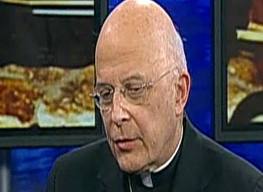
I don’t profess to be any better at this than anyone else, but here are just two examples from this past week in which I recognized God’s presence.   I was fortunate enough to get away for a couple days last weekend and see the beauty of the dawn on New Year’s Day as the sun rose over the horizon.  That sunrise – including time spent with a few special friends – was clearly painted by the hand of God, and for it I am very thankful.  More recently I think we need to recognize the presence of God as seen in the very public apology delivered by a Cardinal of the Church, something that doesn’t happen very often.  Chicago’s archbishop Cardinal Francis George publicly recognized the harm and hurt his words had done a week before in comparing the LGBT community to the Ku Klux Klan.  Just as I had been shocked by his initial comparison, I never expected that he would apologize has he has done. The cardinal said:

“I am truly sorry for the hurt my remarks have caused. Particularly because we all have friends or family members who are gay and lesbian. This has evidently wounded a good number of people. I have family members myself who are gay and lesbian, so it’s part of our lives. So I’m sorry for the hurt.”

May our prayer this Epiphany day be that we are a not only able to see and name God in our midst, but that we may also be more faithful copartners in the promise of the Gospel by sharing God’s love, hope, presence and peace with everyone we meet every day of our lives.

Cardinal George Crosses the Line

At first, one might think that Cardinal Francis George’s uncharitable comparison of the gay rights movement to the Ku Klux Klan was simply an unfortunate, off the cuff comment.  Watch the video of the interview with the local Fox station in which the comment was made, and you might have a different impression.  George is polished man when it comes to media interviews, and both his KKK reference and response to the pointed, followup question seem just a bit too prepped.

What should have been a story about how the LGBT community adjusted the schedule of its annual Pride Parade out of respect for the worshiping community at Our Lady of Mount Carmel parish has since become yet another example of how certain individuals in the Church’s hierarchy will go out of their way to speak ill of gays and lesbians. As Equally Blessed correctly states, the Cardinal’s comment is truly “unworthy of his office.” I would go even further. Such a statement is mean-spirited and damaging, not to mention simply untrue.

In these final days of the Advent Season, Catholics and all Christians look forward to celebrating the birth of Jesus and the presence of the Living God in all creation, especially in each and every person who reflects the image of the Divine.  His Eminence’s hurtful and hateful words tarnish him more than they do those of whom he spoke.

Anger, Advent and Hope

Yesterday, I was a little down. This is my second “holiday season” as a single man, a relationship status not of my choosing, but is mine nonetheless. As a single man of a certain age (!), it’s not always easy constantly encountering the sights and sounds of family togetherness and happy couples holding hands, knowing that the vast majority of my own time is spent by myself and not with the person I had hoped to share life with.

I am self-aware enough to know that this was part of the reason for being down (or “low energy,” as a dear friend euphemistically describes it); and also self-loving enough to do things to get out of myself and become more engaged with others and the world. All this notwithstanding, I also began to realize how very angry I have become. Angry not only because I had little say in my now being single, but especially at the Church, that is, the institutional Church and its officials. Looking through the many Twitter feeds, blogs and news sources I follow, I felt my anger in a way I hadn’t felt before.

Oh, I know I’ve been angry at bishops and others who claim to speak for the Church for a long time. I love the Church; it is and always will be my family. But anger is a natural response when the family you love denies your full humanity, says you are “intrinsically disordered,” and uses its power to maintain your status as a second class citizen by denying you the civil rights your straight brothers and sisters have. Anger is also a natural response when such exclusionary positions are embraced precisely by those who claim to be shepherds, called to bear witness to the presence and love of Christ.

And so I prayed. I prayed last night that this Advent might help me find ways to respond to this righteous anger not by denying it or letting it rule me, but by allowing the Spirit to transform it into something good. How can I not see the reading from today’s Morning Prayer as a response to that prayer, filling me with hope?

“Do not fear, for I have redeemed you;
I have called you by name, you are mine.
When you pass through waters, I will be with you; through rivers, you shall not be swept away.
When you walk through fire, you shall not be burned, nor shall flames consume you.
For I, the Lord, am your God, the Holy One of Israel, your savior.”

(Isaiah 43:1b-3a)

The “good” bishops apologizing? A nice idea, but ….

Brian Cahill’s suggestion in the National Catholic Reporter (NCR) that the small number of “good guy” bishops apologize for the harm done by the church leaders to gays and lesbians is intriguing. Unfortunately, I think it misses the bigger picture, and falls way short of what these “good guys” can and should be doing.

Here’s my comment.


Mr. Cahill,

The idea of an apology from church leaders for the ways in which the official church currently treats God’s LGBT children is certainly appealing. However, the problem with your suggestion — i.e. that this small group of “the good guys” apologize for the actions of others — is that it is inconsistent with the more complete idea of “reconciliation” and misses the point that, for reconciliation to be truly meaningful, it must be personal.

If my brother steals your car or harms you in any way, I can tell you that “I’m sorry this happened” or “I regret what my brother has done; he should not have done it,” but this is not an apology in the formal sense. It’s a statement of empathy, care, and concern for the harm you have experienced at the hands of another. Only my brother can truly “apologize” for the harm HE committed (sorrow for one’s actions), only HE can make right (penance) this harm, promising not to do it again (purpose of amendment), and only YOU can forgive him. These elements are what is necessary for reconciliation to occur.

  • What these “good guys” CAN do, however, is challenge — fraternally, respecfully, lovingly — the misguided “teachings” of their fellow bishops on the various issues surrounding homosexuality.
  • What they SHOULD do is embrace their teaching responsibility and fraternally correct their brother bishops who continue to misinterpret Sacred Scripture and ignore the truths from all current sciences about sexuality and sexual orientation.
  • What they SHOULD do is help their brother bishops form their consciences so that they — the bishops, including the Holy Father, who speak harshly and disrespectfully of God’s LGBT children — may allow their hearts to be unhardened, and they may find it in themselves to apologize for the wrong they continue to do.

Now THAT would be a good day in God’s Church!

Good News from Boston

For more than a decade, the Catholic Church in Boston has more frequently been associated with priests and bishops who failed miserably in their personal and professional lives in protecting the most innocent among us.  Finally, some truly “Good News” came yesterday when St. Cecilia’s Church celebrated its “All Are Welcome” Mass to proclaim the Gospel Message that all God’s children — including those whom God created gay or lesbian — are not only a part of God’s family, but are truly welcome in the doors and at the Eucharistic Table.  I’m so very proud of my friend Fr. John Unni, pastor of St. Cecilia’s, for having the faith and the courage to stand up and proclaim what Jesus would no doubt have proclaimed.

A Catholic Family Conversation on LGBTQ Issues at Georgetown University

Last evening I attended A Catholic Family Conversation on LGBTQ Issues with speakers Andrew Sullivan and Maggie Gallagher, moderated by EJ Dionne. The event was held at Georgetown University, sponsored by the school’s Democrat and Republican clubs.

Sullivan was thoughtful and articulate in his presentation as he told his own story and shared with the audience why it’s important for LGBT people to have the same civil rights as all other people. Saying that the first person he came out to was God, at an early age he understood that “this thing” (i.e. his experience of same-sex attraction, only later to be labeled as homosexuality or being gay) was part of his very nature, his very core; part of who God made him to be. I can identify!

While Sullivan’s starting point in the discussion was his own lived-experience, Gallagher’s starting point was an abstraction.  This, I think, exemplifies the fundamental flaw in the arguments of those who seek to deny God’s gay and lesbian children their rights and rightful place in society. Gallagher’s argument goes essentially like this:

Because there is something unique and special in the way humans procreate; and because this involves the coming together of a man and a woman in the act of sexual intercourse; and because the child produced from such intercourse deserves to be raised by the mother and father who created him/her; the social bond which we call “marriage” is unique and limited to those couples who can procreate. Thus, because same-sex couples cannot produce and raise children in the same way as heterosexual couples, they therefore should not be afforded the same social recognition of their relationships in the institution which societies throughout history and across cultures have called “marriage.”

So what’s the problem? Well, the many self-evident holes in that argument notwithstanding, the problem is that she’s barking up the wrong tree; she’s arguing the wrong issue.  No one who seeks to advance the rights of gay people within society at large or within the Church is in any way “attacking” heterosexual marriage or seeking to change the way children are produced and raised.  The starting point for advocates of LGBT rights is the lived experience of those of us whom God created gay. That’s what this is about — simply recognizing that there is now, always has been, and probably always will be a significant part of the human family whom God creates gay or lesbian. Given this unavoidable fact, we’re faced with the question of how God’s gay and lesbian children can and should live within society.

Gallagher may well have legitimate concerns about the “breakdown of [heterosexual] marriage” or “what’s best for children” or any other social issue that warrants its own discussion.  But many of us who hope for change in church and society regarding gay people are concerned less with issues and more with people.  In fact, I have to wonder if the evening would have unfolded differently if that distinction had been recognized from the beginning.  If this had been a “Catholic Family Conversation about LGBTQ People,” would that have made a difference?