

Demonstrators in front of US Capitol (Dec. 2012)
This week has been hard.
Taking a brief 3-day cruise that began last Sunday, we were at sea and “off the grid” for the final days of the recent election. I did not sleep Tuesday evening, tossing and turning and praying all night. By 6 am we had arrived within sight of Port Everglades and cellular service was returning. While following my morning routine of going to the Deck 5 coffee shop, I was able to get a ful cellular signal. I opened the Washington Post app on my phone and saw the words, “Trump Triumphs.” I felt ill; I sat down for a few moments in the empty lounge I was passing through. I returned to our stateroom (sans cappucino) to share the news with my partner. I don’t think I’m revealing too much when I say that we cried. It remains unfathomable to me how anyone — including some family and friends — could have voted for a man who seems to be without moral compass and whose campaign brought out the worst in the human spirit. This Huffington Post commentary expresses what I and so many millions of Americans are feeling. As commentator Jennifer Sullivan writes, “The entire Trump/Pence ticket’s platform revolves around making other individuals be made to feel less than. It is divisive. It is harmful. And it stands in stark opposition to every ideal this country was founded upon.” For me, the enduring feeling — as someone on Facebook stated — is as if my neighbors, my family, my friends voted against me.
It Is What It Is
One of the essential elements of mental and spiritual health is the ability to live in reality. And so I recognize and accept what is. Tuesday cannot be undone. Our quirky Electoral College system that allows someone who came in 2nd to be named the winner cannot be retroactively changed. One hundred million voters who decided their vote didn’t count cannot now cast their ballots and have their voices heard, too.
The only option we have is to move forward, reminding ourselves daily of the values we hold most dear and how those values impact our daily lives and daily choices. Like the demonstrators above who were not afraid to demonstrate for peace on the grounds of the US Capitol, we too must find ways of ensuring that our voices are heard in the public square — whenever and however we can.
 Again, this has been a tough week. But I took comfort this morning from this passage in Richard Rohr’s Everything Belongs (p. 132).
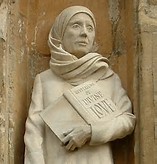
“Again I quote beloved Julian of Norwich in her famous thirteenth Showing. ‘In fear and trembling,’ she asked Jesus, ‘O good Lord, how can all be well when great harm has come to your creatures through sin? And here I wanted, if I dared, to have some clearer explanation to put my mind at rest.’ And he said, ‘Since I have brought good out of the worst-ever evil, I want you to know by this; that I shall bring good out of all the lesser evils, too.'”
Or, as Julian is famously quoted: “All shall be well, and all shall be well and all manner of thing shall be well.”

 Image and Likeness