
Grazie per il vostro amore e il vostro sostegno. Possiate sperimentare sempre la gioia di mettere Cristo al centro della vostra vita.
— Benedetto XVI (@Pontifex_it) February 28, 2013
Thank you for your love and your support. May you always experience the joy of putting Christ at the center of your life.
Tag Archives: Benedict XVI
Resignation of Benedict XVI: First Impressions
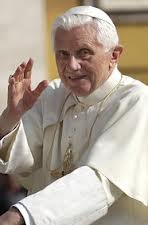
Pope Benedict XVI
It will never be an understatement that the announced resignation of Pope Benedict XVI has shocked the world. Already the media and internet are abuzz with discussion, commentary, and speculation about what will follow.
I have two initial reactions: first, a sense of trepidation. Moving into the unknown, especially when it comes so quickly and with apparently so little notice, can leave us with a sense of anxiety. Regardless of what one thinks of Benedict and his legacy, he is a known entity. What will happen after February 28, 2013, the day his resignation becomes official, is yet to be seen.
Second, a sense of hopeful expectation. The fact that a conservative pope would do what most conservative Catholics would consider to be unthinkable is a sign to me that God’s Spirit is still at work in the Church. Sometimes an unexpected shock — and this news is a shock — is what the Church needs in order to move forward. Doing what some would have considered an impossibility is a stark reminder of what is and is not a core belief or practice in Catholicism. The concept of creeping infallibility is just the extreme version of a more broad notion that says “this position” or “that practice” is from God, when in fact it is limited by time or place or culture. The resignation of a conservative pope reminds us that the Church can and does change — and change is a sign of life!
May God bless Benedict in whatever lies ahead for him, and may God bless all God’s Holy People as a new Successor to St. Peter is chosen to lead the Church!
Following Pontifex
So what will Pope Benedict’s first tweet be?? As we wait, here’s an interesting discussion about possible ways to describe Twitter in Latin.

“His brother’s keeper” – Benedict XVI and Prison
There’s no doubt that the Catholic Church these days isn’t very high on many people’s lists of respected institutions. There are many valid reasons for this, and there’s no need to restate them here. One of the great and sad side-effects of this largely self-generated reality is that the Church’s moral voice on so many important matters is not able to be heard.
 On Thursday, Nov. 22 (Thanksgiving Day in the US), Pope Benedict XVI spoke to European Directors of Prison Administration. His words are rooted in a Catholic Christian Weltanschauung of great depth and richness. As such, I wonder how much, if at all, they would resonate in contemporary American society and politics, especially among those in the public eye who wear their Catholicism or Christianity proudly, but whose politics reflect little of Catholic Christianity’s gospel-rooted values.
In speaking to those who run prisons and are responsible for the care and well-being of convicts, Benedict spoke about justice, about the need for rehabilitation (and not mere punishment), and about the need for their work to focus on the dignity of prisoners. How many American government executives (governors, etc) would say this to prison wardens and administrators in their state:
“Everyone is called to become his brother’s keeper, transcending the homicidal indifference of Cain. You in particular are asked to take custody of people who, in prison conditions, are at greater risk of losing their sense of life’s meaning and the value of personal dignity, yielding instead to discouragement and despair. Profound respect for persons, commitment to the rehabilitation of prisoners, fostering a genuinely educational community: these things are all the more urgent, in view of the growing number of ‘foreign prisoners’, whose circumstances are often difficult and precarious”.
In 2010 about 7.1 million adults were under the supervision of adult correctional authorities in the U.S. Over 3,000 of these were under a sentence of death (US Dept. of Justice, Bureau of Justice Statistics).
While the “Black” in today’s moniker of “Black Friday” might refer to the color of the ink on retailers’ profit statements, for prisons it no doubt has a different meaning. The disproportionate number of US prisoners who are African-American is startling (3.1% of the black male population, compared with 0.5% of the white male population) and the bleakness of prison life no doubt burdensome.
The pope ended his remarks on a somewhat poetic, hopeful note:
“Particularly important in this regard is the promotion of forms of evangelisation and spiritual care, capable of drawing out the most noble and profound side of the prisoner, awakening his enthusiasm for life and his desire for beauty, so characteristic of people who discover anew that they bear within them the indelible image of God.”
“Fundamentalism is always a falsification of religion.”
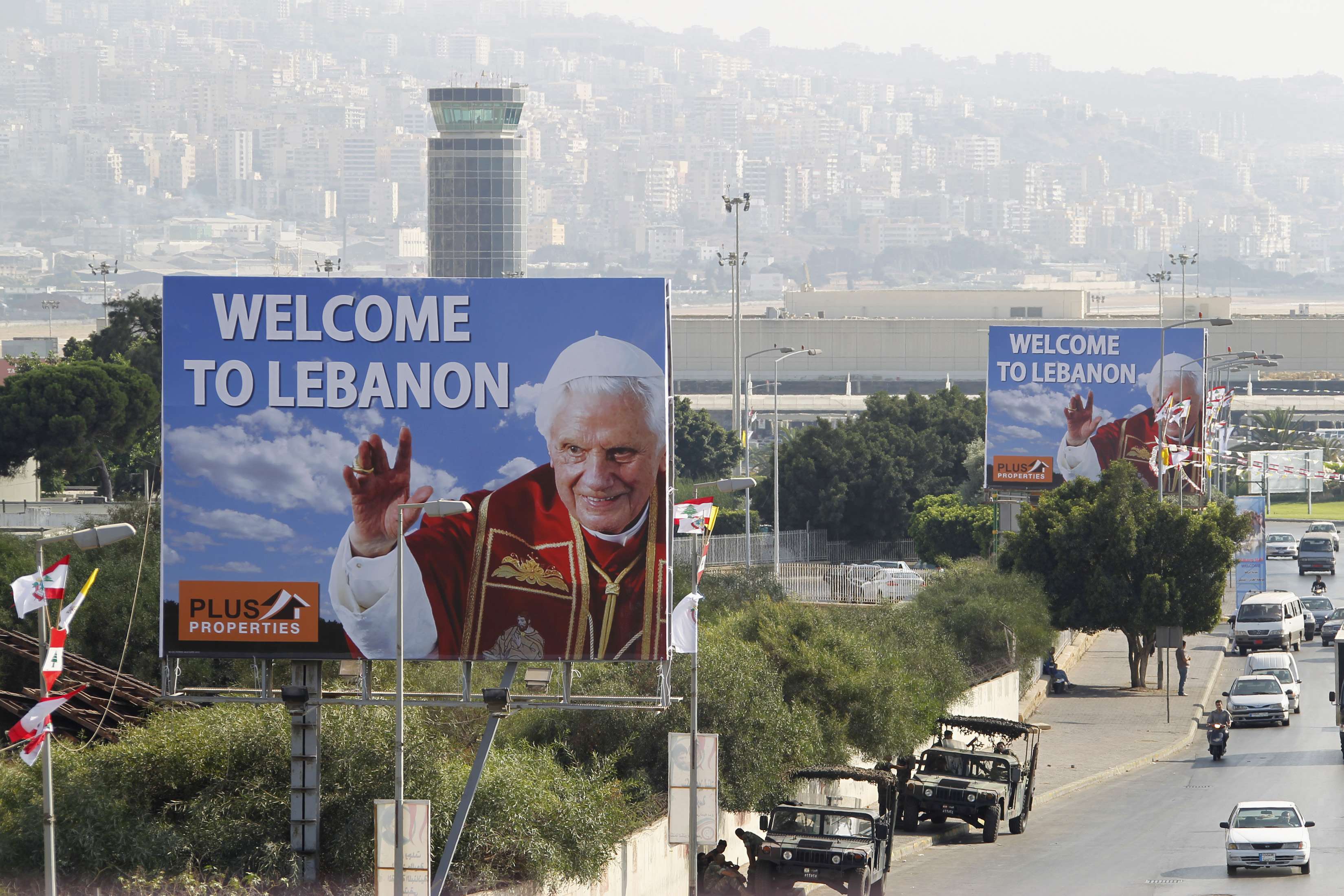 On the flight to Lebanon for his current pastoral visit to that troubled part of the world, Benedict XVI answered journalists’ questions. He was asked:
“Many Catholics are expressing concern about increasing forms of fundamentalism in various parts of the world and about attacks that claim large numbers of Christians as victims. In this difficult and often violent context, how can the Church respond to the imperative of dialogue with Islam, on which you have often insisted?”
Benedict replied:
“Fundamentalism is always a falsification of religion. It goes against the essence of religion, which seeks to reconcile and to create God’s peace throughout the world. … The essential message of religion must be against violence – which is a falsification of that message, like fundamentalism – and it must educate, illuminate and purify consciences so as to make them capable of dialogue, reconciliation and peace”.
I couldn’t agree more! Fundamentalism — including so-called Christian Fundamentalism and its many iterations here in the United States — falsifies the truths of Christianity and the Gospel of Jesus. It picks and chooses bits and pieces that serve the narrow purpose of its proponents, usually based in some ideological starting point. In context, such starting points can be understood correctly. But out of context and not seen as part of a larger and unified whole, they can undermine the Truths of the religion they purport to uphold. As a falsification of religion, fundamentalism is not merely the absence of faithful religious expression; it is its antithesis.
Even within Catholicism we have our “Catholic Fundamentalists” who fail to see the full breadth and depth of our Catholic Christian tradition, choosing instead to limit the power of the Gospel by boundaries of their own making. When the Sacraments are used as tools to exclude rather than heal; when the Scriptures are presented as support for one partisan perspective over another; and when the rules and regulations of human institutions become more important than the mission they are meant to serve … when these things happen, fundamentalism and false religion are present.
Benedict XVI on Poverty, Wealth and the Responsibilities of States
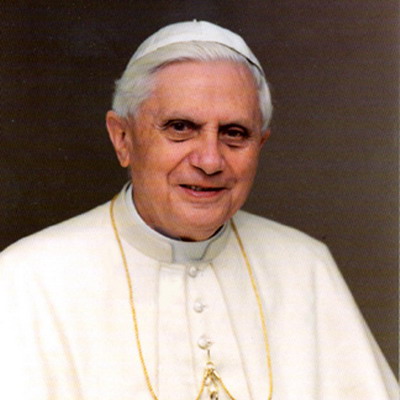
Pope Benedict XVI
Earlier today (May 4, 2012) in his address welcoming several new ambassadors to the Holy See, Pope Benedict stated:
“When poverty coexists with enormous wealth, a sense of injustice arises … Therefore it is necessary for States to ensure that legislation does not increase social inequality and that people can live dignified lives.”
I wonder how much this principle is kept in mind around the world as governments debate and pass legislation? How many Members of Congress, and their staffs, consider the growing disparity not only between the rich and the poor, but even between the majority in the middle and the extremes of either end?
How often do legislators ask this question when considering the many bills and motions and amendments that come before them in their work: “Will this legislation help people lead more dignified lives?”
Benedict, Nuns, Christians…and “freedom” to proclaim the Gospel
In his daily meditation for today (April 24, 2012), Franciscan Fr. Richar Rohr writes:
I am not denying that Jesus could and undoubtedly did physical healing. It still happens, and I have seen it, but the healings and exorcisms in Mark’s Gospel are primarily to make statements about power, abuse, relationships, class, addiction, money, the state of women and the poor, and the connections between soul and body—the exact same issues that we face today. [emphasis added]
Just as Jesus’ actions made statements about those parts of the world in need of healing, so have the actions of many of his followers. In the United States, religious women — sisters and nuns (there is a difference, by the way!) — for more than two centuries have been at the heart and forefront of two of the most important activities of any society: Education and Healthcare. Communities of religious women have founded hospitals and clinics and hospices; they have opened schools and colleges and universities. And while they have ministered to people across the social spectrum, they typically would be willing to serve where others would dare not tread.
Even Pope Benedict XVI has praised the historic role of women in building the Church in America. Just yesterday, the pope noted that two women from this continent will be canonized later this year — Blessed Kateri Tekakwitha and Blessed Mother Marianne Cope.
While recalling the historic role of women in the Church in the United States, the pope notably did not praise the current role played by so many tens of thousands of women religious in the daily lives of hospitals, schools, parishes and communities across this land. Instead, he gave voice to that growing canard that the bishops of the US have latched on to, i.e. the notion that the “freedom” of religion is somehow under attack. In concluding his speech to some visiting Americans, Benedict stated:
In these days I ask your continued prayers for the needs of the universal Church and in particular for the freedom of Christians to proclaim the Gospel and bring its light to the urgent moral issues of our time.
I don’t know where the Pope gets his information, though given the Vatican’s recent actions regarding congregations of women religious in the US (see coverage in US Catholic for one perspective), I suspect it’s not from very good sources. Concerning religious freedom, however, I’ve yet to see any roadblocks put forth hindering the proclamation of the Gospel or the light it sheds on the “moral issues of our time.” What the Pope fails to understand is that his voice and the voices of his brother bishops are not the only voices empowered to proclaim the Gospel. The voices of religious women and men, of priests and lay people, all the Baptized together have a right and responsibility to proclaim the Gospel in both word and — like Jesus in Mark’s Gospel — in action. At times, those voices will differ as we collectively discern “the signs of the times” and struggle to understand where and how God’s Spirit might be leading us here and now.
Benedict rightly notes that “Christians” (he didn’t limit this to the hierarchy!) have the freedom to proclaim the Gospel. I pray that he and his brother bishops will listen to the voices of Christians doing just that, even when what they have to say might not be what Benedict wants to hear!
What’s the difference, really??
Here are two current stories about two very similar men whom the Catholic Church treats very differently.
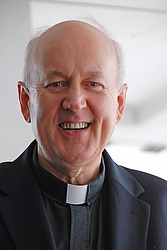 The first is a man who followed a call to ministry, was ordained a priest within his church, and eventually became a bishop. Because that church allows priests to be married, Jeffrey Steenson also has a wife, three children, and even a grandchild. Steenson, the former bishop of the Episcopal Diocese of the Rio Grande, Albuquerque, NM has since left the Anglican Communion, been welcomed into the Catholic Church and ordained a Catholic priest. Most recently he was appointed head of a new Ordinariate intended to smooth the transition to the Catholic Church for Episcopalians who, for whatever reason, feel called to swim the Tiber. Although Fr. Steenson will not be permitted to become a bishop, his new position essentially gives him all the administrative authority of a bishop and he will even be a voting member of the US Conference of Catholic Bishops.
 The second man also followed a call to ministry within his church, and was similarly ordained both a priest and a bishop. Though I don’t presume to know anything other than what is being reported today, Gabino Zavala apparently also felt called to the intimacy of a marital relationship and family life, and recently revealed that he is the father of two teenage children. In the current structures of Catholicism, however, the requirement of mandatory celibacy makes all this a big “no, no.” And so, today’s big news is that the Pope has accepted Zavala’s resignation as an auxiliary bishop of the Archdiocese of Los Angeles. The Vatican announcement of this news cites that part of Canon Law (can. 401§2) which allows for the resignation of a bishop prior to the established retirement age of 75 due to ill health or “some other grave cause.”
Putting aside the fact that Bishop Zavala did not live up to the imposed requirement in the Western Church that priests and bishops be celibate, the question remains: At a substantive, material level, how are these two men really different, and why does the Catholic Church treat them so differently?
Opposing the death penalty: “common ground” for conservative and liberal Catholics
 The idea of “common ground” seems to have become a victim of the extremism all around us these days. In the worlds of politics and religion, we hear regularly about the lack of civility, the dearth of bipartisanship, and the recalcitrant conflicts between those who have different perspectives on almost every issue.
Instead of focusing on what separates, the concept of common ground asks us to look for those areas in which we agree in order to make some progress and do some good. The fact that such common ground must be searched for in the first place means we already know, and likely know all too well, the areas in which we disagree. It recognizes that progress on those issues of conflict may not be possible right now … but surely there is something we can do, some common ground we can find, in order to make this world a better place.
In the Catholic world where conservatives and liberals have conflicts no less strident than those on Capitol Hill, why can we not come together on the issue of our collective opposition to the death penalty as a place to start?
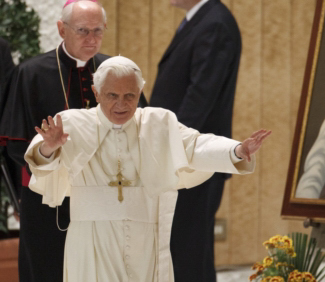 Recently, Pope Benedict XVI praised the advocacy efforts of some Americans from Chicago representing a group whose name needs no explanation: Illinois Coalition to Abolish the Death Penalty.
If American Catholics from cathedra to pew could find this common ground, at least two benefits could ensue. First, we might be able to help our fellow citizens see that our words about human dignity and the value of human life are words with meaning. We would put into practice what we preach when we say our faith calls us to respect the dignity and value of every person. Second, achieving a goal with someone typically seen as “the other” would surely open our eyes even more, helping us see the humanity in “the other” whom we can sometimes readily dismiss. Perhaps we might understand more fully why they cling to what they cling, even when we cling to something different. Common ground forces us to see one another not from a distance, but up close.
Perhaps that’s not such a bad thing to do, especially during this Advent Season when we celebrate our belief not in a distant and disinterested god, but in a God who took on the common ground of our own humanity and invites us daily to do the same.
Your thoughts? Would love to know.
What do Straight Catholic Priests think about the new Anglican Ordinariate?
By now everyone is probably aware that the doors of the Roman Catholic Church have been opened widely to those disaffected members and the Anglican Communion who seek communion with Rome. Such disaffection usually has to do with the ordination or women and more open attitudes toward gays and lesbians in some branches of Anglicanism. Whether as individuals or even as entire parishes and communities, Rome has put in place processes and structures by which Anglicans (Episcopalians in the US) can enter the Catholic Church, often keeping in place many of the traditions and practices they bring from their Anglican heritage.
On its face, th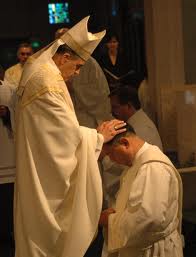 is would seem like a gracious thing to do. It was back in 1980 when Pope John Paul II granted a special “Pastoral Provision” allowing clergy from the Anglican Communion to become Catholic and continue to exercise their priestly ministry. The difference with this new provision was (and remains) that if married, such clergy would obviously remain married — thus creating a married Catholic priesthood. At the time, I was surprised that there wasn’t more of an outcry from Catholic priests who had made the difficult choice between marriage and priesthood. After all, the Church has always thought of both as vocations, both sacramental, and not mutually exclusive. Though complex, the rationale of mandatory celibacy in the Roman Rite of the Catholic Church has largely been rooted in matters of order and church discipline.
  Yes, there have been countless attempts to spiritualize this requirement, but mandatory celibacy for non-monastic clergy in the Roman Rite has sometimes been called a discipline in search of a theology.
More recently, this open door policy has been expanded not just to individuals, but to entire Anglican parishes. Benedict XVI’s apostolic constitution Anglicanorum Coetibus (2009) established the norms and procedures for this en masse “swimming the Tiber” to take place.
And so we come to the most recent meeting of the US Bishops held in Baltimore Nov. 14-16, 2011. There, it was announced that the Anglican Ordinariate, as it is known, would be implemented in the US on January 1, 2012. Washington’s Cardinal Donad Wuerl heads up the US bishops’ efforts to welcome former Anglican groups, while Bishop Kevin Vann of Fort Worth, TX takes over as the “Ecclesiastical Delegate” for the 1980 Pastoral Provision process.
So, my question is this: What do men who were raised Catholic and who feel called both to priesthood and marriage have to say about all this? We certainly know that priests were not consulted before either of these provisions were announced, but one would expect that some priest or group of priests would at least raise to the bishops questions about the fundamental fairness of this very unequal treatment. I can find nothing from a “policy perspective” on the website for the National Federation of Priests’ Councils, nor can I even find a website for a recently announced new Association of U.S. Catholic Priests. So, what do straight Catholic priests think of all this? Anyone??
 Image and Likeness