“Introduction: Image and Likeness”

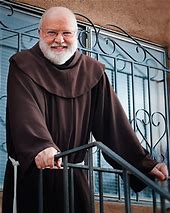
Richard Rohr, OFM

When one of my favorite authors titles a blog post with the same title of these pages, how could I not share it? In part, Franciscan Fr. Richard Rohr notes a fact of history and human experience that reinforces a fundamental and false belief underlying all dualistic, all-or-nothing perspectives:

“Christianity has far too easily called individual, private behaviors sins while usually ignoring or even supporting structural and systemic evils such as war, colonization, corporate greed, slavery, and abuse of the Earth. All of the seven capital sins were admired at the corporate level and shamed at the individual level.”

Here’s his full post: How can everything be sacred? 

The Present is all we have – and why we must forgive

IMG_4983

Myakka River State Park, Florida

If you’ve ever been in a Catholic church, you’ve surely noticed the tabernacle. It’s a small box-like structure on an altar, and usually there’s a candle nearby, burning 24/7. Inside the tabernacle is reserved some of the bread that was blessed and consecrated at Mass, the liturgical celebration of what we call Eucharist.  Because we believe that Jesus is somehow present in the elements of bread and wine blessed in his name, Catholics refer to this reserved Eucharist as the Real Presence.  I like that term a lot. Whether you hold to Catholicism’s sacramental beliefs or not, there’s something very powerful and meaningful about Presence.  The Present, really, is all we ever have. What, then, am I doing with it? How am I using the gift of this present moment right here, right now? Fr. Rohr offers some thoughts:

Only the false self easily takes offense. The false self can’t live a self-generated life of immediate contact with God. It defines itself by the past, which is to live in un-forgiveness. Forgiveness is the only way to free ourselves from the entrapment of the past. We’re in need not only of individual forgiveness; we need it on a national, global, and cosmic scale. Old hurts linger long in our memories and are hard to let go. We must each learn how to define ourselves by the present moment—which is all we really have. I will not define myself by what went wrong yesterday when I can draw upon Life and Love right now. Life and Love are what’s real. This Infinite Love is both in us and yet it is more than us.

From Daily Meditation for Aug. 1, 2017

The Truly Catholic Vision of Religious Freedom

Today's post from Bondings 2.0, On the USCCB's Fifth (And Hopefully Final) "Fortnight For Freedom", prompted me to re-read Dignitatis Humanae [DH], the Second Vatican Council's Declaration on Religious Freedom. After all, if the bishops or others think that religious liberty and the free exercise of religion are under attack in the US, one would think we should be looking to this important document for guidance.

DH clearly and strongly promotes the rights of individuals and social groups "… to be immune from coercion on the part of individuals or of social groups and of any human power, in such wise that no one is to be forced to act in a manner contrary to his own beliefs, whether privately or publicly, whether alone or in association with others, within due limits."

The bishops' concern that religious persons and institutions might be forced by the government to act in a way that is coercive and violates their "own beliefs" clearly finds some support here. However, that nasty 3-word phrase at the end puts a different slant on things: "within due limits." Several times DH references the "just order of society" and the "due limits" on one's religious freedom. Perhaps the clearest statement is in Article 7, which begins:

"The right to religious freedom is exercised in human society: hence its exercise is subject to certain regulatory norms. In the use of all freedoms the moral principle of personal and social responsibility is to be observed. In the exercise of their rights, individual men [sic] and social groups are bound by the moral law to have respect both for the rights of others and for their own duties toward others and for the common welfare of all. Men are to deal with their fellows in justice and civility."

While the bishops and other "religious freedom" advocates look with limited vision to the US Constitution, they seem to have forgotten the teachings of their own Tradition. DH reminds us of the "due limits" and "regulatory norms" which a just and civil society must enact to ensure the "rights of others" are respected. The bishops' original concern related to healthcare, though quickly was extended to the area of LGBT rights. The US Supreme Court has decided to hear a case from Colorado about the refusal by the owner of Masterpiece Cakeshop, Jack Phillips, to bake a wedding cake for a same-sex couple. Phillips cited his disapproval of same-sex marriage, which he claims to be rooted in his Christian faith, as the reason.

From a Catholic teaching perspective, it'd be quite a stretch to say that the baking of a wedding cake rises to the level of a "religious act" worthy of protection. If it did, then where would it end? In theory, no end would be in sight. After all, any religious person who takes faith seriously would try to express his/her religious values in all aspect of life, right? If that's true, what's to stop said religious person from hiding behind such "religious freedom protections" for any and all acts in which he engages?

As the bishops of Vatican II rightly recognized, civil society has the obligation to impose due limits and appropriate regulatory norms on the exercise of religious freedom. Such limits and norms must respect the rights of ALL citizens. As we celebrate today 241 years of independence from political tyranny, may we be always strive to be free from tyranny of all stripes, even when wrapped in red, white and blue.


Leadership and Vision

Yesterday’s meditation from Richard Rohr, OFM provides more historical reference to the tradition of the “third eye.” Spiritual traditions of both east and west know that there is a middle way, beyond the dualistic, either/or way of seeing. One must find this third eye in order to move beyond “us and them” seeing toward deeper insight and wisdom where everything and everyone belong.

I could not help but think of both the current US president as well as the bishop of Springfield, IL Thomas Paprocki (currently in the news for issuing guidelines that prohibit Catholics in same-sex marriages from receiving a Church funeral) when I read Rohr’s words below.

“One wonders how far spiritual and political leaders can genuinely lead us without some degree of contemplative seeing and action. It is hardly an exaggeration to say that “us-and-them” seeing, and the dualistic thinking that results, is the foundation of almost all discontent and violence in the world… It allows heads of religion and state to avoid their own founders, their own national ideals, and their own better instincts. Lacking the contemplative gaze, such leaders will remain mere functionaries and technicians, or even dangers to society,” [emphasis added].

On Becoming — A poem for Easter

I am no poet. But there was a period of time several decades ago when — impelled by what forces I know not — I wrote a poem. One poem. I’ve not shared it before, but it seems to fit on this Easter Sunday. Here it is.

Orchid blossom

On Becoming

How I wish words would poetically pour
forth, that my pen with beauty and
power and clarity of thought would paint
the blank paper with unforgettable
images that express what I think and
feel.

How I wish that I could find within myself
that well which artists find
and drop their buckets in
so not only they may drink from what they draw,
but also the thirst of others is in some
measure quenched.

How I desire to be called “creative” and
seen as a man with a heart as
well as head;
as a man who not only
sees the stars and speculates on what possibilities
they contain, but also
sees the stars and wonders in awe-filled silence
at that Hand which gave them life
— and him as well.

And yet I am content.
I am at peace with me.
It is as if the words of the sixth day
are forever resounding within my heart.
I am not the brightest blossom of creation, but
am its most beautiful bud — never fully flowered —
becoming more beautiful each moment, more graced
today than yesterday,
and tomorrow more…….

(c) Tim MacGeorge, 1992

The Victory of Justice

I have a work colleague who occasionally makes good-natured comments about how I want the world to be “fair,” while asserting that the world “isn’t fair.” This often comes on the heels of me pointing out ways in which the various “systems” we are a part of do not live up to their self-professed ideals or principles of operation. I respond that I fully understand the difference between “what is” and its distance from “what could be.” But, I ask, should the acknowledgment of this reality prevent us from working toward a better reality for ourselves and our world?

As we begin this Holy Week, today’s words from Isaiah (ch 42) strike home: 

“I, the LORD, have called you for the victory of justice, I have grasped you by the hand; I formed you, and set you as a covenant of the people, a light for the nations, to open the eyes of the blind, to bring out prisoners from confinement, and from the dungeon, those who live in darkness.”

Trusting that All Will Be Well

Demonstrators in front of US Capitol (Dec. 2012)

Demonstrators in front of US Capitol (Dec. 2012)

This week has been hard.

Taking a brief 3-day cruise that began last Sunday, we were at sea and “off the grid” for the final days of the recent election. I did not sleep Tuesday evening, tossing and turning and praying all night. By 6 am we had arrived within sight of Port Everglades and cellular service was returning. While following my morning routine of going to the Deck 5 coffee shop, I was able to get a ful cellular signal. I opened the Washington Post app on my phone and saw the words, “Trump Triumphs.” I felt ill; I sat down for a few moments in the empty lounge I was passing through. I returned to our stateroom (sans cappucino) to share the news with my partner. I don’t think I’m revealing too much when I say that we cried. It remains unfathomable to me how anyone — including some family and friends — could have voted for a man who seems to be without moral compass and whose campaign brought out the worst in the human spirit. This Huffington Post commentary expresses what I and so many millions of Americans are feeling. As commentator Jennifer Sullivan writes, “The entire Trump/Pence ticket’s platform revolves around making other individuals be made to feel less than. It is divisive. It is harmful. And it stands in stark opposition to every ideal this country was founded upon.”  For me, the enduring feeling — as someone on Facebook stated — is as if my neighbors, my family, my friends voted against me.

It Is What It Is

One of the essential elements of mental and spiritual health is the ability to live in reality. And so I recognize and accept what is. Tuesday cannot be undone. Our quirky Electoral College system that allows someone who came in 2nd to be named the winner cannot be retroactively changed. One hundred million voters who decided their vote didn’t count cannot now cast their ballots and have their voices heard, too.

The only option we have is to move forward, reminding ourselves daily of the values we hold most dear and how those values impact our daily lives and daily choices. Like the demonstrators above who were not afraid to demonstrate for peace on the grounds of the US Capitol, we too must find ways of ensuring that our voices are heard in the public square — whenever and however we can.

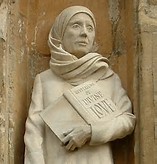
julian-of-norwichAgain, this has been a tough week. But I took comfort this morning from this passage in Richard Rohr’s Everything Belongs (p. 132).

“Again I quote beloved Julian of Norwich in her famous thirteenth Showing. ‘In fear and trembling,’ she asked Jesus, ‘O good Lord, how can all be well when great harm has come to your creatures through sin? And here I wanted, if I dared, to have some clearer explanation to put my mind at rest.’ And he said, ‘Since I have brought good out of the worst-ever evil, I want you to know by this; that I shall bring good out of all the lesser evils, too.'”

Or, as Julian is famously quoted:  “All shall be well, and all shall be well and all manner of thing shall be well.”


Florida DCF Should Protect LGBT Youth in Foster Care

Florida Department of Children and Families
1317 Winewood Boulevard, Bldg. 4

Tallahassee  Florida  32399

ATTN:  Ms. Jodi Abramowitz

Dear Ms. Abramowitz,

My name is Timothy MacGeorge and I am a Licensed Clinical Social Worker (LCSW).  In my work as a therapist at a community behavioral health center in Naples (FL), I occasionally work with youth who self-identify as lesbian, gay, bisexual, or transgender (LGBT).

I am writing to urge the Department of Children and Families (DCF) to restore the language that was recently stricken from  Rule 65C-I4: Group Care Licensing (cf. http://www.dcf.state.fl.us/publicnotices/20160408-Notice-of-Change-65C-14.pdf ) being considered at tomorrow’s [April 8, 2016] public hearing.  As a therapist, I have seen first hand how a young LGBT person’s emotional well-being is impacted by the degree to which he/she is accepted by his/her family, friends, classmates, teachers, and society at large. When young people are accepted for who they are, they are more likely to thrive and reach their God-given potential. When young people are denigrated, shamed, and made to feel that their sense of self is an abomination to be exorcised, then the resulting high rates of anxiety, depression and even suicide should not come as a surprise. All reputable mental health organizations now recognize the broad range of sexual orientations and gender identities within the human family. They also recognize that any attempt to change or “convert” someone’s sexual orientation or gender identity is not only clinically unsound, but also professionally unethical.

Media reports suggest that the impetus behind this recent language change in the Proposed Rule was pressure from religious groups in the state, including the Florida Catholic Conference. As a Catholic Christian (one who was also ordained a Catholic priest), I believe that there is more support in Sacred Scripture for accepting all of God’s children as they are, created in God’s image and likeness, than there is for any view which sees LGBT persons as “unnatural,” “not normal” or in need of so-called “conversion therapy.”

Please do the right thing and restore the recently stricken language from the proposed rule. Please act on behalf of all youth committed to DCF’s care — including LGBT youth.

Sincerely,

Timothy J MacGeorge, LCSW
Bonita Springs, FL  34135