
New York Cardinal Edward Egan’s moving and thought-provoking article on abortion.
Category Archives: Uncategorized
Thirtieth Sunday of Ordinary Time – October 25/26, 2008
Thirtieth Sunday of Ordinary Time – October 25/26, 2008
Dignity/NoVA & Dignity/Washington
There is a story from the Talmud about two great Rabbis who lived a generation before Jesus. One, Rabbi Shammai, was known to be very strict in his views and adherence to the law. One day, a gentile – a non-Jew – came to him and said he would convert to Judaism if the rabbi could teach him the whole Torah in the time he could maintain his balance standing on one foot. Thinking this ridiculous because the Torah was so involved and substantive, Rabbi Shammai picked up a stick and drove him away! The gentile asked the same question of Rabbi Hillel, who was known for his kindness, his gentleness, and his concern for humanity. Rabbi Hillel listened to his question, the man stood on one foot, and the rabbi told him that that the whole of the Torah can be summed up in this: That which is hateful to you, do not do to your neighbor. That is the whole Torah; the rest is commentary. Needless to say, the man converted!
That story seems appropriate as we continue to read from the 22nd Chapter of Matthew. Last week we heard the story about one group, the Herodians – followers of Herod and collaborators with the Roman occupiers – came to Jesus and sought to “trip him up” with their question about whether or not it was lawful to pay taxes to the emperor. Of course, Jesus would not play their game and responded with his line that they should “render to Caesar what is Caesar’s and to God what is God’s.”
Matthew then follows with a story in which Jesus is questioned by the Sadducees about Marriage and the Resurrection … and then we come to the passage today, where Jesus is questioned yet a third time in this very public way. This time, the question comes from a lawyer who is a Pharisee. The lawyer asks Jesus a question that was very frequently a topic of discussion: of all the laws in the Torah, which one was the most important? Jesus had a lot to choose from – as most reckonings say that there are about 613 laws – 248 of which were positive (“thou shalt”) and 365 of which were negative (“thou shalt not”).
Jesus responded to the lawyer’s question with two quotations from the Torah. The first comes from the Sacred Jewish Prayer called the Shema Israel. From the Book of Deuteronomy (6:5), this was and still is recited by pious Jews every morning and evening. “Hear, O Israel, God is One. You shall love the Lord, your God, with all your heart, with all your soul, and with all your mind.” This response was probably not a surprise to the lawyer and the others listening. But then Jesus says something that probably did surprise them. He says that the second is like the first, and then quotes from the Leviticus (19:18): “You shall love your neighbor as yourself.” All of the Law and all of the teachings of the Prophets depend on these two inseparable commandments – Love of God and Love of Neighbor.
Remembering these two commandments is certainly easier than remembering 613 rules and regulations, but if the fundamental definition of what it means to be a person of faith – someone who loves God and loves Neighbor – is so relatively simple and straightforward, why then does it seem to be so difficult to live up to?
There are probably a number of obstacles that can get in our way of fulfilling this second commandment, but let me mention just two of them. First, the commandment is not just to “love your neighbor,” but it’s “love your neighbor as yourself.” I suspect that for many of us – and probably all of us at least occasionally – the “…as yourself” part can get in the way. How well do we truly love ourselves, respect ourselves, value ourselves, care for ourselves? Do we see ourselves as fundamentally good, created in God’s image and likeness? Do we ourselves as the daughters and sons of God that we are?
And even if we do “love ourselves” in the way God wants us to, we’re faced with the question of, “just who is my neighbor?” Herein lies the challenge of putting into concrete practice Jesus’ command – the command which really sums up the entirety of what Christianity is all about.
The beginning of an answer to the question, “who is my neighbor” is suggested in the reading from Exodus: our neighbor is the widow, the orphan, the foreigner who lives among us. Our neighbor is also anyone and everyone who is in need – regardless of race, language, ethnic origin, even regardless of religious connection or political perspective. Given the divisiveness that we see all around us – especially during this political season in which we find ourselves, how many of us can say we truly see the face of our neighbor in the faces of those with whom we disagree on issues of such importance? For me as perhaps for many of us, this can be particularly difficult at a time when some of our fellow citizens around the country are faced with ballot initiatives that seek to further limit the rights of GLBT people. Yes, we must never fail to be neighbor to the least among us … but the Gospel also calls us to “Be Neighbor” even to those who aren’t very neighborly toward us. It’s all too easy to be dismissive of those who would dismiss us – but isn’t the Gospel standard a little higher than that?
To help us get past stumbling blocks that can get in the way of loving God and loving neighbor, it can be helpful to remember that even before these “two commandments of love,” there is another love that makes them possible. Before we can ever hope to love God or love our neighbor, we must remember that God has first loved us. It is precisely God’s love for us that sustains us each and every day. It is God’s love for us that gives us life and breath and without which we would perish. Because we have first been loved by God, we are then able to return that love by putting it into daily practice with every person we meet.
The scriptures today are a timely reminder that these two great commandments – Love of God and Love of Neighbor – go hand in hand. According to Jesus, true love blends of faith (love of God) and justice (love of neighbor). It is impossible to have one without the other. If I have faith and truly love God with all my heart, then it is not possible for me to act with injustice and hate my neighbor. On the other hand, if by my actions and my indifference to others I show that I do not really love my neighbor; if I do not have active concern for the alien (documented or not), the widow, or the orphan; if I do nothing to help the poor and the oppressed and the outcast, and I treat these neighbors with contempt or disdain – then all my claims to love God are nothing but empty words.
While the passage from Exodus provides us with a start, each of us must individually ask, “Who is my neighbor?” Given the circumstances of my life, in what ways am I being asked to love a neighbor in need? As we celebrate this liturgy, let us pray that we may express our love for God in concrete and practical ways by loving every neighbor we encounter.
"Vote the Common Good"
A Catholic Platform for the Common Good — http://www.votethecommongood.com/ — non-partisan perspective on informing our Catholic consciences as we approach the polls in November.
Twenty-Second Sunday of Ordinary Time – August 30/31, 2008
Homily for the Twenty-Second Sunday of Ordinary Time – August 30/31, 2008 (Dignity/NoVA & Dignity/Washington)
In last Sunday’s Gospel reading, we heard Peter’s divinely inspired proclamation that Jesus is the Christ, the Son of the Living God. Jesus responded boldly to Peter by affirming that he was correct, and by stating that Peter – the “rock” – would be the foundation upon whom the Church would be built. Jesus then continued on in language that bespoke the authority Peter would have as the first among the followers of Jesus – and last week our homilist shared with us some of the challenges that we have had over the years in understanding the proper role of this authority in the history and life of the Church.
Today, however, the scene continues and we see a very different encounter between Jesus and Peter. In speaking to his disciples, in helping them to learn more clearly about who He is and what He has come to bring and to do, Jesus offers what scripture scholars call a “Passion Prediction.” Jesus prepares his disciples for what lies ahead by telling them he must go up to Jerusalem, that he will suffer greatly at the hands of the religious leaders of the day, that he will be killed, and that he will rise on the third day.
The disciples’ mindset is apparently still one that was expecting the Messiah to be an earthly king, one who would restore Israel to its previous glory, one that might perhaps throw off the yoke of foreign oppression and bring Israel back to where it should be. For Peter in particular, this prediction is apparently too much to take! How can it be that the Christ, the Messiah, the Son of the Living God, would suffer such a humiliating and disgraceful defeat? How can it be that Jesus could speak so calmly and acceptingly about a future that does nothing to restore Israel and does not live up to their expectations of what the Messiah was supposed to do? And because it’s too much for Peter to bear … what does he do? He doesn’t just question Jesus and ask for an explanation. He takes Jesus aside, and, in Matthew’s words, “begins to rebuke him.” Peter – the disciple and follower – begins to rebuke Jesus whom he has just acknowledged as the Christ, the Son of the Living God!
And so – to leave absolutely no doubt about who is the Leader and who is the disciple – Jesus turns to Peter and says, “Get behind me, Satan! You are an obstacle to me. You are thinking not as God does, but as human beings do!” “Peter the rock” has become “Peter the stumbling block.” The word “obstacle” in Greek is “skandalon” – and a scandal in the biblical sense is something that causes someone else to stumble and fall. In this brief response to Peter, Jesus is presented as speaking with as much force and strength of character as anywhere else in the Gospels. He firmly and clearly and without equivocation is telling Peter that he has overstepped his bounds and that he is still a disciple. It’s almost as if Jesus is reminding him: “You may be the rock on which I will build my church … but I am the builder and it is MY church, not yours.” By extension, these words of Jesus to Peter are also a strong and clear reminder to anyone in a position of authority within the Church. It’s a reminder that one’s authority remains only insofar as one’s words and deeds are consistent with the Will of God. God’s Will comes first – and when the person in authority speaks or acts in ways not consistent with God’s Will, the authority is void.
And then – perhaps taking a deep breath and calming down a bit – Jesus returns to “teacher mode” and explains in greater detail what his “passion prediction” means for anyone who wants to be his disciple. Just as Jesus will suffer and die, so too must anyone who wants to bear the name “Christian” follow this same path of suffering and death. To be a follower of Jesus, one must deny oneself, take up one’s cross, and follow him.
As I was thinking about these three steps – denial of self, taking up the cross, and following Jesus – I myself got held up on that first challenge of self-denial. I got caught up on it because it sounded much too much like what the Church and Society have told us as LGBT people that we should do. After all, haven’t we been told that we should deny that deepest part of us that calls us to love in the way we love? Haven’t we been told we should disregard what we know to be the truth of ourselves and that we should embrace a cross of inner repression, even though it leads to self-hatred and outward dysfunction?
As I thought and prayed about this further, I realized that I was not seeing the whole picture of Jesus’ own description of discipleship. As Jesus goes on to explain, there is a paradox in Christian discipleship. If someone wishes truly to live, then he must be willing to die. If someone wants to save her life, she must be willing to lose it. I was failing to see that any understanding of discipleship that does not lead ultimately to life is false. Yes, we are called to deny ourselves; but we are called to deny our false selves so that our true selves might emerge. We are called to lose those parts of us that are not essential to our humanity so that the divine image within us might be revealed.
How do we know, then, if we are being faithful disciples – or if we are succumbing like Peter did, to the thinking of this world? Some insight into that answer is provided by Paul in today’s reading from the Letter to the Romans.
“Do not conform yourselves to this age but be transformed by the renewal of your mind, that you may discern what is the will of God, what is good and pleasing and perfect.”
Paul reminds us that this age – as every age before us and every age until the end of time – is not entirely aligned with the will of God. Every “present age” is not in tune with the mind and heart of God. Just like when on a long road trip, the favorite station that we have tuned to our radio might become “staticky” and eventually lost the further and further we drive from home, so too can our individual and collective lives become “out of tune” with God whenever we forget the fundamental meaning of Christian discipleship. While we all know that there is no playbook for the game of life – no answer book to tell us what to do and how to act all along the way and in each and every situation – our lived faith should be constantly challenging us to deeper and deeper discipleship.
Discerning what the Disciple would do in this situation or in that situation – that is the constant challenge of our daily lives; it’s the question that faces us every minute of every hour of every day. Perhaps one rule of thumb might be to ask ourselves regularly whether we – as today’s psalm reminds us – are constantly thirsting for God? Let us pray that our hearts, our minds, and our souls never fail to recognize that we are incomplete; that we are like a parched earth without water, and that only the riches of God’s banquet can satisfy the deepest longings of our hearts.
"The truth of my judgement and conclusions"
James Cardinal Stafford has provided his personal reflections on the reception that Pope Paul VI’s 1968 encycyclical, Humanae Vitae, received in the United States and his home diocese of Baltimore.
Recounting how, shortly after the encyclical’s publication, he found himself gathered in a Baltimore rectory basement, being encouraged to add his name to the already-published “Statement of Dissent” by a number of clergy from Washington, Stafford states that he could not sign it. Why? “I remained convinced of the truth of my judgement and conclusions,” he writes.
I’m glad that His Eminence recognizes the respect that is due to an individual’s judgment and conclusions — especially ones borne of careful thought, study, and prayer. Wouldn’t it be nice if such respect were more broadly recognized at all levels of the Church, especially as it relates to those heart-felt issues that, sadly, tend to cause strife and division, rather than discussion and mutual understanding.
Congressman should mind his own business
Local D.C. public radio station WAMU reported this morning that Republican Congressman Mark Souder from Indiana has introduced legislation regarding guns and the District of Columbia. In part, Souder suggested that pending legislation in the D.C. City Council would “deprive people of their civil rights,” and that his proposed legislation was an attempt to ensure that citizens were not deprived of a civil right.
If Mark Souder is so concerned with fundamental civil rights of Americans, then perhaps he should start with the right of self-governance and publicly support efforts to provide full congressional representation for the almost 600,000 residents of the District of Columbia who are disenfranchised from full participation in American government. Perhaps he should also focus his time working on issues that affect the people who elected him — and leave the elected officials of D.C. to do the same!
Room for Gay and Lesbian Youth in the Church?
Pope Benedict XVI is in Australia for World Youth Day. I wonder if he’ll have time to attend a forum for gay and lesbian youth sponsored by Acceptance Sydney, an organization providing a “safe, spiritual and social environment for gay, lesbian, bisexual and transgender Catholics, their family and friends”?
The People of God at Work
I defy anyone not to be moved by the Assembly’s response to a man who heckled Episcopalian Bishop Gene Robinson as he attempted to deliver the sermon at a London church recently. Bishop Robinson is in London as the outsider-looking-in, having been uninvited form the decennial Lambeth Conference which, as the conference’s Web site states, is an occasion, “when all bishops can meet for worship, study and conversation. Archbishops, diocesan, assistant and suffragan bishops are invited.” Stopping his sermon as an unruly man stands and shouts at him, calling him a “heretic,” the gathered assembly of the faithful come to the Bishop’s aid by joining their voices in song to drown out the disruptive heckler.
As for Bishop Robinson, Archbishop of Canterbury Rowan William’s has added insult to injury. Not only has Williams invited every other Anglican Communion bishop (along with their spouses!), but so too has he invited “bishops from other churches ‘in communion’ with the Anglican Communion, bishops from United Churches and a number of ecumenical guests.”
For Bishop Robinsson and the people of New Hampshire, this must be like discovering that that your neighbors are having a block party — and yours is the only family on the street not welcome. And not only that, people from other parts of town have been invited as well. For you and your family, however … well, there just wasn’t a place at the table!
Catholics’ Financial Support for Pope Decreases
The Vatican’s consolidated financial statement for 2007 has been published, and things don’t look so good. The annual Peter’s Pence collection — the traditional means by which Catholics around the world directly support the Pope and his evangelizing ministries — fell by a staggering 32% (i.e. from €70.4 million in 2006 to €50.8 million in 2007).
Even despite an anonymous gift of €9.09 million (over $14 million) from one very generous individual, the Holy See still had a deficit of €9 million for the year. The weak U.S. dollar was cited as one of the major reasons for this deficit (“This decrease [in the surplus] … ‘is due above all to a sudden very strong reversal of trend in fluctuations of the rate of exchange, especially of the US dollar.'”)
A Study in Contrasts
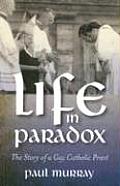
The photo on the cover of the recently published book, “Life in Paradox: The Story of a Gay Catholic Priest,” depicts its author Paul Murray being ordained at the hands of the late Pope Paul VI. The irony of the photograph is that the man ordained side-by-side with Paul is none other than Raymond Burke, former Archbishop of St. Louis and newly-appointed Prefect of the Apostolic Signatura. Archbishop Burke is famous (or is it infamous?) for not only advocating the regular exclusion from Eucharistic sharing of those whose political views may be inconsistent with some official Church teaching, but also for the recent draconian measures against an apparently well-loved and well-respected Pastoral Associate in one of Burke’s St. Louis parishes.
 Image and Likeness