Has a Catholic school teacher ever been fired for … greed? gluttony? advocating war?

When asked why long-time Catholic high school teacher Ken Bencomo was fired, a spokesman for the Archdiocese of Los Angeles had this to say:

“‘However, if a teacher or school employee makes a public display of behavior that is counter to church teaching – such as homosexuality, sex outside of marriage, having a child outside of marriage – that can impact their employment status,’ said John Andrews, diocese spokesman.” [emphasis added]

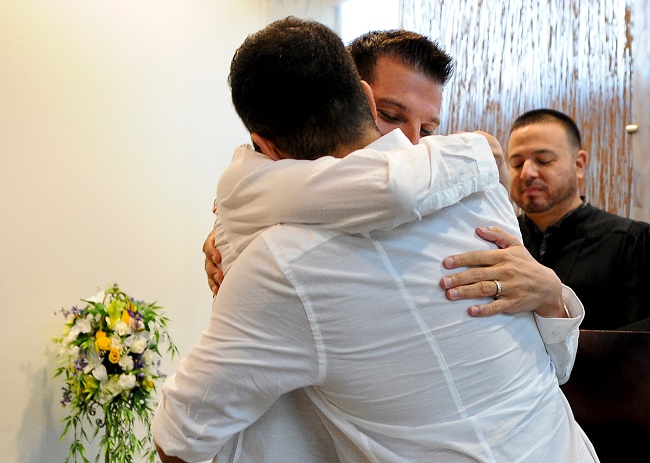
KenBencome-MarriageBencomo, who is gay, married his partner in a civil-ceremony when same-sex marriage became legal in California after the US Supreme Court’s recent ruling on California’s Prop 8.

Why do institutional Church leaders always limit their understanding of “church teaching” to things related to sex?  Is this what they understand Christian life to be mainly about? Is this what they believe Jesus suffered and died for, i.e. so that gay people wouldn’t have sex and that the Church’s rules about marriage would be followed?

How many Catholic school teachers or administrators have been fired  for inadequately living up to the Gospel values of faith, hope and love? What Church workers have been disciplined for failing to do works of charity, or putting into practice the demands of social justice?  How many diocesan employees — including bishops, priests, deacons, and religious sisters and brothers — have lost their jobs because they failed in doing the corporal works of mercy of …

  • feeding the hungry?
  • giving drink to the thirsty?
  • clothing the naked?
  • sheltering the homeless?
  • visiting the sick?
  • ransoming the captive?
  • burying the dead?

My point is not that anyone should lose his/her job for failing to do these things, or otherwise inadequately putting into practice the mandates of the Gospel — because every Christian falls short in one way or another of our call to discipleship.  And yet, even if one accepts the particular “Church teaching” Mr. Bencomo is supposed to have violated, did Jesus Himself ever condemn or punish or harm anyone whom He believed to be failing in some virtue or Gospel value? For those unfamiliar with the Gospels, the answer is No. Even to the so-called “woman caught in adultery,” Jesus says, “Nor do I condemn you.”

Despite Pope Francis’ recent declaration of “Who am I to judge?” when asked about gay priests, apparently many Church leaders feel quite well-equipped to judge and condemn their gay brothers and sisters.

Christianity really is this simple!

I’m always pleased when a pope emphasizes the name of this blog — and its significance.

“The Lord created us in His image and likeness, and we are the image of the Lord, and He does good and all of us have this commandment at heart: do good and do not do evil. All of us. ‘But, Father, this [person] is not Catholic! He cannot do good.’ Yes, he can. He must. Not can: must! Because he has this commandment within him. Instead, this ‘closing off’ that imagines that those outside, everyone, cannot do good is a wall that leads to war and also to what some people throughout history have conceived of: killing in the name of God. That we can kill in the name of God. And that, simply, is blasphemy. To say that you can kill in the name of God is blasphemy.” [emphases added]

from: Pope at Mass: Culture of encounter is the foundation of peace (Vatican Radio)

Richard Rohr: Patriotism as the False Sacred

Today’s meditation from Richard Rohr probably sounds like blasphemy to millions of American fundamentalists, especially those who believe in that oh-so-not-Christian idea of “American Exceptionalism.”

“Jesus is Lord” (Romans 10:9) was proclaimed by the early church, as their most concise creedal statement. No one ever told me this was a political and subversive statement, until I learned a bit of Bible history. To say “Jesus is Lord!” was testing and provoking the Roman pledge of allegiance that every Roman citizen had to proclaim when they raised their hand to the imperial insignia and shouted, “Caesar is Lord!” Early Christians were quite aware that their “citizenship” was in a new universal kingdom, announced by Jesus (Philippians 3:20), and that the kingdoms of this world were not their primary loyalty systems. How did we manage to lose that? And what price have we paid for it? (More)

McQuaid HS and Edward Peters’ Incomplete Ecclesiology

Edward Peters is a well-known canon lawyer, an expert on the law of the Catholic Church. Dr. Peters has been much in the press lately. He provided expert canonical knowledge about what happens when a living Pope resigns, what Church law requires for the valid election of a new Roman Pontiff, as well as canonical commentary on actions of the new Holy Father, Pope Francis — especially regarding the Pope’s decision to include two young women in the foot-washing rite of Holy Thursday.
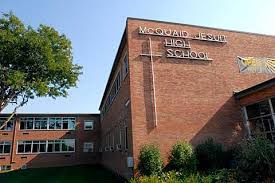
McQuaid Jeusit High School, Rochester, NY

McQuaid Jeusit High School, Rochester, NY

His most recent blog post provides commentary on the letter by Fr. Edward Salmon, S.J,, president of McQuaid Jesuit High School (Rochester, NY).  Not surprisingly, Dr. Peters finds great fault with Fr. Salmon’s decision to permit two male students to attend that school’s Junior Ball as a couple.  Also not surprisingly, I disagree with Dr. Peter’s in his assessment of Fr. Salmon’s very pastoral decision and his clear articulation of the reasons for it.

My purpose here, however, is not to argue the issue at McQuaid, but rather to take note of something in Peters’ post that seems to underlie much of his writing. Betraying his own very obvious biases, Peters writes this:

Catholics who were mercifully spared the “Church of the 70’s” might find illuminating Salmon’s letter; it’s vintage what so many of us were force-fed for ten dark years: condescending, platitudinistic, partial quotes of Church documents used to justify the exact opposite of what the Church wants her members to know about Christ and his Gospel. [emphasis added]

“What the Church wants her members to know.”  This statement exposes a fundamental and serious theological flaw in Peters’ understanding of what (or, more precisely, who) the “Church” is. This language is rooted in a predominantly hierarchical understanding of Church and seems to equate “Church” with those who have particular leadership roles (i.e. popes, bishops, pastors and perhaps even canon lawyers), while “her members” appear to be those of us who do not have such roles and are supposed to be merely passive recipients of what those in authority “want us to know.”

Thankfully, God’s People understand more and more that “the Church” is not limited to those with leadership roles, but rather includes all — as we celebrated once again this past weekend — who have been baptized into the saving life, death, and resurrection of Jesus Christ. Through our baptism and our faith, there is also wisdom in the People of God and in our lived experience. It is this lived experience, I believe, that is behind the process that is forming the consciences of so many Catholics — now even a majority of Catholics — who see the full humanity of their/our LGBT brothers and sisters; and who likewise see the limitations of formal teachings that have called that full humanity into question.

In addition to “what the Church wants her members to know,” it’s also vital to the life of the whole Church that those in positions of leadership listen to “what her members” want them to know!

Dolan is Disingenuous re: LGBT People and “Defense of Marriage”

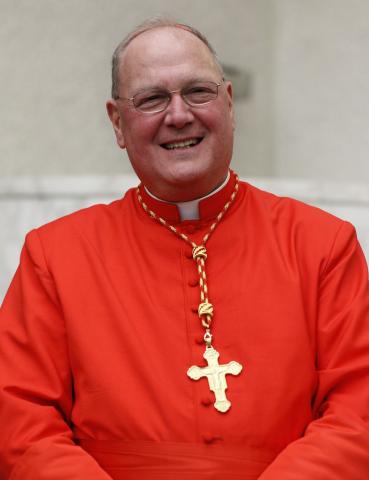
NYC archbishop Timothy Cardinal Dolan

NYC archbishop Timothy Cardinal Dolan

“We gotta be – we gotta do better to see that our defense of marriage is not reduced to an attack on gay people.”  These words from NY Cardinal Timothy Dolan sound friendly and encouraging. They sound as if they echo his earlier statements in the same interview with George Stephanopolous recognizing even gay people are created in God’s “image and likeness” and that he (Dolan) loves gay people too.  All well and good! But if Dolan and other Catholic leaders claim that their “defense of marriage” is not an “attack on gay people,” then why did we never hear about bishops “defending marriage” until the issue of public recognition of same-sex unions and civil marriage became a viable reality in the US? Why is it that the high divorce rate among heterosexual Catholic couples wasn’t enough to spur the bishops to “defend marriage”?  Why is it that the economic pressures on the American family practically demanding that both parents work outside the home — leaving so many children to essentially raise themselves — didn’t cause the bishops to speak out and “defend marriage”?

Dolan’s Irish joviality and good-natured humor make him a darling of the media. We want to believe him and take what he says as true. Facts and history, however, tell a different tale.  The truth is that the Church’s “defense of marriage” is a direct response to the recognition by the majority of Americans and people of good will around that world of a truth that the bishops will one day regret not recognizing sooner.  That truth is this:  all persons, including God’s LGBT sons and daughters, are created in the divine image and likeness; and by this very fact, every human person has the right to live his or her natural and God-given sexuality as he/she understands that gift to be.

Until Cardinal Dolan and other Catholic leaders own the truth that their so-called “defense of marriage” is nothing but an “attack on gay people” and that their words and actions don’t mesh — not until then will LGBT Catholics be truly welcomed in the religious home that is ours and that we refuse to give up.

Blessed Fra Angelico

I hadn’t realized that the great artist Fra Angelico (aka Giovanni di Fiesole) was beatified in 1982 and so is known now as Blessed Fra Angelico. This video of his fresco, The Annunciation, in the Convent of San Marco in Florence brings back memories of my own 2010 visit to Tuscany and to this historically important 15th century convent (where Girolamo Savonarola also lived). Fra Angelico died on this date (February 18) in 1455.  Ironically, this is also the anniversary of the death of Michelangelo Buonarroti who died over a century later in 1564.

Resignation of Benedict XVI: First Impressions

Pope Benedict XVI

Pope Benedict XVI

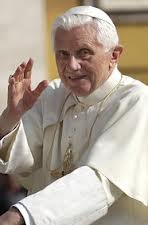
It will never be an understatement that the announced resignation of Pope Benedict XVI has shocked the world.  Already the media and internet are abuzz with discussion, commentary, and speculation about what will follow.

I have two initial reactions:  first, a sense of trepidation.  Moving into the unknown, especially when it comes so quickly and with apparently so little notice, can leave us with a sense of anxiety. Regardless of what one thinks of Benedict and his legacy, he is a known entity. What will happen after February 28, 2013, the day his resignation becomes official, is yet to be seen.

Second, a sense of hopeful expectation. The fact that a conservative pope would do what most conservative Catholics would consider to be unthinkable is a sign to me that God’s Spirit is still at work in the Church. Sometimes an unexpected shock — and this news is a shock — is what the Church needs in order to move forward. Doing what some would have considered an impossibility is a stark reminder of what is and is not a core belief or practice in Catholicism. The concept of creeping infallibility is just the extreme version of a more broad notion that says “this position” or “that practice” is from God, when in fact it is limited by time or place or culture. The resignation of a conservative pope reminds us that the Church can and does change — and change is a sign of life!

May God bless Benedict in whatever lies ahead for him, and may God bless all God’s Holy People as a new Successor to St. Peter is chosen to lead the Church!