Why am I here?

New Ways Ministry Retreat with Anthony Padovano
November 18-20, 2011
Bon Secours Spiritual Center, Marriottsville, MD

Saturday, November 19, 2011
Why am I here? No, that’s not meant as some deep philosophical question about the meaning of life. It’s meant, rather, in the very concrete sense. Why am I here, in this actual physical place in which I find myself right now?

As I ask this question, I am on a retreat at Bon Secours Spiritual Center in Mariottsville, MD. It is 5:21 am. The retreat is for gay “former” priests/religious and the broad focus of the retreat is sexuality and spirituality. Sponsored by New Ways Ministry, the facilitator is Anthony Padovano, a man who has been so influential in the life of American Catholicism since Vatican II.

Why am I here? The ‘expected’ answer no doubt involves God in some way. To spend time with God….To get away from the busy-ness of life and spend time in prayer and reflection.

Why am I here? Some might see this as self-centered or even narcissistic, but the answer is really to spend time with myself.

Padovano talked last evening about Thomas Merton and one of his insights — so simple and yet so profound — is that the only thing that I can do in this life that absolutely no one else can do is be me. Merton said, “To be a saint is to be myself.”

There is no one who has ever lived, is living now, or who will ever live who can be who I am.

What do Straight Catholic Priests think about the new Anglican Ordinariate?

By now everyone is probably aware that the doors of the Roman Catholic Church have been opened widely to those disaffected members and the Anglican Communion who seek communion with Rome. Such disaffection usually has to do with the ordination or women and more open attitudes toward gays and lesbians in some branches of Anglicanism. Whether as individuals or even as entire parishes and communities, Rome has put in place processes and structures by which Anglicans (Episcopalians in the US) can enter the Catholic Church, often keeping in place many of the traditions and practices they bring from their Anglican heritage.

On its face, this would seem like a gracious thing to do. It was back in 1980 when Pope John Paul II granted a special “Pastoral Provision” allowing clergy from the Anglican Communion to become Catholic and continue to exercise their priestly ministry.  The difference with this new provision was (and remains) that if married, such clergy would obviously remain married — thus creating a married Catholic priesthood. At the time, I was surprised that there wasn’t more of an outcry from Catholic priests who had made the difficult choice between marriage and priesthood.  After all, the Church has always thought of both as vocations, both sacramental, and not mutually exclusive.  Though complex, the rationale of mandatory celibacy in the Roman Rite of the Catholic Church has largely been rooted in matters of order and church discipline. Yes, there have been countless attempts to spiritualize this requirement, but mandatory celibacy for non-monastic clergy in the Roman Rite has sometimes been called a discipline in search of a theology.

More recently, this open door policy has been expanded not just to individuals, but to entire Anglican parishes.  Benedict XVI’s apostolic constitution Anglicanorum Coetibus (2009) established the norms and procedures for this en masse “swimming the Tiber” to take place.

And so we come to the most recent meeting of the US Bishops held in Baltimore Nov. 14-16, 2011.  There, it was announced that the Anglican Ordinariate, as it is known, would be implemented in the US on January 1, 2012.  Washington’s Cardinal Donad Wuerl heads up the US bishops’ efforts to welcome former Anglican groups, while Bishop Kevin Vann of Fort Worth, TX takes over as the “Ecclesiastical Delegate” for the 1980 Pastoral Provision process.

So, my question is this:  What do men who were raised Catholic and who feel called both to priesthood and marriage have to say about all this? We certainly know that priests were not consulted before either of these provisions were announced, but one would expect that some priest or group of priests would at least raise to the bishops questions about the fundamental fairness of this very unequal treatment.  I can find nothing from a “policy perspective” on the website for the National Federation of Priests’ Councils, nor can I even find a website for a recently announced new Association of U.S. Catholic Priests.  So, what do straight Catholic priests think of all this? Anyone??

Abp Dolan: “Conversion of hearts, not calls to action”

This direct quote from his presidential address to the current meeting of the US Conference of Catholic Bishops (USCCB) struck me like a knife. In a litany of descriptions about the essence and mission of the Church, Archbishop Timothy Dolan of New York said that the Church’s focus should be on what “Jesus prefers,” namely “conversion of hearts, not calls to action.”

The not-so-subtle critique of Call To Action notwithstanding, Dolan’s words are hard to understand. In an address that one would expect to be unifying those from all points of the Catholic spectrum, is this not a direct self-contradiction? Is not the life of Christ and His followers one that should continually seek both conversion of heart and the Gospel call to live out its mandates in daily action? Is not the Gospel in action evidence itself of the converted heart, or rather, the heart in the midst of ongoing conversion?

Here’s the full paragraph in which this statement was made:

“Our urgent task to reclaim “love of Jesus and His Church as the passion of our lives” summons us not into ourselves but to Our Lord.Jesus prefers prophets, not programs; saints, not solutions; conversion of hearts, not calls to action; prayer, not protests: Verbum Dei rather than our verbage.”

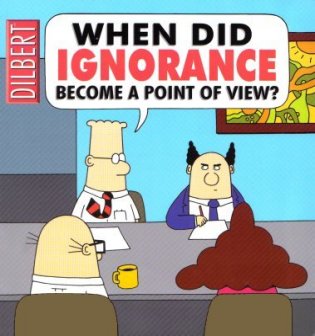
The Bishops’ Vincible Ignorance

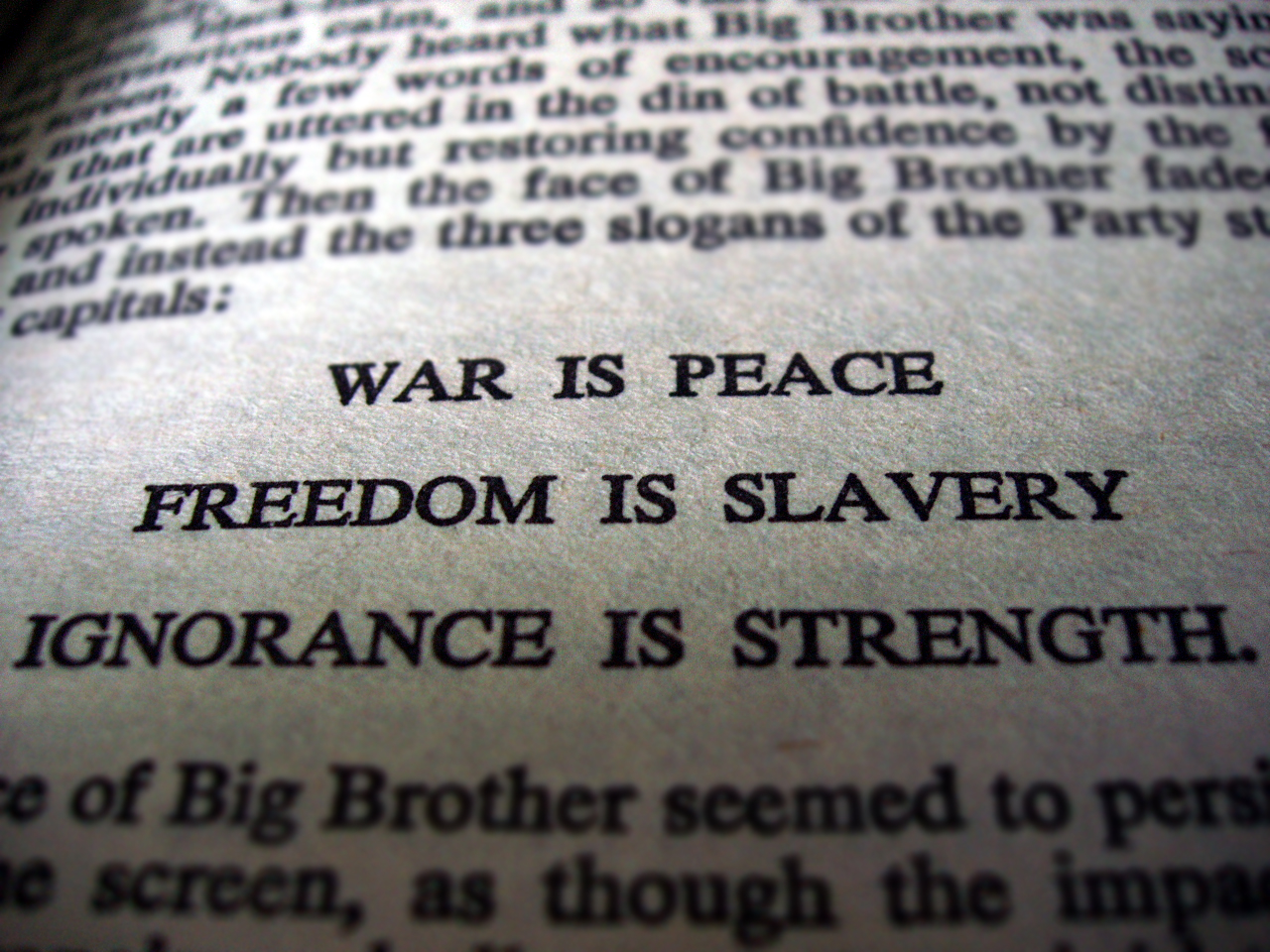
People are responsible for their actions.  The degree to which one is either blamed or praised for those actions is determined by a number of factors.  In moral theology, one such factor used in weighing culpability for an evil act is ignorance.  Literally, “ignorance” means “not knowing,” and usually refers to something one should know.  If I get behind the wheel of a car and start to drive, I may not know the speed limit of the road I’m driving on, but I should know that speed limit.

Invincible ignorance is the type of ignorance that cannot be overcome, while vincible ignorance can be overcome with a relatively normal amount of effort and diligence. Vincible ignorance does not typically reduce culpability and it is this type of ignorance that we should strive to overcome throughout the course of life. Diminishing vincible ignorance is at the heart of education and every pursuit of knowledge.  Knowledge at the horizon is advanced not by mere repetition of what has been received and maintenance of the status quo. On the contrary, it is advanced by constructive and thoughtful criticism, by asking questions, by challenging accepted notions and seeking greater understanding as new data – including the data of lived experience – become available.

It is this type of ignorance — vincible ignorance — which seems so frequently to be present in most of what comes from official church statements about God’s gay and lesbian children and same-sex relationships, including ongoing debates about public recognition of those relationships in marriage.

I continue to be so very saddened by the un-Christlike actions of our episcopal leaders who seem to be stuck in a state of vincible ignorance when it comes to gay and lesbian people.  They seem not only to be blind to the truths about sexual orientation that we are learning from all areas of science, but they also are unwilling to implement a Catholic approach to scriptural theology when it comes to discussing what Sacred Scriptures really say about same-sex attraction.

And — perhaps what is saddest of all —  is  that they seem to think that love, all of which comes from God, is a zero-sum reality.

On the first two points, the bishops and others who oppose the recognition of numerous civil rights for gay and lesbian people — especially marriage — have begun to use the term “sexual difference” instead of “sexual orientation” as they put forth their arguments.  In their lingo, “sexual difference” simply means that males and females are different, and that this difference has predetermined goals, ends and purposes that are the same for everyone.  In their minds, the purpose of “sexual difference” is the creation of family — men and women coming together in exclusive, lifelong partnerships, for the raising and rearing of children.  Bishop Salvatore Cordileone, the current voice of the American bishops’ opposition to the repeal of the Defense of Marriage Act (DOMA), uses the term in this way: “There is no corresponding duty, however, for society to disregard the meaning of sexual difference and its practical consequences for the common good; to override fundamental rights, such as religious liberty; and to re-define our most basic social institution.'” To put it bluntly, the “meaning” of sexual difference and one of those “practical consequences” is simply that every man and every woman should be heterosexual and should have an inherent desire to seek out an opposite-sex partner for a life-long spousal relationship.

This, of course, is where Bishop Cordileone and his confreres completely miss the boat and express their vincible ignorance.  They continue to try to retrofit a square peg into a round hole, and refuse to consider the perspective in which all the pieces fit together – a perspective which honors fundamental Christian anthropology and incorporates the lived and valid experience of God’s gay and lesbian children.

What I Miss Most

I’ve been in Orlando now since Tuesday evening and have stayed an extra day after our annual conference finished yesterday.

I really enjoy the opportunity to travel and experience new places; but what I’ve missed most this past year and a half of being single is having someone special with whom to share it all. Perhaps “singleness” is heightened at a place like DisneyWorld, so focused as it is on family and togetherness. But whether it’s a busy place like Disney or the beauty of a Tuscan village, sharing the joys of life with someone we love is a gift to be treasured always.

20111113-114955.jpg

Daniel Avila Resigns from USCCB

Apparently in response to his outrageous commentary printed last week in which he claimed that “the evil one” must be responsible for same-sex attraction, USCCB policy advisor Daniel Avila is reported to have resigned from his high-level position with the nation’s bishops.

There’s no announcement yet on the USCCB web site, but it will be interesting to see (1) if  it’s announced in writing, and (2) what reason is given.

WebMD: ADHD Medications and Cardiovascular Events

I think I’m starting to get the hang of this press/media/interview thing!

Today I had to pinch hit again and do a brief phone interview with WebMD about an article that appears in today’s New England Journal of Medicine on ADHD medications and cardiovascular “events.” (“Study: ADHD Drugs Likely Do Not Boost Heart Risk“).

My quote is on page 2.

The Pilot — Boston’s Catholic Newspaper — Prints Heresy

UPDATE:  On Nov. 2, 2011 The Pilot issued a retraction of the story, noting its “theological error” (though without specifying what that error was, exactly). The original piece has been removed from the website, and the link below leads only to the retraction and Daniel Avila’s “retraction/apology.” In case this retraction is eventually removed as well, I’m posting it here:

Editor’s Note: Daniel Avila issued the following “Retraction/Apology” Nov. 2 in regard to his opinion piece “Some fundamental questions on same-sex attraction” which was published in our Oct. 28 edition. In addition to echoing Mr. Avila’s statement of regret, The Pilot also wishes to apologize for having failed to recognize the theological error in the column before publication. The Pilot has removed the column ‘Some fundamental questions on same-sex attraction’from its Website.

Retraction/Apology from Daniel Avila

“Statements made in my column, ‘Some fundamental questions on same-sex attraction’ of October 28, do not represent the position of the United States Conference of Catholic Bishops and the column was not authorized for publication as is required policy for staff of the United States Conference of Catholic Bishops. The teaching of Sacred Scripture and of the Catechism of the Catholic Church make it clear that all persons are created in the image and likeness of God and have inviolable dignity. Likewise, the Church proclaims the sanctity of marriage as the permanent, faithful, fruitful union of one man and one woman. The Church opposes, as I do too, all unjust discrimination and the violence against persons that unjust discrimination inspires. I deeply apologize for the hurt and confusion that this column has caused.”


The Pilot
The Oct. 28 edition of the The Pilot, newspaper of the Catholic Archdiocese of Boston, has printed an article in which the author asserts that actions of “the devil” are what cause same-sex attraction.  He makes this outlandish claim not only by suggesting that the devil causes people to become gay, but suggests that this devilish hand is at work in the act of creation itself.  Lest you think I exaggerate, here’s Daniel Avila’s article in full.

If Mr. Avila were just some independent author presenting his own thoughts, that would be one thing.  He is, however, an attorney and Policy Advisor for the US Conference of Catholic Bishops’ Subcommittee for the Promotion and Defense of Marriage. The fact that a man with such a position would write such bunk is bad enough.  That The Pilot editors would not see such statements heretical in the narrow definition of that term is inexcusable.

In addition to the quotation cited in my comment below, the following paragraph from Avila is perhaps the most egregiously erroneous:

“Therefore, whenever natural causes disturb otherwise typical biological development, leading to the personally unchosen beginnings of same-sex attraction, the ultimate responsibility, on a theological level, is and should be imputed to the evil one, not God. Applying this aspect of Catholic belief to interpret the scientific data makes more sense because it does not place God in the awkward position of blessing two mutually incompatible realities — sexual difference and same-sex attraction.”

I submitted the following comment on The Pilot’s web site, though am posting it here in case it never gets published:


“I never thought I’d live to see the day when The Pilot would actually support heresy!

For this venerable Catholic newspaper to print this article in which it is not only suggested, but clearly stated, that “the devil” is involved in creation itself is amazing and truly scandalous.  Yet, this is what Mr. Avila’s article asserts as he appears willing to go to any length whatsoever in a theologically empty attempt to hold up his argument that God didn’t create gay people. Lest you think my criticism is overstated, let me quote:  “In other words, the scientific evidence of how same-sex attraction most likely may be created provides a credible basis for a spiritual explanation that indicts the devil.”

Mr. Avila’s twisted presentation of “the scientific evidence” notwithstanding (most scientific evidence suggests that homosexual orientation is a normal and naturally occurring characteristic in the diversity of the human family), his assertion that the devil’s hand is at work in the creating God’s LGBT children is a new low indeed!

As far as I know and believe, God and God alone is the Author of Creation. Surely to suggest otherwise is heretical to 2,000 years of Christian faith and is anathema to a most fundamental Catholic belief.

I look forward to The Pilot’s retraction and correction on this most basic point of Christian faith.”