The Pope’s First Tweets

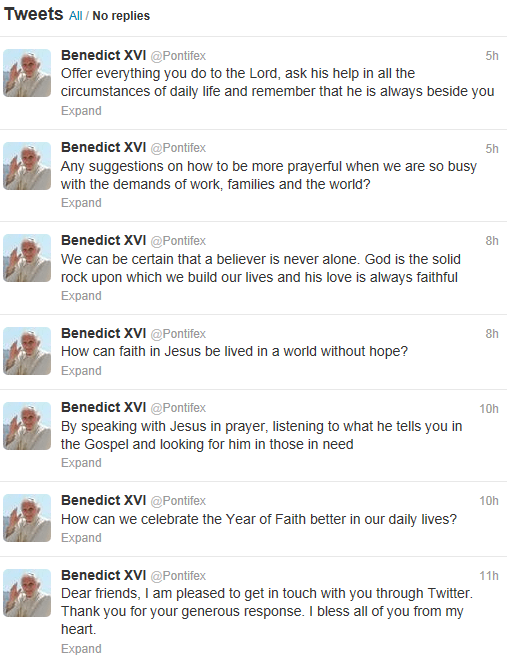
So today it happened. On the Feast of Our Lady of Guadalupe, Pope Benedict XVI sent seven tweets to his Twitter followers, today numbering just under a million at 926,000. His 140 character thoughts focused on the Year of Faith, Jesus, and ensuring that God is the “solid rock” on which our lives are built.  I wasn’t quite sure if his fourth tweet — “How can faith in Jesus be lived in a world without hope?” — was stating as a given that the world is “without hope” or that if he was asking how faith in Jesus can be lived in the world if one doesn’t have hope? I presume the latter and that this is just an examply of a slightly misplaced modifier.

PopesTweets121212

The first tweets of Pope Benedict XVI, sent on the Feast of Our Lady of Guadalupe.

Why is this “Art”?

It’s a serious question.

ChristmasTreeExplosion

(Photo by Susan L. Voisin – Washington Post)

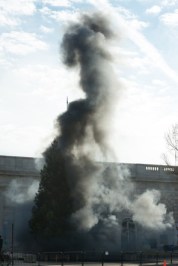
Chinese artist Cai Guo-Qiang exploded a Christmas tree on the National Mall yesterday.

Never mind that all didn’t seem to go according to plan, leaving onlookers (and even the artist) a bit disappointed (see the video).

My question is this:  Why would this be considered “art” in the first place?  What’s the artistic value of exploding or setting on fire anything, let alone the principal symbol of Christmas, which has both secular as well as intensely religious meaning to millions and millions of people around the world.

I realize that the artistic, creative side of my brain isn’t as developed as I’d like … but I really, really don’t get this.  Anyone?

Confirmation Confusion in Minnesota (and Canon Law)

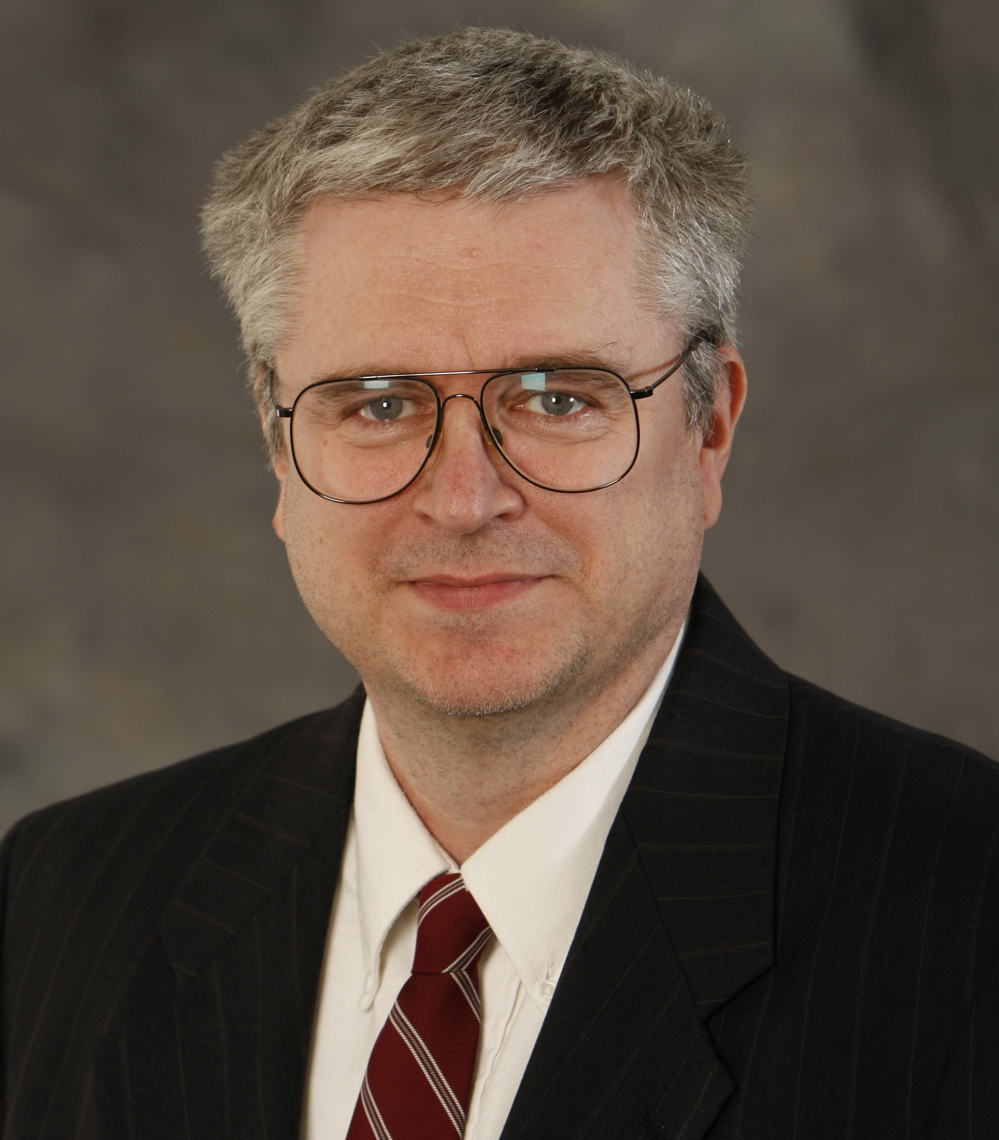
Canon Lawyer Edward Peters

Edward Peters, JD, JCD is a canon lawyer. I occasionally follow his blog, as he sometimes has interesting posts about his take on Church matters in the public eye. I say “occasionally” because his blog does not allow comments or feedback, so I prefer not to give my own time to bloggers who do not allow for such engagement. After all, isn’t engagement and interaction what blogging and the tools of social media are all about?  In this regard, I think Dr. Peters confuses “blogging” with “lecturing” … but I digress.

That said, his recent post, Confirmation and advocacy of ‘gay marriage’ [sic] cries out for response.

Two points:

First, my “[sic]” notation is to draw attention to the fact that Dr. Peters is one of those folks who puts the phrase gay marriage in quotations or otherwise off-sets it as a means of communicating that they do not think such a thing is real.  If he were speaking to you in person, you could just see him holding up both hands and making finger-quotes as he voiced that phrase, as if to say, “they call it ‘gay marriage,’ but we know such a thing doesn’t really exist.” They think that God’s gay sons and daughters — living their full humanity, including their sexuality, as given by God — are incapable of entering into marital relationships with someone of the same sex. Instead of seeing with open eyes and thoughtful minds the evidence from so many human sciences, including theology  (not to mention the lived experience of millions of gay men and women living in committed relationships), Dr. Peters prefers the blinders of ecclesiastical legality to the truth self-evident to so many.

Lennon Cihak

Second, Dr. Peters’ post discusses the situation of a young man who has been denied the Sacrament of Confirmation for his opposition to Minnesota’s recent ballot initiative that would have included in that state’s constitution language limiting marriage to one man and one woman. Peters focuses his brief post on the meaning of “proper disposition” as one of the criteria necessary for the Faithful to share in the sacraments.

I do not take issue with this basic principle of sacramental theology. The sacraments in our Tradition are indeed not to be taken lightly and must be appreciated as the gifts they are, a means by which God’s People share more fully in God’s grace.  Sacramental participation requires a minimal understanding of what a particular sacrament is all about; a freely-expressed desire to share in the sacrament; and the expressed intention to live one’s life as best one can with the fundamentals of Christian faith.

Peters, however, goes on to observe the distinction between “internal disposition” and “external disposition” as follows:

Generally “proper disposition” is not a question of internal disposition (such as interior faith, fervor, or grace) but rather of external disposition (public demeanor, dress, and conduct). The state of a would-be recipient’s soul is not determinable, of course, but his or her attitudes and conduct are observable (we’re talking Facebook, no?), and potentially actionable.

In all fairness, Peters does not state explicitly that the pastor’s action in this situation was correct. A benign interpretation of Peters’ post could be merely that it points out that Church order allows for a pastor to refuse the sacraments in certain circumstances. Priests and pastors do and should have this right. After all, a pastor can and must deny marriage to someone who is already married, or Eucharist to someone who is not Baptized and has no intention of living the Christian life (as they, the potential recipient, would declare).

Nonetheless, a more likely interpretation of his post is that Peters supports the pastor’s decision — and it is with this, i.e. that the pastor’s decision was correct, that I (and others) take issue. Despite what Dr. Peters’ and the USCCB say formally about civil marriage, the fact is that a majority of American Catholics support the rights of God’s LGBT sons and daughters to marry the person they love. Would Dr. Peters deny the sacraments to these millions of Catholics? Or only to those who wear a rainbow ribbon on their lapel or post a supportive photo online? And, of course, why be limited to support for civil-marriage as the litmus test for deciding appropriate “external disposition”? There are countless issues where millions of Catholics hold different positions than do official Church leaders — civil divorce, war, immigration, capital punishment, to name but a few.  Would every Catholic, for example, who holds that civil divorce should be allowed in a pluralistic society likewise be denied the sacraments?

My point is this:  the denial of confirmation to this young man was a bad decision.  Using the sacraments as tools of discipline (especially when that discipline is misguided) is a bad idea.  It’s a lesson that this pastor — and the US bishops — need to learn.

UPDATE: Worth the Applause: Homily of Fr. Richard Lawrence on MD’s Question 6

UPDATE: Apparently in response to a request from Archbishop William Lori of Baltimore, the video of Fr. Lawrence’s homily has been removed. A request to the parish and to the video owner for information about its removal have gone unanswered.

It is sad indeed not only that the archbishop would make such a request inhibiting the free discussion of ideas so that Catholics can make well-informed decisions when entering the voting booth, but also that those responsible for the video’s removal would succumb to such pressure.  Fortunately, the audio of the homily remains available on the website of St. Vincent de Paul where Fr. Lawrence serves as pastor. Homily of Fr. Richard Lawrence, October 28, 2012 (parish website).

And, in case the audio is eventually removed, a copy of the mp3 file may also be found here:  Homily of Fr. Richard Lawrence, October 28, 2012.


As any churchgoer can tell you, it’s the rare homily that is met with applause.  I don’t remember one of my own homilies ever receiving an ovation, though I suspect if it ever happens in the future, it will be out of thankfulness that I’ve stopped talking!

This homily, however, is definitely worth the applause it receives.  We need more Catholic priests and pastors to do what Fr. Richard Lawrence, pastor of St. Vincent de Paul Parish (his parish website “bio” is worth reading!), did this past weekend in Baltimore.  With respect and balance and intellectual honesty, he does what a pastor should do when it comes to helping parishioners form their consciences in matters of public import. Unlike Archbishop Lori, whose letter he reads at the beginning, Fr. Lawrence does not tell his parishioners how to vote on Ballot Question 6: The Civil Marriage Protection Act.  Rather, he encourages them to continue to form their consciences faithfully, as best they can, and to vote accordingly.

102812 Homily from Jerome Bird on Vimeo.

Vatican II: The Optimism of John XXIII

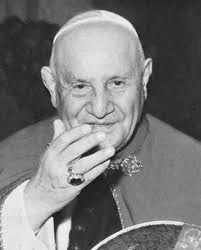
Blessed Pope John XXIII

Fifty years ago today, one of the most momentous events in the life of the Catholic Church took place.  Attentive to the “signs of the times” as he was, Pope John XXIII officially opened the Second Vatican Council.  Others more astute than I have commented at length about the importance of this day and the event that so deeply affected the experience of millions of Catholics around the world. Nonetheless, there is no Catholic alive today who hasn’t felt the impact — whether he/she is aware of it or not — of that Council.

Pope John’s complete opening remarks are worth reading and absorbing.  Parts of those remarks  somehow sound even more relevant to the Church in 2012 as they must have sounded to the Church in 1962.

In the daily exercise of Our pastoral office, it sometimes happens that We hear certain opinions which disturb Us—opinions expressed by people who, though fired with a commendable zeal for religion, are lacking in sufficient prudence and judgment in their evaluation of events. They can see nothing but calamity and disaster in the present state of the world. They say over and over that this modern age of ours, in comparison with past ages, is definitely deteriorating. One would think from their attitude that history, that great teacher of life, had taught them nothing. They seem to imagine that in the days of the earlier councils everything was as it should be so far as doctrine and morality and the Church’s rightful liberty were concerned.

We feel that We must disagree with these prophets of doom, who are always forecasting worse disasters, as though the end of the world were at hand.

Hatred Meets Anger: The Aryan Nation vs Protesters

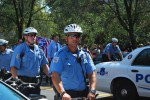
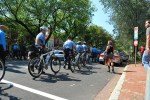
Yesterday was a gorgeous Fall day here in DC.  As I came home from having breakfast with a friend in Arlington, I encountered blocked traffic on 8th St SE, as it was closed off for one of the many Fall festivals DC and cities around the country celebrate.  Finally making my way closer to home, I saw Metro Police everywhere.  I parked on East Capitol Street, just half a block from my building.  When I asked one officer what was going on, he said there was a march shortly.  “Who’s marching?” I asked.  “The Aryan Nation.”

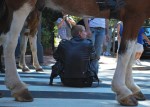
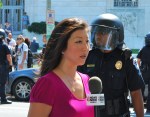
Police in cars, on bikes, on foot, and on horseback were everywhere.  Here are some photos of what happened when the small group of Aryan Nation marchers — I counted less than 10 — were met by a much larger group of protesters who blocked the march at several points along the way.  It was an experience of contrasts.  The positions of the Aryan National are certainly reprehensible.  But the counter protesters, with shouts of “Death to the Nazis…” were equally disturbing.  While there was no violence (at least none I saw), it’s hard to describe this sort of event as “peaceful.”

When Students Become Teachers: LGBT students, Catholic University, and the cost of discipleship

LGBT students at the Catholic University of America (CUA), one of my alma maters, continue to struggle for even simple recognition of their organized group to foster greater awareness and understanding on campus.  This brief film documents that struggle of CUAllies, the unofficial “gay-straight alliance.”  We should all be proud of efforts like this — efforts in which young Catholic Christians stand in respectful opposition to institutional practices that fall short of what it means to be a disciple of Jesus.

At about 5 minutes in can be seen several members from Dignity/Washington (including me) who joined in a prayerful vigil last spring in support of these efforts.

“Fundamentalism is always a falsification of religion.”

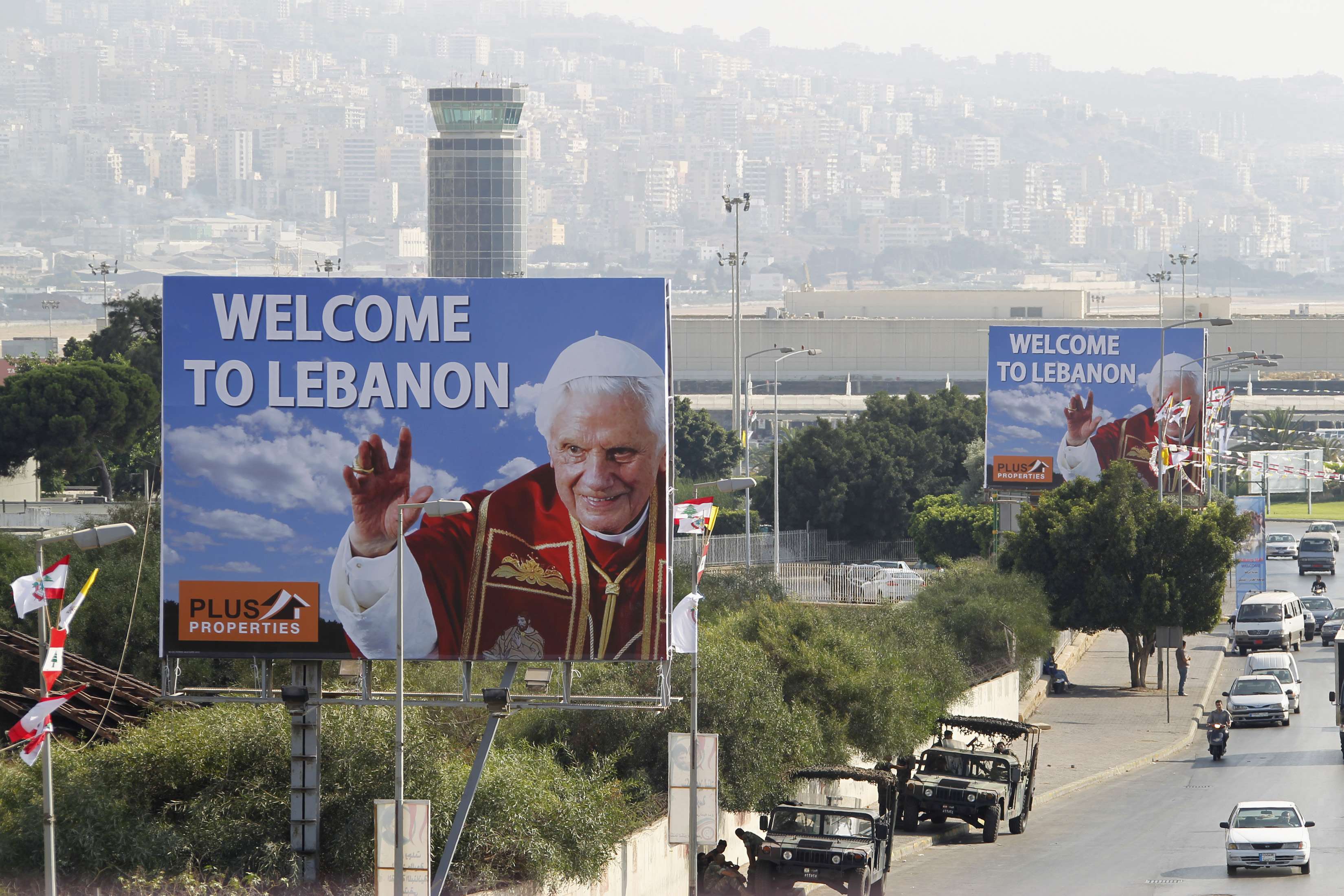
On the flight to Lebanon for his current pastoral visit to that troubled part of the world, Benedict XVI answered journalists’ questions.  He was asked:

“Many Catholics are expressing concern about increasing forms of fundamentalism in various parts of the world and about attacks that claim large numbers of Christians as victims. In this difficult and often violent context, how can the Church respond to the imperative of dialogue with Islam, on which you have often insisted?”

Benedict replied:

“Fundamentalism is always a falsification of religion. It goes against the essence of religion, which seeks to reconcile and to create God’s peace throughout the world. … The essential message of religion must be against violence – which is a falsification of that message, like fundamentalism – and it must educate, illuminate and purify consciences so as to make them capable of dialogue, reconciliation and peace”.

I couldn’t agree more!  Fundamentalism — including so-called Christian Fundamentalism and its many iterations here in the United States — falsifies the truths of Christianity and the Gospel of Jesus.  It picks and chooses bits and pieces that serve the narrow purpose of its proponents, usually based in some ideological starting point. In context, such starting points can be understood correctly. But out of context and not seen as part of a larger and unified whole, they can undermine the Truths of the religion they purport to uphold.  As a falsification of religion, fundamentalism is not merely the absence of faithful religious expression; it is its antithesis.

Even within Catholicism we have our “Catholic Fundamentalists” who fail to see the full breadth and depth of our Catholic Christian tradition, choosing instead to limit the power of the Gospel by boundaries of their own making. When the Sacraments are used as tools to exclude rather than heal; when the Scriptures are presented as support for one partisan perspective over another; and when the rules and regulations of human institutions become more important than the mission they are meant to serve … when these things happen, fundamentalism and false religion are present.

MD Del. Emmett Burns Gets a Civics Lesson: Married Gays “won’t magically turn you into a lustful cockmonster”

“I am requesting that you take the necessary action, as a National Football Franchise Owner, to inhibit such expressions from your employee and that he be ordered to cease and desist from such injurious actions.”

And just what “expressions” and “injurious actions” is Maryland Delegate Emmett Burns (who is, embarrassingly, a Democrat) referring to? It’s simply the public support that Baltimore Ravens player Brendon Ayanbedejo has expressed for marriage equality — the right of same-sex couples to be civilly married. In a letter to the Ravens owner Steve Bisciotti (see below), the delegate from Baltimore County seems to need a basic civics lesson.  Does he not understand the meaning of free speech in an open, democratic society?  Does he not get that people have the right to express their views freely, publicly, openly — without fear of reprisal from either government or employer?  How do such individuals who lack a basic understand of what Democracy is get elected to public office?

Thankfully, a fellow-NFL player responded to Del. Burns in a way that he probably can understand.  While extremely thoughtful, reasonable, and articulate in an NPR interview on the topic, Minnesota Vikings player Chris Kluwe leaves no doubts in his written response supporting Ayanbedejo and reminding Del. Burns of some basic points of history and American Constitutional democracy.  The full letter (and reprinted below) is definitely worth a read — bitingly sarcastic, reasoned, and hilarious all at the same time —  but his final post script sums up pretty well where he’s coming from:

P.S. I’ve also been vocal as hell about the issue of gay marriage so you can take your “I know of no other NFL player who has done what Mr. Ayanbadejo is doing” and shove it in your close-minded, totally lacking in empathy piehole and choke on it. Asshole.

Now I’d just like a theologian to craft a letter like Kluwe’s to Archbishop Timothy Dolan! 🙂

Letter from MD Delegate Emmet C. Burns:

Letter from Vikings punter Chris Kluwe to Delegate Burns:

Dear Emmett C. Burns Jr.,

I find it inconceivable that you are an elected official of Maryland’s state government. Your vitriolic hatred and bigotry make me ashamed and disgusted to think that you are in any way responsible for shaping policy at any level. The views you espouse neglect to consider several fundamental key points, which I will outline in great detail (you may want to hire an intern to help you with the longer words):

1. As I suspect you have not read the Constitution, I would like to remind you that the very first, the VERY FIRST Amendment in this founding document deals with the freedom of speech, particularly the abridgment of said freedom. By using your position as an elected official (when referring to your constituents so as to implicitly threaten the Ravens organization) to state that the Ravens should “inhibit such expressions from your employees,” more specifically Brendon Ayanbadejo, not only are you clearly violating the First Amendment, you also come across as a narcissistic fromunda stain. What on earth would possess you to be so mind-boggingly stupid? It baffles me that a man such as yourself, a man who relies on that same First Amendment to pursue your own religious studies without fear of persecution from the state, could somehow justify stifling another person’s right to speech. To call that hypocritical would be to do a disservice to the word. Mindfucking obscenely hypocritical starts to approach it a little bit.

2. “Many of your fans are opposed to such a view and feel it has no place in a sport that is strictly for pride, entertainment, and excitement.” Holy fucking shitballs. Did you seriously just say that, as someone who’s “deeply involved in government task forces on the legacy of slavery in Maryland”? Have you not heard of Kenny Washington? Jackie Robinson? As recently as 1962 the NFL still had segregation, which was only done away with by brave athletes and coaches daring to speak their mind and do the right thing, and you’re going to say that political views have “no place in a sport”? I can’t even begin to fathom the cognitive dissonance that must be coursing through your rapidly addled mind right now; the mental gymnastics your brain has to tortuously contort itself through to make such a preposterous statement are surely worthy of an Olympic gold medal (the Russian judge gives you a 10 for “beautiful oppressionism”).

3. This is more a personal quibble of mine, but why do you hate freedom? Why do you hate the fact that other people want a chance to live their lives and be happy, even though they may believe in something different than you, or act different than you? How does gay marriage, in any way shape or form, affect your life? If gay marriage becomes legal, are you worried that all of a sudden you’ll start thinking about penis? “Oh shit. Gay marriage just passed. Gotta get me some of that hot dong action!” Will all of your friends suddenly turn gay and refuse to come to your Sunday Ticket grill-outs? (Unlikely, since gay people enjoy watching football too.)

I can assure you that gay people getting married will have zero effect on your life. They won’t come into your house and steal your children. They won’t magically turn you into a lustful cockmonster. They won’t even overthrow the government in an orgy of hedonistic debauchery because all of a sudden they have the same legal rights as the other 90 percent of our population—rights like Social Security benefits, child care tax credits, Family and Medical Leave to take care of loved ones, and COBRA healthcare for spouses and children. You know what having these rights will make gays? Full-fledged American citizens just like everyone else, with the freedom to pursue happiness and all that entails. Do the civil-rights struggles of the past 200 years mean absolutely nothing to you?

In closing, I would like to say that I hope this letter, in some small way, causes you to reflect upon the magnitude of the colossal foot in mouth clusterfuck you so brazenly unleashed on a man whose only crime was speaking out for something he believed in. Best of luck in the next election; I’m fairly certain you might need it.

Sincerely,
Chris Kluwe

P.S. I’ve also been vocal as hell about the issue of gay marriage so you can take your “I know of no other NFL player who has done what Mr. Ayanbadejo is doing” and shove it in your close-minded, totally lacking in empathy piehole and choke on it. Asshole.

Always Our Children — 15 Years Ago Today

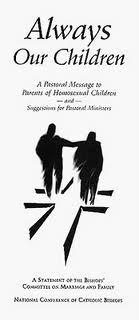
Fifteen years ago today the Catholic Bishops of the United States had one of their brighter moments in recent history.  On September 10, 1997, the National Conference of Catholic Bishops (now the United States Conference of Catholic Bishops, USCCB) published Always Our Children, A Pastoral Message to Parents of Homosexual Children and Suggestions for Pastoral Ministers (and available from the USCCB bookstore here).

As the title indicates, this document was addressed not to gays and lesbians directly, but rather to the parents of “homosexual children” and to pastoral ministers.  Nonetheless, it marked a significant milestone in presenting a more positive understanding of God’s gay children, standing squarely on the side of respect for the full human dignity of gay and lesbian people. It even addressed the issue of persons living with HIV/AIDS, stating unequivocally (as the times demanded), “…we reject the idea that HIV/AIDS is a direct punishment from God.”

Sadly, the intervening years since this publication have not seen the hoped-for progress that LGBT Catholics continue to pray for.  May the recognition of this important anniversary reinvigorate our prayers that one day soon, leaders of our Church may — like the man whose ears were opened in the Gospel story from yesterday’s liturgy — be able to hear the stories of their LGBT brothers and sisters and learn from the loving and faith-filled experiences of our lives how the Living God is alive and well, doing wondrous deeds even today.