Rep. Donalds Refuses to Acknowledge Legitimacy of 2020 Presidential Election Outcome

Byron Donalds (R) is the recently-elected Member of Congress representing Florida’s 19th Congressional District. The district was created in 1983 and for thirty years was represented by a Democrat. Since 2013, however, this district representing southwest Florida has been a staunchly conservative, Republican stronghold. 

Rep. Byron Donalds (R-FL19)

As a constituent, I recently wrote him and posed a simple question. Expressing my deep concern about current polling indicating the degree to which so many registered Republicans believe Donald Trump’s lies that the 2020 presidential election was stolen from him, I asked Rep. Donalds this question:  “Do you agree or disagree with the assertion that the election of Joe Biden and Kamala Harris as President and Vice-President was legitimate?”

The response I received (by email, dated Jan. 17, 2021; see below for full text) was … well … wordy, to say the least. The response was addressed to “Dear Constituent” (apparently Mr. Donalds’ staff have not yet mastered the skills required to personalize canned responses), and – to his credit – it spelled out clearly his condemnation of the violent attacks on the US Congress that occurred on Jan. 6, 2021. 

At least three times, however, Mr. Donalds makes claims about the constitutionality of other States’ electoral procedures in the 2020 presidential election. At least three times Donalds asserts that there were “violations of election law” in that election. While he does not directly answer my simple “yes” or “no” question, his response clearly suggests that his answer is “no,” that he does not accept as legitimate the election of Joe Biden and Kamala Harris as President and Vice-President of these United States.

Mr. Donalds is not an attorney.  He has a bachelor’s degree from Florida State University, and a professional background in banking and finance. Despite his lack of legal credentials, he continues to assert – contrary to the judgments of numerous federal judges, including many Republican and some Trump-appointed judges – that the 2020 election was somehow fraudulent. 

Trump and his supporters mounted no less than 42 legal challenges (as of Jan. 5, 2021) against the results of the election outcome in various states. Trump lost each and every one of these challenges. The vast majority of these challenges were unsuccessful for one reason, and one reason only:  the “violations of election law” that concern Mr. Donalds DO NOT EXIST. There was no wide-spread fraud, there were no constitutional violations, there was no steal to be stopped!

Even the Supreme Court of the United States (SCOTUS) had its say. SCOTUS refused to hear a challenge brought by the Texas Attorney General and other Trump allies challenging the legitimacy of the Electoral College votes of Pennsylvania, Wisconsin, Michigan, and Georgia.  Why did SCOTUS refuse to intervene?  While I’m no attorney either, one doesn’t need a law degree to understand that SCOTUS refused to intervene because of “standing.” To us non-lawyers, standing is what a court requires a litigant to have before it can bring a suit in court.  It simply means that you have a say, you have a voice that needs to be heard, that you are somehow involved in the matter at hand. If you’re not involved, if you don’t have a say, it means you have “no standing.” Put bluntly … SCOTUS told Texas: “You have no standing. It’s none of your business!” 

That answer, however, wasn’t good enough for Mr. Donalds. It wasn’t good enough for him that there was no evidence of wide-spread election fraud. It wasn’t good enough for him that thousands of election workers and officials throughout the country worked diligently to ensure a “free and fair election.” And, most egregiously, it wasn’t good enough for him that numerous courts, including the US Supreme Court, have lent no credence whatsoever to the bogus claims of election fraud. And so, because the weight of all this solid evidence wasn’t good enough for Mr. Donalds, he joined 147 other Republicans in the US House of Representatives in a fruitless attempt to thwart the will of millions of American voters. Mr. Donalds wanted to replace their voice with his; he wanted to replace their millions of votes for Joe Biden with his one vote for Donald Trump.

The opening sentence of Mr. Donalds’ response to me says this: “Our republic will stand.” On that, we agree. Despite the attempt of violent insurrectionists spurred on by a defeated president, and despite Rep. Donalds’ attempt to undermine the legitimate process of our elections – on Jan, 6, 2021 (and into the early hours of Jan. 7, 2021), our republic DID stand. 

Byron Donalds’ refusal to state that he accepts the outcome of the 2020 election should give us pause.  His refusal raises serious questions about his ability to look at facts and to make sound judgments. Let us hope and pray he will have a change of heart, a change spurred on not by the political winds of the day, but by the commitment to principle on which he states he stands “above all else.” Let us hope and pray that Rep. Donalds will clearly, unequivocally, and publicly declare that the election of Joe Biden and Kamala Harris was legitimate and that they are duly elected as President and Vice President of the United States of America.

Here is the full text of Mr. Donalds’ reponse:

The Senate Needs to do a 9th Step

Step Nine. The 9th Step of Alcoholics Anonymous (AA) and other 12-step support groups is familiar to anyone involved in recovery. It’s the step in which individuals recognize that their past behavior under the influence of addiction has caused harm to others; and that if they are to have any integrity in their recovery, they must do what they can to make amends, to make things right again. Here’s Step Nine in the words of AA:

“Made direct amends to such people wherever possible, except when to do so would injure them or others.”

Step Nine of Alcoholics Anonymnous

The “such people” referred to in Step Nine are those mentioned in the previous Step Eight, “… a list of all persons we had harmed.”

What does this have to do with the Senate of today? Well, in 2016 Leader Mitch McConnell and Republican Senators did grave harm to the tradition of the US Senate, to the United States Constitution, and to the American People. McConnell and friends took great pride in blocking then-President Obama from fulfilling his Constitutional duty when they would not even consider Judge Merrick Garland, nominated by Obama to fill a recently vacated Supreme Court seat after the untimely death of Justice Antonin Scalia. None of this history is in doubt. Nor, in doubt, are the reasons McConnell took such action — to block a duly-elected President with 11 months left in his term from filling a vacancy on the nation’s highest court.

Instead of doing what they were supposed to do — and with 270 days before the upcoming presidential election — McConnell and Senate Republicans chose to leave the Supreme Court with just 8 Justices. McConnell’s choice to leave the Court with hands tied did not take long to have real life consequences. In March 2016, the Court handed down its first deadlocked 4-4 decision in the case of Hawkins vs Community Bank of Raymore.

The power to which McConnell and his senate colleagues are addicted is no less destructive than the substances of alcohol and heroin and crystal meth that can destroy not only brains and bodies, but also families, friendships, and the bonds of affection between fellow humans.

Does the sitting president have the right to nominate someone to fill the current Supreme Court vacancy upon the very recent passing of Justice Ruth Bader Ginsburg? Yes. When such a nomination is received, does the US Senate have a constitutional responsibility to act on that nomination as they give “advice and consent” to such presidential nominees? Yes, again.

But the issue, however, is that none of what is currently happening exists in a vacuum. There is one inescapable aspect in the situation described above — McConnell’s 2016 unprecedented attack on the authority not of the Presidency, but on the authority of one particular President, Barack Obama. That inescapable fact is that the actions of the Senate at that time did not just do harm, but did grave harm — harm for which amends must be made if they and the Senate, the Constitution, and the American People are to be made more whole once again.

If we as a nation are to return to a less-politicized notion of the Supreme Court — thinking of the Justices not as one writer put it as “politicians in black robes,” but rather as the (almost) final arbiters of Justice in our Constitutional democracy — then the Senate now must make amends. They must NOT take action on any nominee offered by the current president.

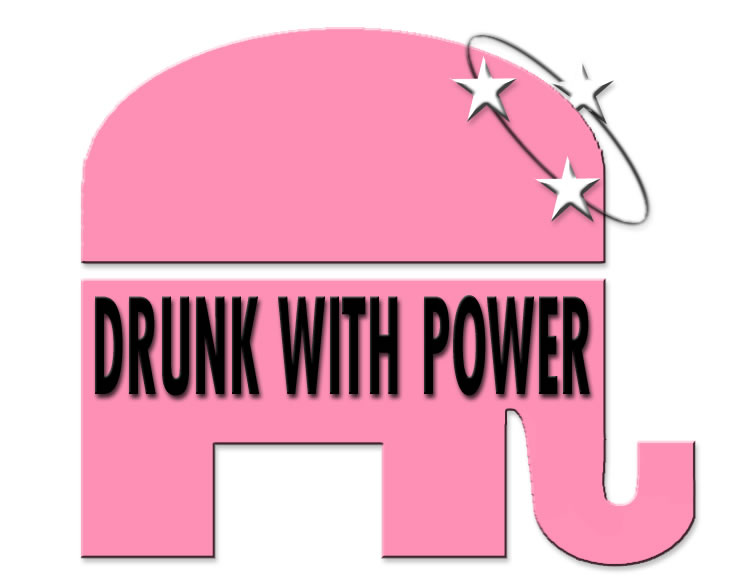
By not taking action now, Senators will demonstrate that they recognize that in 2016 their actions revealed just how drunk with power they were (and in many ways still are). By not taking action now and by waiting until the inauguration of a new president in 2021, they will tell the American People that they recognize they were wrong in 2016, and that they wish to make amends. By not taking action now, they will be telling the American People of today and future generations that they can put country over party, that they can put aside petty politics and do what is right.

Justice Ginsburg died just 47 days before the presidential election scheduled for Nov. 3, 2020. In fact, however, she died after voting in this election has already begun, given that several states began mail-in voting in early September. (See Then and Now: What McConnell, others said about Merrick Garland in 2016 vs. after Ginsburg’s death for a more complete timeline.)

If the Senate moves forward with a nominee that the current president seems intent on putting forth, they will show that not only are they still very drunk with power, but that the deadly effects of such addiction are affecting us all, and that — like most addicts in the midst of addiction — they don’t care about anyone or anything else, other than their next fix.

Race, Religion, and Empathy

Donald Trump at his June 20 rally in Tulsa, Oklahoma

The National Catholic Reporter reports that Trump support declines among white and Hispanic Catholics. From my perspective, that’s a good thing. This indicates that the president’s support among Catholics is trending in the right direction. But … and there’s always a “but” … that story’s sub-heading is not so positive: But poll finds he would still win the white Catholic vote. Based on a recent poll from the Pew Research Center, it seems that 57% of White Catholics still say they would “vote for/lean toward voting for” Trump. Though different conclusions may be drawn from the same data, these data continue to paint a picture that says this: White Catholics tend to value their “Whiteness” more than their “Catholicity.”

As a White Catholic who is also gay and of Irish heritage (today would be the 108th birthday of my Dublin-born maternal grandmother!), this is what I find so troubling: I and those who came before me know what it feels like to be “othered,” to be excluded, to be on the outside looking in. Thankfully, great progress has been made for Irish-Americans, though there was a period not too long ago when there was significant anti-Irish sentiment in America, and “NINA” (No Irish Need Apply”) signs often accompanied employers’ Help Wanted advertisements. Even more recently, the increased acceptance in American society of LGBTQ people has been a beacon of hope for those who, less than a generation ago, were often compelled to remain closeted about a fundamental aspect of who they/we are. The great promise of America is that there is no such thing as the “other.” Our national motto — E Pluribus Unum (Out of Many, One) — enshrines the more folksy sentiment that in this country, every stranger is simply “a friend I haven’t yet met.” Americans’ greatness becomes real when we practice what we preach, when we welcome with open arms the world’s tired, poor, and huddled masses “yearning to breathe free.”

And yet … when we look at our current president, and especially at our fellow citizens who so vocally support him at his rallies and online, we hear nothing but “othering” language which tries to build walls between the false dichotomy of “us and them.” Trump’s entire presidency (some might say his entire life) has been marked by using race, religion, sex, gender and ethnicity to “other” any and all who might challenge him, disagree with him, or see things differently than he. As humans, the experience of having been “excluded” is an experience that should increase our empathy, not propagate discord, disdain, and division. Empathy is the ability to stand in someone else’s shoes, to see the world through their eyes, and recognize that their experience is valid and valuable. Empathy opens my mind and my heart, and leads me to embrace more deeply the truth that we are much more alike than we are different. Empathy — and my faith — tell me that, deep down, there really is no “us and them,” there’s only US.

Trump’s Angry Tirade

Screen Shot 2020-04-14 at 5.42.32 AM“That’s just the left-wing media,” or “You need to stop watching that fake news.” Such are the baseless comments from Trump supporters whenever I’ve tried to engage them in thoughtful conversations about the current president.  When I try to explain that no, I’m not just parroting back what I’ve read in the Washington Post or the New York Times or seen on CNN; that what I’m sharing has come directly from Trump himself, I’m dismissed either with disbelief or an assertion that I’m exaggerating or taking him out of context.  Well, my Republican friends, what do you say when there’s no interpretation, no spin … just the words of Mr. Trump himself to provide full context and no exaggeration?

Yesterday’s White House briefing, ostensibly another update from the federal Coronavirus Task Force, was a sight to behold.  The paper-thin-skinned resident of 1600 Pennsylvania Avenue apparently couldn’t take it anymore.  Apparently the aptly-titled and well-documented article from the NY Times, He Could Have Seen What Was Coming: Behind Trump’s Failure on the Virus was more than that thin skin could bear when the president was asked about it.  So, instead of spending the news conference providing reporters and the American people with much needed information about the virus’s impact on us all, the complainer-in-chief spent most of the time trying to defend himself against that article’s assertions — doing so, I might add, using a campaign-like piece of propaganda prepared by Federal workers on the our dime. The video, by the way, was instructive not so much for what it included, but what it excluded.

While this story from the Washington Post is correctly categorized as “analysis,” it accurately recounts what the “news briefing” was all about.

Here’s the whole briefing:


“A very acceptable time” (2 Cor. 6:1)

What we have been given is not to be kept and hoarded for ourselves, but to be passed on freely and shared, so that it may bring life to others. In my work as a therapist, it is usually the questions I ask, rather than the statements, suggestions, or “advice” I offer that are the most helpful means of effecting this sharing and the new life that rises from it.

Today is Ash Wednesday (as well as Valentine’s Day!). It marks the beginning of the Season of Lent, a “very acceptable time.” This year I choose not to “give up” some “goodie” or “treat,” but rather to make my Lenten practice one of asking questions — not of others, but of myself.

  • How am I open to the Presence of God today?
    • in myself?
    • in others?
    • in nature and all Creation?
  • What lesson is God asking me to learn from the people God brings into my life?
  • In what ways might I be “missing the mark” (which is really the Hebrew definition of ‘sin’) in my love and care for others?
  • Where are kindness, compassion, understanding, and self-sacrifice in my life today?
  • Am I truly listening to God, speaking to me in the depths of my heart — in the midst of trouble and distress, as well as in silence and calm?

The second reading (2 Cor. 5:20-6:1) from today’s Liturgy reminds us:

“Working together, then,
we appeal to you not to receive the grace of God in vain.
For he says:
In an acceptable time I heard you,
and on the day of salvation I helped you.

Behold, now is a very acceptable time;
behold, now is the day of salvation.”

“Introduction: Image and Likeness”

Richard Rohr, OFM

When one of my favorite authors titles a blog post with the same title of these pages, how could I not share it? In part, Franciscan Fr. Richard Rohr notes a fact of history and human experience that reinforces a fundamental and false belief underlying all dualistic, all-or-nothing perspectives:

“Christianity has far too easily called individual, private behaviors sins while usually ignoring or even supporting structural and systemic evils such as war, colonization, corporate greed, slavery, and abuse of the Earth. All of the seven capital sins were admired at the corporate level and shamed at the individual level.”

Here’s his full post: How can everything be sacred? 

The Present is all we have – and why we must forgive

IMG_4983

Myakka River State Park, Florida

If you’ve ever been in a Catholic church, you’ve surely noticed the tabernacle. It’s a small box-like structure on an altar, and usually there’s a candle nearby, burning 24/7. Inside the tabernacle is reserved some of the bread that was blessed and consecrated at Mass, the liturgical celebration of what we call Eucharist.  Because we believe that Jesus is somehow present in the elements of bread and wine blessed in his name, Catholics refer to this reserved Eucharist as the Real Presence.  I like that term a lot. Whether you hold to Catholicism’s sacramental beliefs or not, there’s something very powerful and meaningful about Presence.  The Present, really, is all we ever have. What, then, am I doing with it? How am I using the gift of this present moment right here, right now? Fr. Rohr offers some thoughts:

Only the false self easily takes offense. The false self can’t live a self-generated life of immediate contact with God. It defines itself by the past, which is to live in un-forgiveness. Forgiveness is the only way to free ourselves from the entrapment of the past. We’re in need not only of individual forgiveness; we need it on a national, global, and cosmic scale. Old hurts linger long in our memories and are hard to let go. We must each learn how to define ourselves by the present moment—which is all we really have. I will not define myself by what went wrong yesterday when I can draw upon Life and Love right now. Life and Love are what’s real. This Infinite Love is both in us and yet it is more than us.

From Daily Meditation for Aug. 1, 2017

The Truly Catholic Vision of Religious Freedom

Today's post from Bondings 2.0, On the USCCB's Fifth (And Hopefully Final) "Fortnight For Freedom", prompted me to re-read Dignitatis Humanae [DH], the Second Vatican Council's Declaration on Religious Freedom. After all, if the bishops or others think that religious liberty and the free exercise of religion are under attack in the US, one would think we should be looking to this important document for guidance.

DH clearly and strongly promotes the rights of individuals and social groups "… to be immune from coercion on the part of individuals or of social groups and of any human power, in such wise that no one is to be forced to act in a manner contrary to his own beliefs, whether privately or publicly, whether alone or in association with others, within due limits."

The bishops' concern that religious persons and institutions might be forced by the government to act in a way that is coercive and violates their "own beliefs" clearly finds some support here. However, that nasty 3-word phrase at the end puts a different slant on things: "within due limits." Several times DH references the "just order of society" and the "due limits" on one's religious freedom. Perhaps the clearest statement is in Article 7, which begins:

"The right to religious freedom is exercised in human society: hence its exercise is subject to certain regulatory norms. In the use of all freedoms the moral principle of personal and social responsibility is to be observed. In the exercise of their rights, individual men [sic] and social groups are bound by the moral law to have respect both for the rights of others and for their own duties toward others and for the common welfare of all. Men are to deal with their fellows in justice and civility."

While the bishops and other "religious freedom" advocates look with limited vision to the US Constitution, they seem to have forgotten the teachings of their own Tradition. DH reminds us of the "due limits" and "regulatory norms" which a just and civil society must enact to ensure the "rights of others" are respected. The bishops' original concern related to healthcare, though quickly was extended to the area of LGBT rights. The US Supreme Court has decided to hear a case from Colorado about the refusal by the owner of Masterpiece Cakeshop, Jack Phillips, to bake a wedding cake for a same-sex couple. Phillips cited his disapproval of same-sex marriage, which he claims to be rooted in his Christian faith, as the reason.

From a Catholic teaching perspective, it'd be quite a stretch to say that the baking of a wedding cake rises to the level of a "religious act" worthy of protection. If it did, then where would it end? In theory, no end would be in sight. After all, any religious person who takes faith seriously would try to express his/her religious values in all aspect of life, right? If that's true, what's to stop said religious person from hiding behind such "religious freedom protections" for any and all acts in which he engages?

As the bishops of Vatican II rightly recognized, civil society has the obligation to impose due limits and appropriate regulatory norms on the exercise of religious freedom. Such limits and norms must respect the rights of ALL citizens. As we celebrate today 241 years of independence from political tyranny, may we be always strive to be free from tyranny of all stripes, even when wrapped in red, white and blue.


Leadership and Vision

Yesterday’s meditation from Richard Rohr, OFM provides more historical reference to the tradition of the “third eye.” Spiritual traditions of both east and west know that there is a middle way, beyond the dualistic, either/or way of seeing. One must find this third eye in order to move beyond “us and them” seeing toward deeper insight and wisdom where everything and everyone belong.

I could not help but think of both the current US president as well as the bishop of Springfield, IL Thomas Paprocki (currently in the news for issuing guidelines that prohibit Catholics in same-sex marriages from receiving a Church funeral) when I read Rohr’s words below.

“One wonders how far spiritual and political leaders can genuinely lead us without some degree of contemplative seeing and action. It is hardly an exaggeration to say that “us-and-them” seeing, and the dualistic thinking that results, is the foundation of almost all discontent and violence in the world… It allows heads of religion and state to avoid their own founders, their own national ideals, and their own better instincts. Lacking the contemplative gaze, such leaders will remain mere functionaries and technicians, or even dangers to society,” [emphasis added].