
A Catholic Platform for the Common Good — http://www.votethecommongood.com/ — non-partisan perspective on informing our Catholic consciences as we approach the polls in November.
Author Archives: Tim MacGeorge
Twenty-Second Sunday of Ordinary Time – August 30/31, 2008
Homily for the Twenty-Second Sunday of Ordinary Time – August 30/31, 2008 (Dignity/NoVA & Dignity/Washington)
In last Sunday’s Gospel reading, we heard Peter’s divinely inspired proclamation that Jesus is the Christ, the Son of the Living God. Jesus responded boldly to Peter by affirming that he was correct, and by stating that Peter – the “rock” – would be the foundation upon whom the Church would be built. Jesus then continued on in language that bespoke the authority Peter would have as the first among the followers of Jesus – and last week our homilist shared with us some of the challenges that we have had over the years in understanding the proper role of this authority in the history and life of the Church.
Today, however, the scene continues and we see a very different encounter between Jesus and Peter. In speaking to his disciples, in helping them to learn more clearly about who He is and what He has come to bring and to do, Jesus offers what scripture scholars call a “Passion Prediction.” Jesus prepares his disciples for what lies ahead by telling them he must go up to Jerusalem, that he will suffer greatly at the hands of the religious leaders of the day, that he will be killed, and that he will rise on the third day.
The disciples’ mindset is apparently still one that was expecting the Messiah to be an earthly king, one who would restore Israel to its previous glory, one that might perhaps throw off the yoke of foreign oppression and bring Israel back to where it should be. For Peter in particular, this prediction is apparently too much to take! How can it be that the Christ, the Messiah, the Son of the Living God, would suffer such a humiliating and disgraceful defeat? How can it be that Jesus could speak so calmly and acceptingly about a future that does nothing to restore Israel and does not live up to their expectations of what the Messiah was supposed to do? And because it’s too much for Peter to bear … what does he do? He doesn’t just question Jesus and ask for an explanation. He takes Jesus aside, and, in Matthew’s words, “begins to rebuke him.” Peter – the disciple and follower – begins to rebuke Jesus whom he has just acknowledged as the Christ, the Son of the Living God!
And so – to leave absolutely no doubt about who is the Leader and who is the disciple – Jesus turns to Peter and says, “Get behind me, Satan! You are an obstacle to me. You are thinking not as God does, but as human beings do!” “Peter the rock” has become “Peter the stumbling block.” The word “obstacle” in Greek is “skandalon” – and a scandal in the biblical sense is something that causes someone else to stumble and fall. In this brief response to Peter, Jesus is presented as speaking with as much force and strength of character as anywhere else in the Gospels. He firmly and clearly and without equivocation is telling Peter that he has overstepped his bounds and that he is still a disciple. It’s almost as if Jesus is reminding him: “You may be the rock on which I will build my church … but I am the builder and it is MY church, not yours.” By extension, these words of Jesus to Peter are also a strong and clear reminder to anyone in a position of authority within the Church. It’s a reminder that one’s authority remains only insofar as one’s words and deeds are consistent with the Will of God. God’s Will comes first – and when the person in authority speaks or acts in ways not consistent with God’s Will, the authority is void.
And then – perhaps taking a deep breath and calming down a bit – Jesus returns to “teacher mode” and explains in greater detail what his “passion prediction” means for anyone who wants to be his disciple. Just as Jesus will suffer and die, so too must anyone who wants to bear the name “Christian” follow this same path of suffering and death. To be a follower of Jesus, one must deny oneself, take up one’s cross, and follow him.
As I was thinking about these three steps – denial of self, taking up the cross, and following Jesus – I myself got held up on that first challenge of self-denial. I got caught up on it because it sounded much too much like what the Church and Society have told us as LGBT people that we should do. After all, haven’t we been told that we should deny that deepest part of us that calls us to love in the way we love? Haven’t we been told we should disregard what we know to be the truth of ourselves and that we should embrace a cross of inner repression, even though it leads to self-hatred and outward dysfunction?
As I thought and prayed about this further, I realized that I was not seeing the whole picture of Jesus’ own description of discipleship. As Jesus goes on to explain, there is a paradox in Christian discipleship. If someone wishes truly to live, then he must be willing to die. If someone wants to save her life, she must be willing to lose it. I was failing to see that any understanding of discipleship that does not lead ultimately to life is false. Yes, we are called to deny ourselves; but we are called to deny our false selves so that our true selves might emerge. We are called to lose those parts of us that are not essential to our humanity so that the divine image within us might be revealed.
How do we know, then, if we are being faithful disciples – or if we are succumbing like Peter did, to the thinking of this world? Some insight into that answer is provided by Paul in today’s reading from the Letter to the Romans.
“Do not conform yourselves to this age but be transformed by the renewal of your mind, that you may discern what is the will of God, what is good and pleasing and perfect.”
Paul reminds us that this age – as every age before us and every age until the end of time – is not entirely aligned with the will of God. Every “present age” is not in tune with the mind and heart of God. Just like when on a long road trip, the favorite station that we have tuned to our radio might become “staticky” and eventually lost the further and further we drive from home, so too can our individual and collective lives become “out of tune” with God whenever we forget the fundamental meaning of Christian discipleship. While we all know that there is no playbook for the game of life – no answer book to tell us what to do and how to act all along the way and in each and every situation – our lived faith should be constantly challenging us to deeper and deeper discipleship.
Discerning what the Disciple would do in this situation or in that situation – that is the constant challenge of our daily lives; it’s the question that faces us every minute of every hour of every day. Perhaps one rule of thumb might be to ask ourselves regularly whether we – as today’s psalm reminds us – are constantly thirsting for God? Let us pray that our hearts, our minds, and our souls never fail to recognize that we are incomplete; that we are like a parched earth without water, and that only the riches of God’s banquet can satisfy the deepest longings of our hearts.
"The truth of my judgement and conclusions"
James Cardinal Stafford has provided his personal reflections on the reception that Pope Paul VI’s 1968 encycyclical, Humanae Vitae, received in the United States and his home diocese of Baltimore.
Recounting how, shortly after the encyclical’s publication, he found himself gathered in a Baltimore rectory basement, being encouraged to add his name to the already-published “Statement of Dissent” by a number of clergy from Washington, Stafford states that he could not sign it. Why? “I remained convinced of the truth of my judgement and conclusions,” he writes.
I’m glad that His Eminence recognizes the respect that is due to an individual’s judgment and conclusions — especially ones borne of careful thought, study, and prayer. Wouldn’t it be nice if such respect were more broadly recognized at all levels of the Church, especially as it relates to those heart-felt issues that, sadly, tend to cause strife and division, rather than discussion and mutual understanding.
Congressman should mind his own business
Local D.C. public radio station WAMU reported this morning that Republican Congressman Mark Souder from Indiana has introduced legislation regarding guns and the District of Columbia. In part, Souder suggested that pending legislation in the D.C. City Council would “deprive people of their civil rights,” and that his proposed legislation was an attempt to ensure that citizens were not deprived of a civil right.
If Mark Souder is so concerned with fundamental civil rights of Americans, then perhaps he should start with the right of self-governance and publicly support efforts to provide full congressional representation for the almost 600,000 residents of the District of Columbia who are disenfranchised from full participation in American government. Perhaps he should also focus his time working on issues that affect the people who elected him — and leave the elected officials of D.C. to do the same!
Room for Gay and Lesbian Youth in the Church?
Pope Benedict XVI is in Australia for World Youth Day. I wonder if he’ll have time to attend a forum for gay and lesbian youth sponsored by Acceptance Sydney, an organization providing a “safe, spiritual and social environment for gay, lesbian, bisexual and transgender Catholics, their family and friends”?
The People of God at Work
I defy anyone not to be moved by the Assembly’s response to a man who heckled Episcopalian Bishop Gene Robinson as he attempted to deliver the sermon at a London church recently. Bishop Robinson is in London as the outsider-looking-in, having been uninvited form the decennial Lambeth Conference which, as the conference’s Web site states, is an occasion, “when all bishops can meet for worship, study and conversation. Archbishops, diocesan, assistant and suffragan bishops are invited.” Stopping his sermon as an unruly man stands and shouts at him, calling him a “heretic,” the gathered assembly of the faithful come to the Bishop’s aid by joining their voices in song to drown out the disruptive heckler.
As for Bishop Robinson, Archbishop of Canterbury Rowan William’s has added insult to injury. Not only has Williams invited every other Anglican Communion bishop (along with their spouses!), but so too has he invited “bishops from other churches ‘in communion’ with the Anglican Communion, bishops from United Churches and a number of ecumenical guests.”
For Bishop Robinsson and the people of New Hampshire, this must be like discovering that that your neighbors are having a block party — and yours is the only family on the street not welcome. And not only that, people from other parts of town have been invited as well. For you and your family, however … well, there just wasn’t a place at the table!
Catholics’ Financial Support for Pope Decreases
The Vatican’s consolidated financial statement for 2007 has been published, and things don’t look so good. The annual Peter’s Pence collection — the traditional means by which Catholics around the world directly support the Pope and his evangelizing ministries — fell by a staggering 32% (i.e. from €70.4 million in 2006 to €50.8 million in 2007).
Even despite an anonymous gift of €9.09 million (over $14 million) from one very generous individual, the Holy See still had a deficit of €9 million for the year. The weak U.S. dollar was cited as one of the major reasons for this deficit (“This decrease [in the surplus] … ‘is due above all to a sudden very strong reversal of trend in fluctuations of the rate of exchange, especially of the US dollar.'”)
A Study in Contrasts
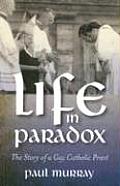
The photo on the cover of the recently published book, “Life in Paradox: The Story of a Gay Catholic Priest,” depicts its author Paul Murray being ordained at the hands of the late Pope Paul VI. The irony of the photograph is that the man ordained side-by-side with Paul is none other than Raymond Burke, former Archbishop of St. Louis and newly-appointed Prefect of the Apostolic Signatura. Archbishop Burke is famous (or is it infamous?) for not only advocating the regular exclusion from Eucharistic sharing of those whose political views may be inconsistent with some official Church teaching, but also for the recent draconian measures against an apparently well-loved and well-respected Pastoral Associate in one of Burke’s St. Louis parishes.
Catholic Justices and the Death Penalty
Despite the efforts of some to claim that Catholic teaching allows for the possibility of capital punishment, anyone who has taken the time to read the Church’s position on this will quickly learn that capital punishment — in all practical instances — goes against the Church’s call to proclaim a “gospel of life” and is forbidden. (See below.)
Why is it, then, that the four Supreme Court Justices who seem to have no problem with States wanting to expand the use of state-imposed executions are all Catholic? In the 5-4 decision reaffirming current U.S. law that allows the State to take a human life only when the individual being executed has also taken a life, Justices Scalia, Thomas, and Alito joined Chief Justice Roberts in dissenting from the majority.
One wonders why these jurists — whose “Catholicity” is often made note of — are not called to task by those prelates who have no problem witholding the Eucharist from politicians with equally questionable commitment to the Gospel of Life.
The Catechism of the Catholic Church (# 2267) states: “Assuming that the guilty party’s identity and responsibility have been fully determined, the traditional teaching of the Church does not exclude recourse to the death penalty, if this is the only possible way of effectively defending human lives against the unjust aggressor.If, however, non-lethal means are sufficient to defend and protect people’s safety from the aggressor, authority will limit itself to such means, as these are more in keeping with the concrete conditions of the common good and more in conformity with the dignity of the human person.Today, in fact, as a consequence of the possibilities which the state has for effectively preventing crime, by rendering one who has committed an offense incapable of doing harm—without definitively taking away from him the possibility of redeeming himself—the cases in which the execution of the offender is an absolute necessity ‘are very rare, if not practically non-existent.'”
Austalian Bishops Ask Forgiveness
Through their National Office for Evanglization, the Catholic bishops of Australia recently launced a national advertising campaign inviting those who have drifted away from the Church to come back. Part of the campagin includes these words: “The Church is God’s family and, like any family, has its differences. Sometimes people are hurt by other family members. We ask your forgiveness if you have been hurt in some way through the Church.”
The bishops are to be applauded for taking this step to reach out to those who have been hurt by the Church, seeking the forgiveness that is necessary to repair damaged relationships. But this is only a step, and seeking forgiveness is only one part of the process of reconciliation, as any 2nd grade Catholic preparing for his/her first confession can tell you. Other critical elements of the reconciliation process — be that sacramental, interpersonal, or social reconciliation — require that the sins be named, repentance be sincere, and a firm “purpose of amendment” be embraced.
As in the United States, I have no doubt that there are scores of Australian gay and lesbian Catholics who have drifted away from the Church because the message they have heard from the “official” Church is not the Good News of the Gospel, but rather a message telling them they are “disordered,” “sinful,” and not worthy of the respect that full human dignity demands. If such Catholics are to return, what welcome will they receive? Will the bishops and clergy of the Church in Australia engage in the dialogue that true reconciliation requires, or will they expect these faithful and spiritually hungry people simply to come back, sit down, and be quiet? Will the bishops’ hearts and minds be open at least to listening to the stories of gay and lesbian catholics, stories that bespeak a God Who is not a cookie-cutter Creator, but whose Hands have lovingly formed each and every human person in unique and diverse fashion? Will they be willing at least to consider that such diversity is reflected not only in “race, language, and way of life,” but also in the divine gift of sexual orientation?
I am thankful that the bishops of Australia have taken this first step. I pray they may have the faith and courage to take the next step, too.
 Image and Likeness