Homily for the 31st Sunday of Ordinary Time

Oct. 29/30, 2011

For the communities of Dignity/NoVA at Emmanuel Church-on-the-Hill in Arlington, VA and Dignity/Washington at St. Margaret’s Episcopal Church, Washington, DC.

There probably isn’t a parent on the face of the planet who at least once hasn’t said to his or her child some version of, “Do as I say, not as I do.” And of course, there probably isn’t a child on the planet who, upon hearing this from his mom or dad, has ignored such parental admonition just as quickly as it was pronounced.  Ignoring and disobeying parents in such cases – whether it’s a three-year old or a thirteen year old – is probably rooted not so much in obstinacy or defiance as it is the innate ability most children have to know that being told to “do as I say, not as I do” is hardly that carries a lot of inherent weight!  Kids know – as do most of us – that something’s not quite right if the person in “authority” is saying one thing, but clearly doing not just a different thing, but often the complete opposite thing.

I’m sure we can all picture such a situation – perhaps even one in which we ourselves were either the parent or the child – and see the young person rolling her eyes, or muttering something under his breath.  The innocence of the three or four year old might enable her even to say out loud, “But Dad, you said that wearing a bike helmet is what smart kids do when riding their bikes.  Aren’t you smart? Why don’t you wear a helmet?”  The teen might have a little bit more “attitude” when he responds to his angry Mom who has just found his cigarettes in his desk drawer.  “But you smoke like chimney, so what’s the big deal?”

The scripture readings we have just heard all deal with this disconnect between saying one thing and doing another.  Our first reading comes from the last book of what we often call the “Old Testament,” or more appropriately, the “Hebrew Scriptures.”  The name Malachi may be the name of the prophetic author, or it may simply be a reference to the Hebrew meaning of the word “Malachi,” which means “My messenger.”  Although this book is a bit unusual in that it has few historical references, thus making it difficult for scholars to know exactly when it was written, it most like was written in the middle of the 5th century before Jesus – about 450 BCE.  As a whole, the book probably makes clergy, of all people, wince just a little bit, because one of Malachi’s consistent messages is that religious leaders have failed miserably.  It’s a theme that is present in the passage we hear today when Malachi announces, “And now, O priests, this commandment is for you.” The religious leaders of the day, the ones to whom God has entrusted His message and who should be the ones who, by the example of their lives, not only preach the Covenant, but also live the Covenant – these leaders seem to have failed in making the connection between what they say and what they do.  I don’t say this to be cynical – but it does seem to be true that the more things change, the more they say the same, leading us to wonder how far we have or haven’t come in 2,500 years!

As long as there are no innocent victims – as there clearly can be when clergy sometimes abuse their power or position – we often take devilish delight in learning about the scandals that are seen all too often in the lives of religious leaders.  And while we might feel a bit smug when the latest anti-gay evangelical preacher is caught in a sex-scandal with a male prostitute, we should really listen attentively to the words of Matthew in the today’s Gospel passage before we smile too widely.

You’ll remember that last week, we were reminded that one of the main ways in which Matthew depicts Jesus is that Jesus is “the new Moses, the giver of a New Law.” That Law, of course, is the Law of Love. That Jesus is the New Moses would have been very clear to Matthew’s readers.  Even though the scribes and the Pharisees have taken their place in the community “on the chair of Moses” – which, by the way is a phrase that appears nowhere else in Scripture – Matthew’s readers would have been keenly aware of the fact that, while these leaders might sit on that chair and hold an office that has a certain degree of authority and power, they really are not who they claim to be. They might have a position of authority, but the disconnect between what they preach and what they practice would undercut the legitimacy of their claim to be the true heirs of Moses.

Jesus, on the contrary, not only proclaims the New Covenant, but he also embodies the New Covenant. In his very person – in his thoughts and his words, his deeds and his actions – Jesus exemplifies complete and utter integrity.  He is able to have such integrity, such wholeness and inherent unity, because of his connection with Truth, because of his message of Love, and his abandonment of self-interest to become the Servant of all.

These are the things that are essential if we, as disciples of Jesus, are to have some measure of integrity in our own lives:

  • Having the courage to live our lives in the Light of Truth;
  • Expressing to all others the same unconditional Love that God has for us; and
  • Having humility to wash the feet of others in true servanthood

These are the prescripts of the New Law, the New Covenant that Jesus hands down not from the mountaintop of Sinai, but from the height of the Cross.

Easy to say? You bet.  Easy to do? Not so much!

Nonetheless, that is the challenge we have before us not only today, but every day of our lives as followers of Jesus. “Practicing what we preach” – “Walking the Talk” – “Lives lived with Integrity” – there are many ways we can talk about it.  Likewise, there are many ways we can live it, for each of us is uniquely gifted and uniquely blessed, each with our own strengths and weaknesses, our special talents and gifts.  But whatever way God may be asking us to Live out in our daily lives that Commandment of Love so central to the New Law and New Covenant of the Gospel, one thing we can be sure of us this:  the more we are able to make that connection, both to proclaim and to practice the Gospel of Jesus, the more we will be able to experience the truth of what the Psalmist proclaims, “In You, O Lord, I have found my Peace.”

The “good” bishops apologizing? A nice idea, but ….

Brian Cahill’s suggestion in the National Catholic Reporter (NCR) that the small number of “good guy” bishops apologize for the harm done by the church leaders to gays and lesbians is intriguing. Unfortunately, I think it misses the bigger picture, and falls way short of what these “good guys” can and should be doing.

Here’s my comment.


Mr. Cahill,

The idea of an apology from church leaders for the ways in which the official church currently treats God’s LGBT children is certainly appealing. However, the problem with your suggestion — i.e. that this small group of “the good guys” apologize for the actions of others — is that it is inconsistent with the more complete idea of “reconciliation” and misses the point that, for reconciliation to be truly meaningful, it must be personal.

If my brother steals your car or harms you in any way, I can tell you that “I’m sorry this happened” or “I regret what my brother has done; he should not have done it,” but this is not an apology in the formal sense. It’s a statement of empathy, care, and concern for the harm you have experienced at the hands of another. Only my brother can truly “apologize” for the harm HE committed (sorrow for one’s actions), only HE can make right (penance) this harm, promising not to do it again (purpose of amendment), and only YOU can forgive him. These elements are what is necessary for reconciliation to occur.

  • What these “good guys” CAN do, however, is challenge — fraternally, respecfully, lovingly — the misguided “teachings” of their fellow bishops on the various issues surrounding homosexuality.
  • What they SHOULD do is embrace their teaching responsibility and fraternally correct their brother bishops who continue to misinterpret Sacred Scripture and ignore the truths from all current sciences about sexuality and sexual orientation.
  • What they SHOULD do is help their brother bishops form their consciences so that they — the bishops, including the Holy Father, who speak harshly and disrespectfully of God’s LGBT children — may allow their hearts to be unhardened, and they may find it in themselves to apologize for the wrong they continue to do.

Now THAT would be a good day in God’s Church!

My 5 Minutes of Fame — ADHD Awareness Week 2011

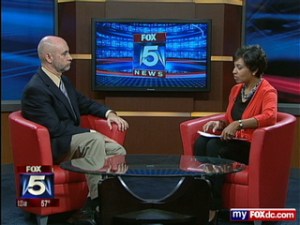
Interview with Fox 5 for ADHD Awareness Week

In my job as the director of the National Resource Center on ADHD (NRC) at CHADD, I’m usually a behind-the-scenes kinda guy.  Last week (Oct. 16-22) was ADHD Awareness Week and the sponsoring organizations — including both CHADD and the NRC — were called upon by various media to do interviews, including ones that answer questions about recently updated guidelines from the American Academy of Pediatrics on the evaluation, diagnosis and treatment of ADHD for kids age 4-18.  My boss, Ruth Hughes, would normally have done this interview with DC’s local Fox affiliate, but a scheduling conflict made that impossible. So, here’s my 5 minutes of on-air fame, captured for perpetuity!

Invitation and Response: Homily for the 28th Sunday of Ordinary Time

28th Sunday of Ordinary Time – Oct. 8/9, 2011

For the communities of Dignity/NoVA at Emmanuel Church-on-the-Hill in Arlington, VA and Dignity/Washington at St. Margaret’s Episcopal Church, Washington, DC.

I typically don’t take a long lunch break, but usually simply sit at my desk and read a bit of the Washington Post online.  Usually, I end up at the advice columns and I especially enjoy reading the Wednesday column of Miss Manners. I like that particular column – which the author Judith Martin writes in the third person – because there’s usually a bit of humor or wit in what Miss Manners has to say.  Probably the most common type of question asked has to do with the etiquette surrounding invitations. People want to know what is proper when it comes to such things as dinner party invitations, family events, baby shower invitations, and most especially invitations to weddings – including what might be called “traditional weddings,” as well as the more questionable practice of such things as “theme weddings or “destination weddings.” What I find amusing is that most of the letters seem to be written by people who appear never to have read her column  – because if they had, they would know that what they were asking about was utterly improper or even rude.  For example, couples preparing for a wedding will often ask some variation of “what’s the proper way to word an invitation and let invitees know that gifts of cash are preferred over a ‘boxed gift,’ or “what’s the proper way according to the rules of etiquette to tell guests we’d prefer that they contribute to our ‘honeymoon fund’ rather than give a toaster or something we already have?”

The obvious answer, as Miss Manners never tires of responding, is that there is no proper way to say these things.  She constantly reminds people that an invitation that hosts extend to potential guests is just that – an invitation.  It is not a contract, or a business deal, or a solicitation for donations.  It is, on the contrary, a statement that the hosts – those extending the invitation – are asking family members, friends, and other guests to join them in something special.  As the hosts, they are the ones who have planned and prepared the celebration; they are the ones who have seen to all the details of the event and who wish to share the happiness and joy of the occasion with others in their lives whom they love and care for. The thing that so many people forget about invitations – an element about which Miss Manners also very readily and universally reminds her readers – is that just as it is freely extended, it also is freely responded to: it can either be accepted or declined, and that decision rests purely with the one invited.

I’m sure we all know what the experience is like of being the recipient of such invitations.  It feels good to be included, to know that we are important in others’ lives and to know we are thought of.  I suspect it’s also true that we know what it feels like NOT to receive an invitation – especially to an event or gathering that others we know have received.  At such times – even if it’s the memory of a 7th grade birthday party we weren’t invited to, or something more recent and significant – the feeling of being left out, of being excluded, is painful at any age.

Today’s readings continue to present to us images about the Reign of God and in particular who is invited in to that reign.  In weeks past we heard various stories and parables about the Reign of God as a Vineyard, and today we hear passages – including our gospel parable about the Wedding Banquet – that speak of God’s reign as a luxurious feast, a celebration where the guests are given delicious foods and choice wines. The Gospel story in particular speaks not just of any feast, but a wedding feast – a feast where the invited guests fail to show up, and so the feast is opened not just to a limited guest list, but rather to anyone and everyone.

It is this universality of God’s love, the fact that the message of God’s love and presence is freely given and readily available to all – this is what’s NEW in the message of Jesus and the Christian Gospel that challenged the notion that God’s love is limited and available only to a chosen and select few, or that it can be earned in any way by following a set of prescribed rules, laws, or religious practices.

Each and every day, God invites us to share in the feast of His Love. What’s important not to miss in this particular parable about the king hosting a wedding feast for his son is the importance of our response.  Many theologians and scholars who reflect on Scripture have wondered about why the King – God – is so harsh with the guest who comes improperly dressed, who attends the celebration without a wedding garment.  After all, if they were just called in from the highways and byways, how could it be expected that the guests would come prepared?  I think the best explanation for what the wedding garment is comes from St. Augustine.  Augustine, quoting from St Paul, wrote that the wedding garment is nothing more and nothing less “the love that springs from a pure heart, a clear conscience, and a genuine faith.” In essence he is saying that the “wedding garment” is what we bring to the Feast, it’s our free and freely given Response to God’s free and freely given Invitations.

Perhaps we aren’t always aware or don’t always recognize those invitations, but they certainly come to us each and every day in countless ways; and also in countless different ways invite us to respond with a pure heart, clear conscience, and genuine faith.

Patricia Sanchez (Celebration, Oct. 2011) writes that in every situation of human life, there is an invitation from God, and every invitation invites a response. These invitations come to us

  • Through the persons who reach out to us in their need, as God invites us to share our abundance;
  • Through those who suffer injustice, as God invites our advocacy and responsible participation at the ballot box.
  • Through those who have no one to speak for them, no one to uphold their rights to live and work without fear, God invites our persistent involvement on their behalf.
  • In the beauties of nature, God invites our awe and admiration; in the calamities of nature, God invites our trust.
  • In the warmth of friendship and familial harmony, God invites our gratitude; in the pain and turmoil of strained relationships, God invites our perseverance.
  • In the vigor of our youth and good health, God invites our grateful service; in the pain of sickness and the struggles of old age, God invites our endurance and calm.
  • In all our fears, in all our frustrations, in all our sadness, desires, accomplishments and joys, God is inviting us to be at peace and center upon the One who is to be our ultimate concern.

As we celebrate this Liturgy today – remember as we did earlier this week the gift of a Franciscan outlook on life, and remembering later this week the 13th anniversary of the brutal slaying of Mathew Shepard – let us be fully aware of God’s invitations all around is each and every day. In doing so, let’s pray that we respond not ill-prepared, with “that love which springs from a pure heart, a clear conscience, and a genuine faith.”

Archbishop Dolan’s Letter Recognizes US Bishops Don’t Speak for US Catholics

I just re-read the letter which Archbishop Timothy Dolan, current president of the US Conference of Catholic Bishops, sent to President Obama last month expressing concerns that the Obama Administration is no longer defending legal challenges to the constitutionality of DOMA (Defense of Marriage Act).

Dolan repeatedly notes that he is writing on behalf of the “Catholic Bishops of the United States,” and that the views he is expressing are shared by “millions of citizens who stand with us on this issue.”

What the good archbishop does not say, however, is that these citizens are necessarily Catholic; nor that he is writing on behalf of Catholics in the United States.  Perhaps this is because, given whatever limitations the logic of his arguments might have, Archbishop Dolan at least is able to read opinion polls and he knows that the views he and his brother bishops are espousing are not the views of most American Catholics when it comes to recognizing that even gays and lesbians are God’s children, with all the rights and responsibilities this brings.

A Perfect Rainbow at Delaware Gay Pride

Rainbow over Gay Pride Day

Southern "end" of the perfect rainbow over Rehoboth Beach, DE after the local Gay Pride Celebration

Even though it rained most of the day, God must have been smiling over the Delaware Gay Pride Festival held Saturday, September 17, 2011 in Rehoboth. Late in the afternoon, a perfect rainbow — visible complete, from end to end — could be seen looking east toward the ocean.

No Discipleship without Suffering

22nd Sunday of Ordinary Time – August 27/28, 2011

For the communities of Dignity/NoVA at Emmanuel Church-on-the-Hill in Arlington, VA and Dignity/Washington at St. Margaret’s Episcopal Church, Washington, DC.

What a difference a week can make!

Oh, certainly Mother Nature has let us know the truth of that saying, having rocked our area on Tuesday with an earthquake of all things – something that I, for one, never need to experience again; and now this weekend instead of the heat and sunshine of beautiful summer days we had for most of last weekend, Nature pelted us last night with fierce winds and heavy rains of hurricane Irene. By the way … I find it just a bit ironic that this hurricane is named Irene – because Irene comes from the Greek word meaning Peace!  Anyway, two weekends and weeks out of the year could not be more different than these past seven days compared to the seven that came before!

A week can make quite a difference not only in the world of Nature, but also in the scriptures we have for our reflection.  Last Sunday we heard Jesus praising Peter – praise that the successors of Peter and the institutional Church have been more than happy to repeat over and over again across the centuries!  That praise rightfully acknowledged the faith that Peter had in declaring that Jesus was not merely another preacher or prophet or miracle worker – but that Jesus in fact was and is “the Christ, the Son of the Living God.”  Upon hearing Peter’s words, Jesus declares in response that Peter doesn’t know this by his own wisdom or insight, but rather immediately states that this is Revelation – it has been revealed to Peter – to use Jesus’ words – “by my heavenly Father.” And then Jesus goes on to declare the responsibility that Peter will have in building up the community of all Jesus’ disciples.

And yet, how quickly things change!  Perhaps Jesus’ declaration of Peter’s special role has gone to his head, because no sooner does Jesus call Peter the Rock on which the Church will be built, something quite striking happens.  After what is commonly referred to as the “first passion prediction” – the first time Jesus begins to prepare his disciples for the difficult journey ahead – Peter has the audacity to pull Jesus aside and rebuke him.  “God forbid Lord!  No such thing shall happen to you!”  It seems that Peter has momentarily forgotten that the church to be built is the Church of Christ, not the Church of Peter.

And so what does Jesus do?  In an unusually blunt and strong response – perhaps made stronger by the emotion that Jesus must have felt in knowing what lay before him – he corrects Peter not in a gentle and kind way, but with some of the harshest words in the Gospels: “Get behind me, Satan! You are an obstacle to me!” It seems that even though Peter has declared who Jesus is, he hasn’t fully grasped the real meaning behind that identity. He has not yet had the experience – though in time he would – of what Jeremiah knew so well:  that if one is true to speaking and living as God would have us speak and live, then our words and our actions will bring us “derision and reproach” from others.

This is, after all, the implication of being a disciple of Jesus and of taking up one’s Cross every day – because to be a disciple of Jesus isn’t easy and it always involves suffering.  In fact, people who are much more spiritually mature than I am often will point out that if we claim to be Christians, and our lives don’t involve some measure of suffering because of that claim, then we need to take a look at how closely we’re living the Gospel and the values that Jesus preached!

Any one of us here – especially any one of us “of a certain age” – knows the truth that suffering is part and parcel of human life. Who among us has not suffered in one way or another?  Who has not known the impact of injury or illness? Who has not suffered the loss of a loved one, the pain of rejection or defeat?  These are sufferings of the human condition, whether we claim to be Christians or not.  But, as so many of the saints throughout the centuries have learned – saints known and unknown – following Jesus faithfully always involves suffering of a different kind, a suffering that is accompanied with the scorn and even hatred of others.

  • In our own day, those who work actively for peace are often accused of being unpatriotic.
  • Those who stand up for the poor, the homeless, the marginalized, the undocumented, the mentally ill, or those who left by the wayside in the competitive economy of ours, are at best naïve and at worst, socialist.
  • Those who stand up for the rights and dignity of God’s gay and lesbian children, especially LGBT youth … run the risk of being attacked personally and vindictively by so-called “religious people” who claim to know the will and mind of God even better than God does!!
  • And if by the grace of God someone actually puts his or her life on the line and truly works for nonviolent change in working to bring about the Reign of God on earth … like Martin Luther King, Jr or Sisters Ita Ford and her sisters in Maryknoll, or Archbishop Oscar Romero … then people like this truly know what it means to take up the Cross in all its meaning.

Each and every one of us is called to discipleship. And while we believe wholeheartedly in the ultimate victory of the justice and joy and peace that will come with the fullness of God’s reign, we know that the road to God’s reign is one in which – if we are faithful – will be beset with challenges, obstacles, pitfalls, suffering and even death.  In closing, let me read what the Second Vatican Council says about this, and as I do so, I ask you to think about the ways in which you – in your own way and in your own life – can more fully embrace your discipleship in Christ:

“The Church, like a pilgrim in a foreign land, presses forward amid the persecutions of the world and the consolations of God, announcing the cross and death of the Lord until he comes. 
By the power of the risen Lord, she is given strength to overcome patiently and lovingly the afflictions and hardships which assail her from within and without, and to show forth in the world the Mystery of the Lord in a faithful though shadowed way, until at the last that Mystery will be revealed in total splendor.”

Fully Gay and Fully Catholic

It’s because of crap like this (which also comes in a Catholic version through the programs called the Courage Apostolate) …

… that I feel so strongly the mission of DignityUSA and its chapters around the country should focus on the “gay issue” — and nothing else. Just look at this young man.  Clearly seeking something, wouldn’t it be wonderful if someone truthfully and faithfully and convincingly helped him to see himself as God sees him?

Young gay Roman Catholics need a place where they can learn that God created them as they are, that it’s not only OK but good and right for them to live their lives as the people God created them to be.  They need a place where they can be fully themselves — fully gay and fully Catholic. I pray that Dignity and its chapters continue to be such places — fully Gay and fully Catholic.

“Give them some food yourselves”

Homily for the 18th Sunday of Ordinary Time – July 30/31, 2011
For the communities of Dignity/NoVA at Emmanuel Church-on-the-Hill in Arlington, VA and Dignity/Washington at St. Margaret’s Episcopal Church, Washington, DC.

Readings: Is: 55: 1-3, Rom 8:35;37-39, Mt. 14:13-21

One of the inescapable aspects of human life is that we all wear many hats. Almost from the day we are born we play different parts and relate in different ways to the people and situations of our lives. We begin as children, sons and daughters of our parents or caretakers. We may have siblings with whom we relate as sister or brother. Later we become playmates and friends; students and athletes. As we grow older and mature, we become workers; boyfriends and girlfriends; perhaps even someone’s “significant other” or spouse, and maybe even a mother or father to children of our own. Some of these roles are relational, based on our connections with others; while some of them are more functional, based on what we do or activities in which we engage.

Today we have listened to Matthew’s accounting of a miracle story that must have been so important to the early Christian communities that it is recounted in all four Gospels. It’s the story of the feeding of the multitudes. As with many gospel stories that are so familiar to us, it’s very easy to miss some of the significant and very telling details. When I first read this particular passage in preparing for today, something struck me that I had never taken notice of before. It’s that first line, delivered almost parenthetically, in which Matthew says, “When Jesus heard of the death of John the Baptist…” It’s easy to miss that the reason Jesus gets into a boat and goes off by himself, alone, … is because he’s in mourning. He has just heard the sad news, delivered directly by the disciples of his cousin John, that his cousin has been brutally killed. Immediately before this sentence, Matthew tells of the terrible way in which Herod – fulfilling the request of his niece who danced for him at his birthday – had ordered John to be beheaded, his head presented on a silver platter. Hearing this news from eyewitnesses directly, is it any wonder that Jesus wants some time to be alone with his grief, and to mourn in solitude, the way any grieving family member would do?

And yet, the crowds who knew of his preaching, will not let him be. In the previous chapter, Jesus had delivered a number of sermons which biblical scholars call “Kingdom Parables.” Jesus gives numerous examples of what “The Kingdom of Heaven is like…” It is like a man who sowed good seed in his field; it is like a mustard seed that grows to be the largest of plants; it is like the yeast a woman mixes with three measures of wheat flour; and it is like a treasure buried in field, or a net thrown into the sea.

This is the background of what we listen to today. And even though Jesus wanted to be alone, wanted to honor his role as the cousin of John the Baptizer, Matthew tells us that his heart is moved with pity at the sight of so many people who came to hear him, who knew him as the one who spoke of God and the Reign of God for which they longed. I don’t need to recount the story, but there’s another element that we can so easily miss. Up until this point, the disciples of Jesus, the ones who even now encourage Jesus to tell the crowds to go away, have largely been observers of his preaching and the miracles he has accomplished. The hat they have worn, the role they have played has largely been passive and receptive.

With this event, however, the disciples begin to take on a new role. They begin to mature in their role as disciples and become active participants in the miracle that unfolds. They bring to Jesus what little they have for just themselves; at Jesus’ direction they distribute the 7 items of blessed food – five loaves and two fishes – to the thousands now seated in this deserted place; and they gather up the leftovers, filling 12 wicker baskets. The symbolism of these numbers is important – for 7 was the number of known Gentile nations, and 12 the number of the Tribes of Israel. In short, Matthew is telling us that the message of Jesus about the Kingdom of Heaven, is for everyone, Jew and Gentile alike.  Matthew is reminding us that NO ONE – no nation, no race, no people, no tribe, no clan, no group, no person – is excluded from the bounteous goodness and reign of God. He is saying, in effect, that Jesus fulfills the word of Isaiah in that if we listen to Jesus, we will “eat well” and “delight in rich fare.” If we come to Jesus and don’t just merely “listen” but listen “heedfully,” … then we will have life itself.

Each week we gather here wearing the many hats of the roles of our current lives. At times, one such role may be more prominent than the other. But if we are to be faithful followers, faithful disciples of Jesus, we must do in our own lives what the disciples do in today’s Gospel. We must heed the command of Jesus to give food to our brothers and sisters who hunger. As we look at the world around us, let’s be careful not to spiritualize away the hunger that Matthew speaks of. Yes, the hunger of the spirit must be fed, and we must not be afraid to live in the light as disciples of Jesus. But so too must the hunger of the belly, the hunger of the body, be nourished. In saying that, I am so very mindful of not only the thousands and thousands of our fellow citizens – mostly children – who go to bed hungry every day; but I am also so very mindful of the millions upon millions of people around the world – especially in the drought-stricken countries of East Africa, where the lack of food has pushed hunger into starvation. Hunger and starvation in AfricaThe United Nations estimates that 12.5 million people in countries in the horn of Africa are on the brink of starvation, lacking water and the simplest of food; and, if aid is not increased to help, by the middle of September 2,500 women, men and children will die each day.

Like those first disciples, we too are called not simply to sit by the sidelines. Rather, Jesus speaks to us today, as he did two thousand years ago: “Give them some food yourselves.”

The Symbolic Significance of Vestments

Although there was much to recommend and rejoice at during the recent DignityUSA Convention held here in Washington, DC, one of the things that troubled me was the ambiguity that seems to pervade some of the organization’s liturgical celebrations, both at the national level and in many local chapters. In particular, it seems that there is a lack of clarity between what a “presider” is and what a “presbyter” is. Nowhere was this confusion more evident than in the convention’s Eucharistic liturgy, as well as other liturgical celebrations.

Without delving in to the many elements of Roman Catholic Sacramental Theology as it relates to Eucharist and Orders, one not-so-small thing jumped out at me repeatedly. It seems that whenever anyone was leading a prayer, he/she wore a stole. Such loosey goosey use of liturgical vesture robs these important vestments of their liturgical value and contributes to confusion.

Liturgist Aidan Kavangh put it clearly:

“Vestments are sacred garments rather than costumes or billboards. They are meant to designate certain ministers in their liturgical function by clothing creatures in beauty. Their symbolic strength comes not from their decoration but from their texture, form and color. The basic vestment of major ministers is the stole, which bishops and presbyters wear around the neck and deacons wear over the left shoulder. No other ministers wear stoles in the Roman Rite,” [emphasis added]. (Elements of Rite: A Handbook of Liturgical Style, Aidan Kavanagh, Pueblo Publishing Co., 1982, p. 19)