For the communities of Dignity/NoVA at Emmanuel Church-on-the-Hill in Arlington, VA and Dignity/Washington at St. Margaret’s Episcopal Church, Washington, DC.
Oct. 30/31, 2010
Readings: Wis 11:22-12:2; Ps 145:1-2, 8-14; 2 Thes 1:11-2:2; Lk 19:1-10One of the persistent themes in the writings of Franciscan Richard Rohr is summed up in the title of one of his books, “Everything Belongs.” This basic concept – which is truly at the heart of not only Christianity, but also at the center of all great religious and spiritual paths – involves recognition of the fact that we truly grow only when we begin to move from seeing the world in a “dualistic” way to seeing it in a “non-dualistic” way. When we are able to move beyond the categories and boxes and labels that we use in almost every dimension of daily life, when we can begin to see what mystics of all spiritual traditions speak of as God or the Divine or Mystery or simply Love, then we are becoming more fully human, more fully ourselves, more fully alive.
Today’s Gospel passage tells a story in which it’s so easy to use categories and labels, to see things with “us and them” eyes. Even commentators who write about this story and probably most homilists are usually quick to point out that Zacchaeus was a bad guy. There are lots of reasons for giving him this label and putting him in that box. By being not just a tax collector but a chief tax collector, he had opted to side with the Roman occupiers of Israel, those who oppressed his own people. Being a tax collector wasn’t just a job, but was something that he would have had to seek out as an enterprising businessman, an entrepreneur, a skilled negotiator and dealmaker. Because he is described as wealthy, he most likely had a lucrative arrangement with the authorities from Rome in which he paid the area’s taxes for the year up front, and then had the right to collect taxes from the people throughout the year; including whatever percentage markup or profit he could get. And of course, the fact that “the crowd” grumbles and refers to him as a sinner is further indication that Zacchaeus was seen as “the bad guy” and certainly not “one of us.”
Looking more deeply, however, some scholars suggest there is evidence that Zacchaeus wasn’t so bad after all. There are several indications in the text itself that suggest this. First, the Greek verb that is here translated in the future tense in the second part of this conditional sentence – “If I have extorted anything from anyone I shall repay it four times over” – could also be translated with a more present, ongoing meaning, in a way that indicates that such repayment, if it were necessary, had been his practice all along. Plus, there’s the fact that Zacchaeus is committed to repaying extorted funds not just in full, nor with a 20% penalty – as would have been required by Jewish law – but rather is committed to repayment “four times over,” which is what Roman law required, but required only for those who were convicted criminals. In addition, his very name – Zacchaeus – which occurs in the Scriptures only here and two other places – comes from a Hebrew word which means, “clean, pure, innocent.”
So … perhaps in his own way, our Gospel author is trying to tell us that things aren’t always as black and white as they seem. Even Zacchaeus … the traitor to his people by his chosen profession … may actually have carried out his work in a way that was fair and considerate and respectful. This is not to say he was perfect; by no means. Even he recognizes his need and is drawn to Jesus. And, in the presence of Jesus to whom he is open and whom he seeks out, Zacchaeus is transformed. For his part, Jesus sees Zacchaeus in all his fullness, in the totality of who he is. Jesus sees him as both good and not-so-good; honorable yet sometimes shady; generous yet highly tempted by money; a Jew as well as a collaborator. Because Jesus sees with the eyes of God, he is able to proclaim Zacchaeus as a man of faith and a “son of Abraham.” In the midst of what seems black and white – there really is a lot of gray!
You know, it’s be been said that if any community should be a model of inclusivity and openness, it should be ours. As members of the LGBT community we individually and collectively know what it’s like to be excluded, to be rejected, to be told we’re no good, to be told we’re bad, or that we’re sinners not because of anything we’ve done, but because of who God has made us to be. And even while much of institutional religion and many loud voices in the public square continue to demonize us, aren’t we called – in turn – to be better than that? Aren’t we called not to exclude, but to include? Not to close, but to open? Not to turn away, but to welcome? Not to hate, but to love? Not to demonize others, but to speak the truth in charity? Shouldn’t ours be the loudest of all voices in proclaiming that not only do we have a rightful place at the table, but so too does every man, woman and child on the face of the earth?
Here’s an example of what I mean about speaking the truth in charity. Even though some of the most vocal catholic bishops – like John Nienstedt from Milwaukee – continue to speak untruths about God’s gay children and our relationships – thankfully there are people like Fr. Michael Tegeder, pastor of St. Edward Parish, Bloomington, Minnesota. After Bishop Nienstedt and the other Minnesota bishops sent a DVD to all parishes in the state, a DVD in which same-sex marriage was described as “a dangerous risk” for society, Fr. Tegeder had the courage to speak up, saying that the real danger to marriage was not the loving unions of same-sex couples; he voiced the truth borne out by evidence from so many sources, namely that biggest danger to stable relationships is poverty and the many stresses that come to couples and who are not able to take care of their families due to lack of financial resources.
This city was a busy place yesterday [“Rally to Restore Sanity“], as it was a number of weeks back when a similar event [“Restoring Honor” rally] was held. These two rallies – representing different aspects of the political spectrum – were both held on the Mall, that place that those of us from New England would call “the common.” The common is that public space in every village, town, or city where people could gather to express their views, to hear those of others, and where everyone was welcome. Certainly many of us would find ourselves more drawn to the views expressed at one of those rallies than the other. But regardless of our views on this or that public issue, and regardless of whether we express those views in simple conversation or the voting booth, shouldn’t those conversations and those votes be rooted in our belief that we are ALL children of the one God, the one God who calls us to love others as God loves us?
Let me end by reading once again part of that passage from Wisdom, asking each of you to remember that in God, everything, everyone does belong … and that in faith, we are challenged to do our part to ensure that no thing, no one is excluded from the banquet: “For you, God, love all things that are and loathe nothing that you have made; for what you hated, you would not have fashioned. And how could a thing remain, unless you willed it; or be preserved, had it not been called forth by you? But you spare all things, because they are yours, O LORD and lover of souls, for your imperishable spirit is in all things!”

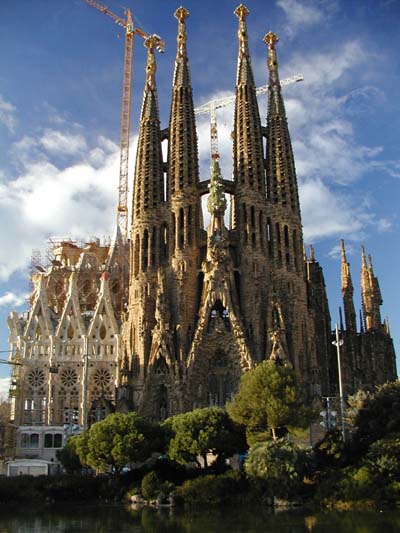
 Image and Likeness